
Latest News
Pork Import Requirements for Commercial Buyers

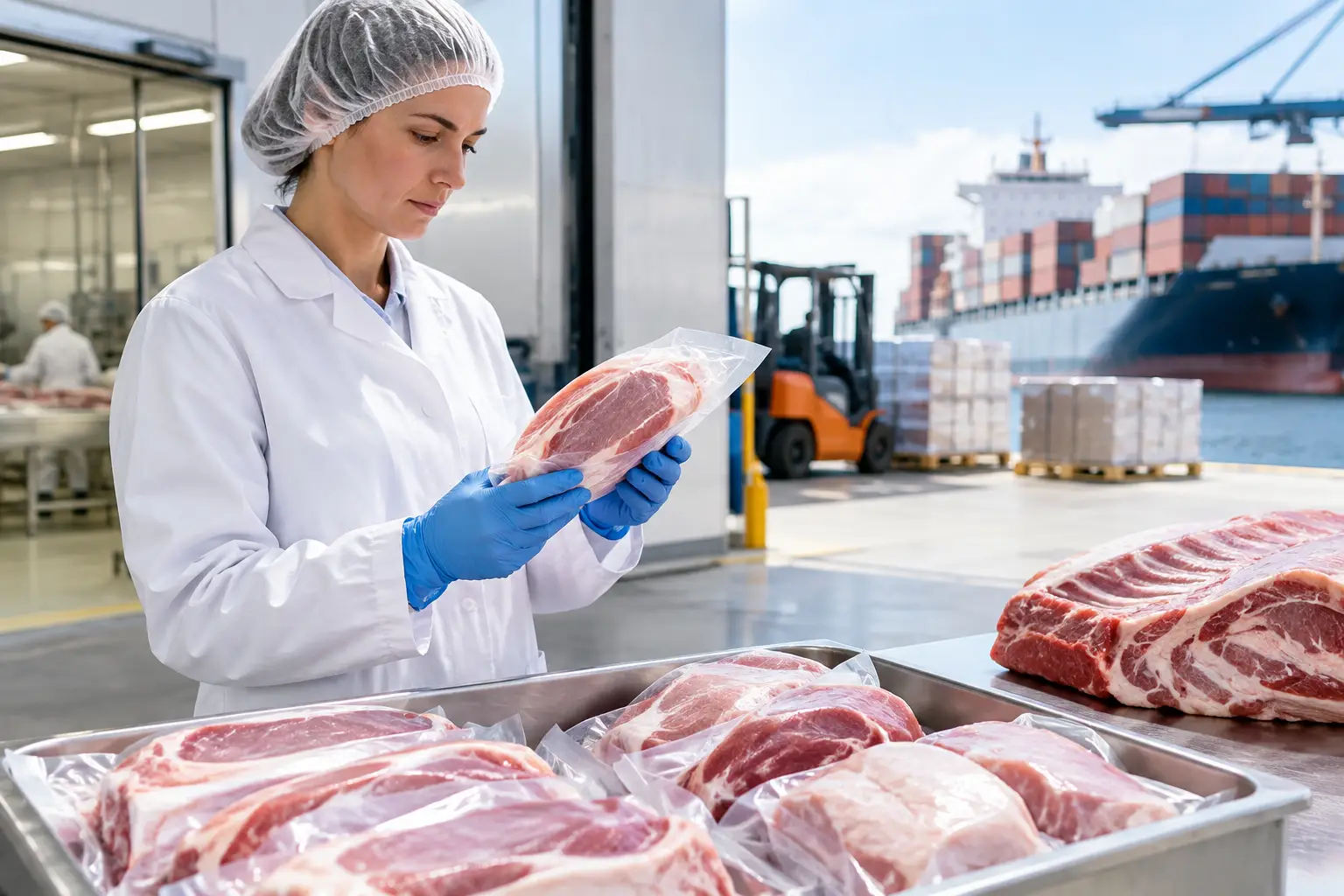
A refrigerated container can arrive on time, at the correct temperature, and still be held at the border. For commercial buyers, pork import requirements are not a final administrative task. They determine whether a product can be sourced, shipped, cleared, and distributed as planned. The most reliable purchasing programs treat import compliance as part of product specification and supplier approval from the first quotation.
Requirements vary by destination, product form, processing status, and country of origin. Fresh chilled pork, frozen cuts, edible offal, and further-processed products may follow different conditions even when they are shipped to the same market. A practical approach begins by confirming market access before negotiating volumes, delivery terms, or launch dates.
Pork Import Requirements Start With Market Access
The first question is whether the exporting country, region, and individual production establishment are eligible to supply the destination market. Many importing authorities approve meat imports at more than one level. They may recognize a country or region, authorize particular slaughterhouses or cutting plants, and impose product-specific conditions.
This distinction matters when disease-control measures change. An importing country may restrict pork from a particular region, limit imports to heat-treated products, or suspend shipments while veterinary authorities review an animal-health event. Buyers should verify eligibility at the time of shipment, not only when a supplier relationship begins.
Market access should be checked against the exact commercial product. A bone-in frozen shoulder, chilled boneless loin, pork belly, and edible offal can have different tariff classifications, certificate language, inspection procedures, or labeling obligations. The purchase specification should identify the product clearly, including cut, bone status, packaging format, production date requirements, frozen or chilled condition, and intended use.
For buyers sourcing from Spain, European Union veterinary controls provide a structured production and official-certification framework. However, EU origin alone does not guarantee access to every destination. The receiving market’s current rules remain decisive.
Establishment approval is a shipment-level control
Where establishment approval is required, the processor’s approval number and name must match the relevant destination listing and official documentation. This should be checked before production is allocated. A supplier may be suitable for one export market but not approved for another.
Buyers should also confirm whether slaughter, cutting, cold storage, and export handling must occur in approved facilities. In some markets, the full chain must meet destination-specific requirements. In others, product can move through an approved cold store or consolidation point under defined controls. Assumptions in this area can create costly relabeling, re-routing, or rejection risks.
Documentation Must Match the Physical Product
Border clearance depends on consistency. The product in the container, commercial documents, health certificate, labels, and customs declaration should describe the same goods. Small discrepancies in weights, lot codes, product descriptions, dates, or establishment numbers can delay release while authorities request clarification.
A commercial pork shipment commonly requires several documents:
- An official veterinary health certificate issued by the competent authority, when required by the destination
- A commercial invoice and packing list showing product description, quantity, net and gross weight, and lot identification
- A bill of lading or air waybill that matches the consignee and shipment details
- A certificate of origin when requested for customs, tariff preference, or customer requirements
- Customs declarations and tariff classification information
- Supporting records such as temperature data, laboratory results, or Halal documentation when required by the market or buyer
The official health certificate is particularly sensitive. Its wording, attestations, signatures, dates, and issuing authority must meet the importing country’s prescribed model. Buyers should not rely on a certificate used for a different market, even if the product is identical.
Documentation planning also needs a clear division of responsibility. The exporter typically prepares commercial and export documents, while the importer or customs broker manages import entry and local permits. Under the agreed Incoterm, costs and risk may transfer at different points, but regulatory responsibility cannot be left unclear. Procurement teams should define who verifies permit validity, books inspections, pays duties, and responds if authorities request additional records.
Food Safety, Traceability, and Product Controls
Import approval is based on more than paperwork. Authorities and customers expect evidence that pork has been produced, handled, and transported under controlled conditions. Buyers should assess the supplier’s ability to maintain traceability from raw material and slaughter through cutting, packaging, storage, and dispatch.
A useful traceability system connects each shipping lot to production dates, establishment details, product codes, packaging records, and destination documentation. This supports efficient verification at receiving and gives the importer a practical basis for stock control, customer inquiries, and withdrawal procedures if needed.
Food-safety requirements depend on the market and product category. They may address microbiological criteria, residues, animal-health status, permitted treatments, packaging materials, and shelf-life rules. The buyer should agree in advance on testing responsibilities, sampling protocols, acceptance limits, and the treatment of nonconforming results. Laboratory testing can support release decisions, but it does not replace official import conditions or supplier process controls.
At Litera Meat, integrated slaughter, cutting, cold-chain handling, packaging, quality control, and laboratory capability support the controlled production of pork for domestic and international commercial channels. For a buyer, the practical value of this integrated model is visibility across the process rather than reliance on disconnected suppliers.
Labels and Packaging Need Destination Review
Packaging that is appropriate for one market may not meet another market’s label rules. Requirements can cover the product name, net weight, country of origin, establishment number, production or freezing date, storage temperature, lot number, ingredients for processed products, and local-language declarations.
Retail-ready labels typically require more market-specific information than bulk foodservice or manufacturing cartons. Even bulk packs, however, must remain identifiable through warehouse handling and customs inspection. Buyers should approve artwork and carton markings before production, particularly where language, date format, or mandatory importer information applies.
Packaging also has an operational role. It must protect the product through loading, sea transit, unloading, inspection, and distribution while preserving the required chilled or frozen condition. Vacuum packaging, carton strength, pallet configuration, and pallet treatment requirements should be agreed as part of the specification, not after orders are placed.
Cold Chain Is a Compliance Issue, Not Only a Quality Issue
Chilled and frozen pork require different logistics planning. Chilled product has a shorter usable window and demands precise coordination between production, documentation, vessel schedules, clearance, and delivery. Frozen pork provides more inventory flexibility, but it still requires temperature stability and disciplined handling.
Buyers should define the temperature set point, permitted range, monitoring method, and response procedure for deviations. Container pre-trip inspection, loading records, seal control, data logger placement, and destination review of temperature records all strengthen the chain of evidence. A temperature record is most useful when it can be tied to a specific shipment and evaluated promptly after arrival.
Port congestion, inspection holds, and onward trucking delays should be included in the logistics plan. The appropriate safety margin depends on the product’s shelf life, destination infrastructure, and whether the importer has refrigerated storage near the port. For chilled programs, a lower purchase price can be outweighed by avoidable risk if lead times are too tight.
Turn Pork Import Requirements Into Purchase Controls
The strongest import programs convert regulatory conditions into routine buying controls. Before confirming an order, the buyer should validate market access, establishment eligibility, product specification, certificate requirements, labeling, tariff classification, and cold-chain plan. Before shipment, the same points should be checked against the final production lot and documents.
Supplier evaluation should include export experience for the relevant destination, not simply general export capability. Ask how the supplier controls lot traceability, handles certificate review, manages destination-specific labels, and communicates changes that could affect a scheduled shipment. A capable supplier will provide clear answers, records, and defined points of contact.
Pork import requirements change with veterinary policy, customs rules, trade arrangements, and disease-control measures. Building a disciplined approval process gives procurement teams more than compliance confidence. It creates a more predictable supply chain, protects customer commitments, and makes each shipment easier to receive, inspect, and distribute.