
Latest News
How Wholesale Pork Suppliers Support Reliable Sourcing

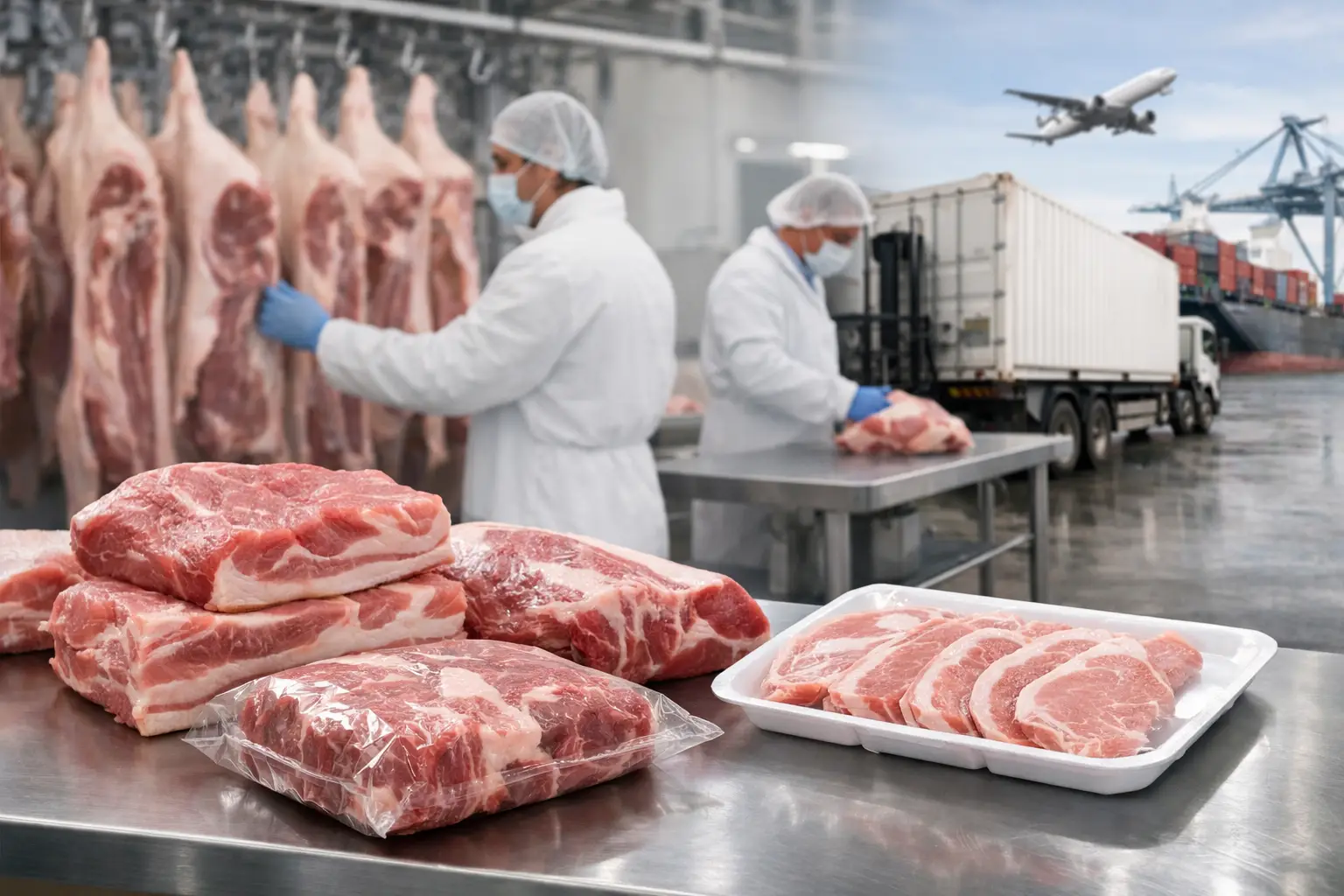
A pork shipment can meet the agreed price and still create a costly sourcing problem. An incorrect cut specification, inconsistent fat cover, incomplete export documentation, or a break in temperature control can affect production schedules, customer relationships, and inventory planning. For procurement teams, choosing wholesale pork suppliers is therefore a question of operational reliability, not simply unit cost.
International buyers need suppliers that can convert a commercial requirement into a repeatable supply program. That means defining products precisely, maintaining control from slaughter through dispatch, and understanding the import conditions at destination. The most suitable partner depends on the buyer’s market, product application, required volumes, and cold-chain model.
What Buyers Should Expect From Wholesale Pork Suppliers
A capable supplier should provide more than a catalog of pork cuts. The supplier should be able to explain how each item is produced, packed, stored, labeled, and prepared for transport. This is particularly important when products will be further processed, distributed under controlled-temperature conditions, or supplied to retail and foodservice customers with detailed specifications.
The core requirement is consistency. A food manufacturer may need a defined lean-to-fat ratio for trimming or processing yield. A distributor may need standardized carton weights to improve warehouse handling. A retailer may require labeling formats and shelf-life parameters that fit its local market. These requirements should be agreed before production and verified through documented controls.
Scale also matters, but only when it is supported by planning discipline. Large-volume suppliers can help buyers maintain continuity across regular orders and seasonal demand peaks. However, procurement teams should confirm how capacity is allocated, what lead times apply, and how the supplier manages specification changes or unexpected demand.
Start With a Clear Pork Product Specification
The purchasing specification is the working document behind a successful order. Generic descriptions such as “pork loin” or “pork shoulder” leave room for different interpretations across markets. The specification should identify the exact cut, trim level, weight range, bone-in or boneless format, packaging method, frozen or fresh condition, and carton configuration.
For fresh pork, buyers should also establish the required production date, delivery window, storage temperature, and minimum remaining shelf life on arrival. Fresh supply can offer advantages in processing flexibility and market presentation, but it requires dependable transport timing and close coordination with the receiving operation. Frozen pork offers longer inventory flexibility and can be appropriate for distant markets, buffer stocks, and manufacturing programs. Neither format is automatically better. The right choice depends on transit time, local distribution infrastructure, demand predictability, and the intended use of the meat.
A broad range of cuts and offal can improve purchasing efficiency when a buyer wants to consolidate volume with fewer suppliers. Yet breadth should not replace product expertise. Ask whether the supplier can maintain the required specification across the cuts that matter most to the program, including primal cuts, trimming products, and edible offal where relevant.
Assess Food Safety, Traceability, and Laboratory Control
Food safety systems must function throughout the production chain, not only at the final loading point. Buyers should understand the controls applied during slaughter, cutting, packaging, cold storage, and dispatch. Internal quality teams and scientific laboratory capability can provide important verification of microbiological, chemical, and physical control measures within the supplier’s process.
Traceability should allow a supplier to connect a finished carton with its production information and, where required, its upstream origin. In a commercial setting, traceability supports rapid investigation when a customer asks a question about a batch, label, temperature record, or product attribute. It also helps buyers protect their own recall and complaint-management procedures.
Before approving a new source, request practical evidence of its control framework. Relevant topics include:
- batch identification and product coding;
- temperature monitoring during storage and loading;
- hygiene controls and verification procedures;
- foreign-material prevention and packaging integrity;
- documented procedures for nonconformities, complaints, and corrective action.
The detail required will vary by destination and customer category. A buyer supplying a major retailer or regulated food manufacturer may need more documentation than a distributor serving local foodservice accounts. In both cases, clear records reduce uncertainty and make supplier performance easier to evaluate over time.
Look Beyond Capacity to Processing Integration
A supplier’s capacity is meaningful when the full operation supports it. Pork processing involves coordinated slaughter, cutting, packaging, cold-chain handling, quality control, warehousing, and commercial dispatch. If these activities are fragmented across multiple parties, additional handovers can introduce delays, specification risk, or gaps in accountability.
Integrated operations can give buyers clearer responsibility for product flow. They may also support more efficient planning when an order includes several cuts, different pack formats, or a combination of fresh and frozen products. Buyers should ask how production scheduling connects to order forecasts, how inventory is segregated, and how loading appointments are managed.
Litera Meat operates in Binéfar, Spain, with an integrated platform that includes slaughter, cutting, cold-chain handling, packaging, quality control, and commercial distribution. Its facilities process 160,000 pigs weekly across 22 cutting lines, supported by 1,600 employees. For buyers assessing industrial suppliers, figures of this type are useful because they indicate the operational context behind a proposed supply program. They should still be considered alongside the specific product, schedule, and destination requirements of each order.
Plan Export Requirements Before Confirming the Order
International pork procurement requires early attention to market access and documentation. Import conditions can differ by country and may change according to product type, processing status, animal-health requirements, labeling rules, or approved establishment status. A product accepted in one market is not necessarily eligible for another.
The supplier and buyer should align on the commercial and regulatory documents required for the shipment, as well as the agreed Incoterms, port or delivery point, container configuration, and inspection process. It is also sensible to establish who is responsible for providing label artwork, import permits, veterinary documentation, certificates, and any destination-specific declarations.
Cold-chain planning deserves the same level of attention. For frozen shipments, confirm storage temperature, loading conditions, container settings, voyage duration, and procedures for responding to temperature deviations. For fresh programs, the margin for delay is narrower. Buyers should work from a realistic end-to-end schedule that includes production, inspection, transit, customs clearance, and final delivery.
Build a Supplier Relationship Around Measurable Performance
The first shipment is an approval point, not the end of supplier assessment. Effective procurement teams review performance against agreed measures such as order accuracy, product conformity, on-time dispatch, document completeness, temperature compliance, and responsiveness to issues. These measures create a fact-based discussion when volumes increase or specifications evolve.
Price remains essential, but the lowest quoted price may not represent the lowest total cost. Product inconsistency can increase trimming loss. Unreliable documentation can delay clearance. Poor carton configuration can reduce warehouse efficiency. A supplier that understands these downstream effects can help the buyer make more informed decisions about pack formats, order frequency, and contingency stock.
The most productive sourcing conversation begins with a detailed requirement rather than a request for a general price list. When the product, controls, export route, and performance expectations are clearly defined, both buyer and supplier can build a pork supply program designed to hold up under commercial pressure.
See the products we supply, or get in touch with your requirements.