
Latest News
Bulk Fresh Pork Export for Serious Buyers | Litera Meat

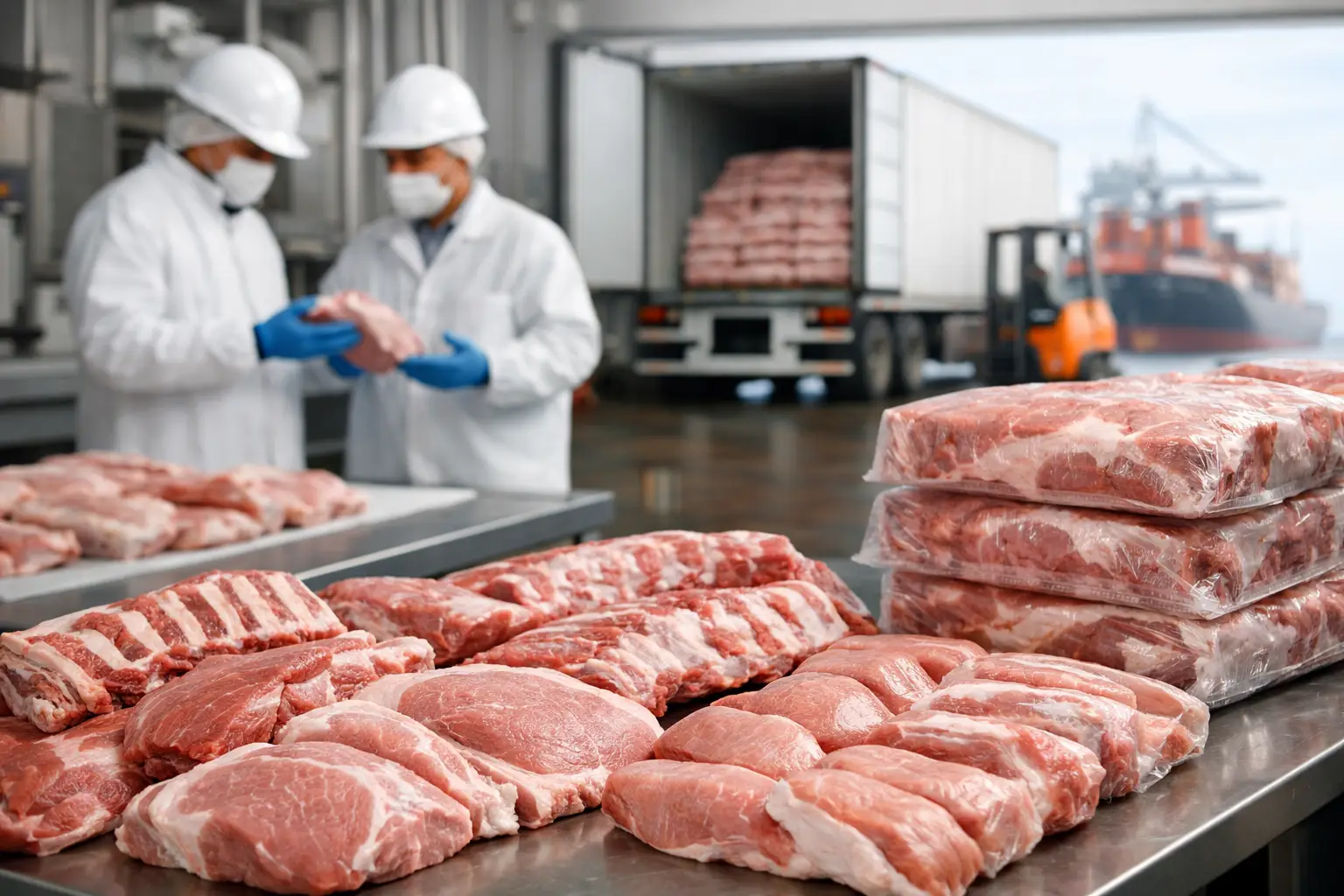
A bulk fresh pork export program is only as reliable as the controls behind it. For importers, distributors, food manufacturers, and retail purchasing teams, commercial volume matters, but it cannot compensate for unclear specifications, inconsistent cold-chain execution, or incomplete export documentation. The right supplier must be able to repeat the same result across regular shipments while meeting the requirements of the destination market.
Fresh pork sourcing is therefore a procurement decision that extends well beyond price per kilogram. Buyers need confidence in product definition, processing capacity, food safety, packaging, logistics coordination, and traceability. These factors determine whether pork arrives with the usable shelf life, condition, and documentation required for onward distribution or production.
What bulk fresh pork export means in practice
Bulk fresh pork export refers to the supply of commercial volumes of chilled pork for international markets. It can include carcass components, primal cuts, retail-ready cuts, trimming, and edible offal, depending on the buyer’s application and the import conditions in the destination country.
Unlike frozen supply, fresh pork has a shorter operating window. This places greater importance on slaughter and cutting schedules, rapid chilling, packing format, dispatch planning, and controlled transportation. A supplier may have substantial production capacity, but buyers should also confirm how that capacity is organized around lead times and the shelf-life expectations of the intended market.
The most suitable program depends on the product’s end use. A processor producing cured meats may prioritize consistent raw-material specifications and fat content. A wholesale distributor may need a broad mix of cuts and offal in export cartons. A retailer may focus on portion control, labeling requirements, and dependable replenishment. Each need should be defined before commercial terms are finalized.
Bulk fresh pork export: the buyer’s key checks
A clear technical specification is the foundation of a workable supply agreement. General product descriptions are rarely sufficient for recurring international trade. The specification should identify the exact cut, trimming standard, target weight range, bone-in or boneless format, acceptable fat cover, packaging method, carton configuration, and temperature requirements.
Buyers should also agree on practical tolerances. Natural variation exists in meat processing, especially in weights and yield, so the objective is not to eliminate all variation. It is to establish an acceptable range and a method for verifying it. This prevents disputes after arrival and allows both parties to plan production, storage, and resale more accurately.
Product range and cut consistency
A supplier with integrated slaughtering and cutting operations can coordinate raw-material availability with cutting demand. This matters when a buyer needs more than one product category, such as loins, shoulders, bellies, hams, ribs, heads, feet, or other pork offal. Combining product lines can improve container utilization and help balance procurement across the carcass.
However, a wider assortment also requires disciplined planning. Demand for individual cuts changes by market and season, and certain combinations may require longer lead times. Buyers should discuss expected purchase volumes, frequency, and mix early in the process. A realistic program is more valuable than a broad product list that cannot be supplied consistently at the required cadence.
Cold chain and remaining shelf life
For fresh pork, temperature control is a product-quality and food-safety requirement, not simply a logistics preference. The cold chain begins at the processing facility and continues through loading, international transport, port handling, customs clearance, cold storage, and final delivery.
Procurement teams should verify the agreed shipping temperature, monitoring approach, loading process, and responsibility for transport arrangements. It is also useful to define the minimum remaining shelf life expected on arrival, particularly where customs procedures or inland delivery may take several days.
Fresh and frozen pork serve different commercial models. Fresh pork may offer advantages where customers value chilled product, rapid processing, or specific handling characteristics. Frozen pork can provide more scheduling flexibility and lower risk where transit times are long or demand is less predictable. The right choice depends on route reliability, border procedures, inventory turnover, and the buyer’s cold-storage capacity.
Food safety, quality control, and traceability
International buyers should assess food safety as a system rather than a single document. A capable exporter needs controlled procedures across slaughter, cutting, chilling, packing, storage, and dispatch. Internal quality checks and laboratory capability add practical value because they support verification throughout the production process.
Traceability should allow a shipment to be connected to its production information and relevant records. In the event of a question concerning a lot, label, temperature record, or specification, the supplier should be able to investigate quickly and provide a documented response. This is particularly important for buyers supplying industrial customers, national retail networks, or regulated foodservice channels.
At Litera Meat, the integrated platform in Binéfar, Spain covers slaughter, cutting, cold-chain handling, packaging, quality control, and commercial distribution. Its operations include 22 cutting lines and facilities covering 130,000 square meters, providing the scale needed to support structured commercial supply programs. For buyers, the practical value of this integration is greater control from processing through export preparation.
Documentation must match the destination market
Export paperwork is a central part of international pork procurement. Requirements differ by country, product category, and intended use. Buyers should confirm the documentation needed before placing an order, rather than treating it as a final shipping task.
A typical export file may include the commercial invoice, packing list, transport documentation, health certificate where required, certificate of origin where applicable, product labels, and any destination-specific statements. The precise documents and wording must be aligned with the importing country’s rules and the relevant border authority.
The following four areas deserve early confirmation:
- The exporting establishment’s approval status for the destination market.
- Product eligibility, including whether the requested cut or offal category is permitted.
- Health certificate format, attestations, and signature requirements.
- Labeling, language, lot identification, date marking, and carton-marking rules.
Errors in any of these areas can create delays, storage costs, or rejected cargo. Importers should involve their customs broker, veterinary advisor, or local regulatory team when requirements are unclear. The exporter should provide accurate commercial and production information, while the importer remains responsible for ensuring the product can be legally placed on its market.
Evaluate capacity beyond headline volume
Production volume is relevant, but it is not the only capacity measure that matters. Buyers should ask whether the supplier can reserve product for an agreed program, manage mixed loads, maintain cut specifications, and respond if demand changes. The strength of a bulk supply relationship is demonstrated in routine execution, not only in a large first shipment.
A supplier’s operating model should also support communication between sales, production planning, quality assurance, and logistics. If a specification changes or a shipment faces a disruption, decisions need to move quickly through these functions. This is especially important for chilled product, where delays reduce commercial flexibility.
Spanish pork suppliers can offer a strong base for international sourcing because of their established processing infrastructure and access to European production systems. Still, buyers should evaluate each supplier on its own documented capabilities, market approvals, product range, and operational fit. A supplier suitable for a frozen container program may not be the best fit for regular chilled distribution, and vice versa.
Build the relationship around repeatable execution
The most effective way to begin a new bulk fresh pork export program is with a defined commercial and technical plan. Start with the destination, product list, forecast volumes, target arrival condition, packaging needs, and required documents. Then test the plan against actual production timing, transport transit time, and destination clearance procedures.
Early shipments should be reviewed in detail. Compare delivered weights, packaging condition, temperatures, shelf life, documentation, and customer feedback against the original specification. This creates a practical basis for adjustment before volumes increase.
Reliable pork sourcing is built through precise information and disciplined follow-through. When the supplier, importer, and logistics partners work from the same specification and shipment plan, bulk purchasing becomes easier to manage, easier to audit, and more dependable for the customers waiting at the end of the chain.
Browse the frozen pork range from Litera Meat or send us an enquiry.
One thought on “Bulk Fresh Pork Export for Serious Buyers | Litera Meat”