
Latest News
Offal Export Regulations for Pork Buyers

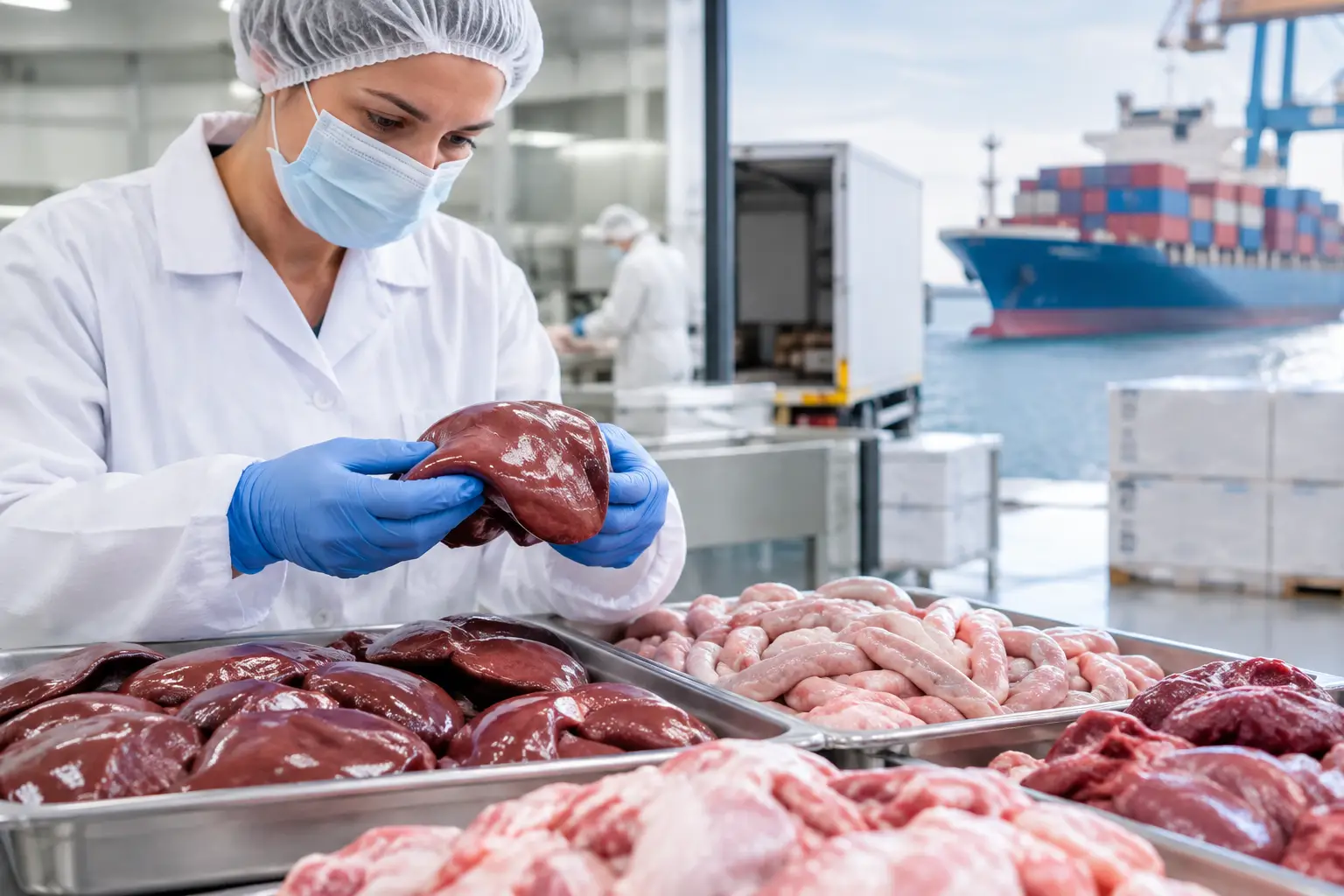
A container of pork offal can be commercially attractive and fully specification-compliant, yet still be stopped at the border because one document does not match the consignment, the approved establishment is not listed for the destination, or the product description is too broad. For importers and procurement teams, offal export regulations are therefore not an administrative detail. They are a core part of product availability, landed cost, and continuity of supply.
Pork offal trade requires close coordination between the exporter, importer, competent veterinary authorities, logistics providers, and inspection services in the destination market. Requirements vary by country and can change in response to animal-health conditions, bilateral protocols, or updated import controls. The most reliable approach is to confirm compliance before production is allocated, rather than after product has been packed and loaded.
Why Offal Export Regulations Require Extra Attention
Offal is not regulated in exactly the same way as standard muscle cuts. Markets may distinguish between edible and inedible by-products, fresh and frozen product, chilled and heat-treated goods, or individual anatomical items such as liver, heart, kidney, tongue, stomach, intestines, head meat, feet, ears, tails, and other variety meats.
These distinctions affect the applicable import conditions. A destination may accept frozen pork cuts from an approved Spanish establishment but apply separate eligibility rules, product definitions, or certificate wording to edible offal. Buyers should not assume that authorization for one pork category automatically covers every offal item.
Product demand also influences the compliance process. Certain markets have highly specific commercial demand for selected offal products, while others restrict the range of items that may enter for human consumption. The importer must ensure that the agreed specification, customs classification, health certificate, labeling, and local market authorization all describe the same product.
The Core Controls Behind Compliant Offal Exports
Successful shipments are built around a clear chain of evidence. The exporter must be eligible to ship the relevant product, the product must be processed under applicable food-safety controls, and the consignment documentation must accurately support its movement into the destination market.
Establishment Approval and Market Access
The processing facility is often the first compliance checkpoint. Many importing countries require meat and offal to originate from establishments specifically approved or listed by their authorities. This approval may cover slaughter, cutting, processing, cold storage, or a defined combination of activities.
For buyers, the practical question is not simply whether a supplier exports pork internationally. It is whether the specific establishment, product type, and process are approved for the intended destination on the expected shipping date. Approval lists and bilateral conditions can be updated, suspended, or amended.
Industrial integration can support this control. When slaughter, cutting, cold-chain handling, packaging, quality assurance, and laboratory capability are managed within a coordinated production platform, it is easier to maintain product identity and document each stage of the process. At Litera Meat, pork production is supported by large-scale processing operations in Spain, with traceability and quality controls designed for international commercial supply.
Veterinary Health Certification
A veterinary health certificate is commonly required for pork offal exports. It is issued according to the destination market’s agreed conditions and normally confirms matters such as species, origin, establishment approval, inspection status, animal-health declarations, and product handling.
Certificate language matters. The commercial invoice may describe goods as “pork offal,” but the official certificate may require a more exact description, including the particular item, product state, net weight, number of packages, production dates, establishment number, container number, and seal number. Inconsistencies can lead to delays, additional inspection, re-export, or rejection.
Buyers should agree the certificate format and required declarations before confirming the order. This is especially relevant where a shipment contains multiple offal items, more than one production lot, or a combination of fresh and frozen products.
Traceability From Animal to Shipment
Traceability is central to offal export compliance because offal is often separated into numerous product streams during slaughter and cutting. A reliable system needs to connect the finished carton and pallet to the relevant production records, raw-material origin, processing date, storage conditions, and dispatch details.
For importers, traceability should be considered both a regulatory and operational safeguard. If a destination authority requests clarification, the supplier must be able to identify the affected lot quickly and provide supporting records. This reduces the risk that an isolated issue disrupts a wider supply program.
Traceability expectations can differ by market, but procurement specifications should normally request clear lot coding, production and freezing dates where applicable, establishment identification, and document references that match physical labels.
Temperature Control and Shelf-Life Management
Fresh and frozen offal each create different logistical requirements. Chilled products require tight temperature management and sufficient remaining shelf life to accommodate transit, border inspection, customs clearance, and local distribution. Frozen products need continuous control to protect product condition and maintain the integrity of the cold chain.
The regulatory requirement and the commercial requirement are closely connected. A product may meet the minimum import conditions but still be unsuitable if the remaining shelf life does not support the buyer’s distribution network. Procurement teams should define the required temperature range, freezing method where relevant, minimum residual shelf life, packaging format, pallet configuration, and data needed for receiving checks.
Documents Buyers Should Align Before Shipment
Document preparation should begin during order planning, not after containers are booked. Although requirements depend on the market, a pork offal shipment may involve the veterinary health certificate, commercial invoice, packing list, bill of lading or air waybill, certificate of origin where required, customs declarations, and any destination-specific import permit or prior notification.
The key is consistency. Product name, scientific or common description where required, HS code, quantity, net and gross weight, establishment details, lot numbers, dates, and shipping references should align across the document set. A small difference, such as a carton count that does not match the packing list, can create unnecessary questions at clearance.
Importers should also clarify who is responsible for securing permits, filing pre-arrival declarations, paying duties and inspection fees, arranging examination appointments, and responding to an authority’s requests. Incoterms define commercial responsibilities, but they do not remove the need for a detailed operational agreement between buyer and supplier.
Labeling and Product Specification Must Match
Labels are a frequent source of avoidable issues. Destination requirements may cover the product name, country of origin, establishment number, production or freezing date, best-before date, storage conditions, lot identification, net weight, and language. Some markets require particular label layouts or prior approval of artwork.
The product specification should be equally precise. “Pork liver” and “pork liver, frozen” are not interchangeable descriptions if the approved certificate, label, or import permit distinguishes product state. The same principle applies to cut style, packaging, intended use, and whether goods are sold as edible offal.
Before the first shipment, buyers should request and approve label artwork, carton markings, product photos if useful, and a final written specification. For repeat programs, the specification should be reviewed whenever there is a market-rule change, packaging revision, or change in product presentation.
Managing Changes in Offal Export Regulations
Animal-health events, sanitary measures, port procedures, and bilateral trade arrangements can change with limited notice. A compliant supplier should monitor official export instructions and maintain close communication with the relevant competent authorities. Importers should likewise remain in contact with their customs broker, veterinary agent, and local inspection authority.
Risk is lower when supply planning includes alternatives. This may mean agreeing acceptable ports of entry, defining substitute packaging formats, allowing realistic lead times for original documents, or identifying alternate eligible products if a specific offal item becomes temporarily restricted. The appropriate contingency plan depends on the destination, product format, shipment frequency, and buyer inventory position.
For regular programs, a pre-shipment checklist is more effective than relying on experience alone. It should confirm destination eligibility, establishment approval, final product description, labeling, certificate requirements, document consistency, cold-chain arrangements, and importer readiness before loading authorization is given.
The most useful procurement question is simple: can every carton, record, and certificate tell the same story? When the answer is yes, pork offal can move through demanding international channels with greater predictability, protecting both regulatory compliance and the commercial value of the shipment.