
Latest News
Litera Meat Sustainable Fresh Pork Production at Scale

A container of fresh pork can cross several borders before it reaches a processor, distributor, retailer, or foodservice customer. At every handoff, product integrity depends on decisions made much earlier in the chain. Sustainable fresh pork production is therefore not a single environmental claim. It is the disciplined management of animal welfare, food safety, resource use, workforce capability, and cold-chain performance from origin through delivery.
For international buyers, sustainability has become a practical procurement issue. Customers need suppliers that can demonstrate reliable volumes, consistent specifications, documented controls, and the operational capacity to meet demanding market requirements. A sustainable model must protect these essentials while reducing avoidable impacts and maintaining accountability across the production process.
What Sustainable Fresh Pork Production Requires
Fresh pork has a short path from processing to market, but it has no margin for weak process control. Temperature deviations, incomplete documentation, inconsistent cutting performance, or a breakdown in hygiene management can compromise commercial value quickly. Sustainability must reinforce operational discipline rather than compete with it.
At industrial scale, that begins with an integrated production platform. Slaughter, cutting, chilling, packaging, laboratory verification, and dispatch must operate as connected stages, supported by defined procedures and traceable data. When those activities are fragmented, it becomes harder to identify root causes, standardize product quality, and manage the use of water, energy, packaging, and transport capacity.
The objective is not simply to process more product with fewer inputs. It is to produce safe, high-quality fresh pork with measurable control over the resources and risks involved. That distinction matters to quality managers reviewing supplier programs and to procurement teams balancing price, continuity, compliance, and corporate responsibility commitments.
Traceability Turns Responsibility Into Evidence
Traceability is the operating backbone of responsible pork production. A buyer should be able to follow a product lot through receiving, processing, cutting, packaging, storage, and shipment, with the associated production records available for review. This supports rapid decision-making if an issue is identified and gives customers confidence that specifications are being managed consistently.
Effective traceability links physical product movement with digital records. Lot identification, processing times, temperature controls, quality checks, and dispatch information need to correspond accurately. Automated systems can reduce manual handling and transcription errors, but technology alone is not enough. Procedures, trained teams, internal verification, and a culture of escalation are equally necessary.
This level of visibility also supports more efficient production. When a facility can identify yield variation, rework patterns, product loss, or recurring quality deviations by line and lot, it can address waste at its source. Better data improves both commercial performance and environmental management.
Animal Welfare Is a Process Standard
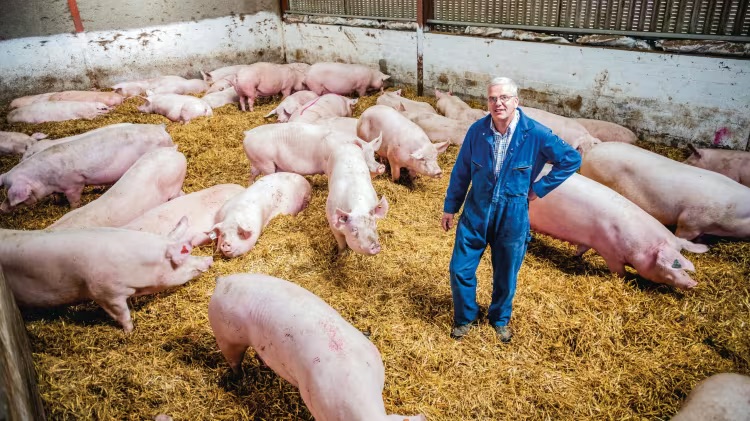
Animal welfare is inseparable from product quality, employee safety, and responsible production. It requires controls that begin before animals enter the facility and continue through handling, lairage, movement, and processing. Staff training, facility design, veterinary oversight, monitoring routines, and clear corrective actions all have a role.
The commercial case is direct. Calm, well-managed animal handling supports predictable operations and aligns with the expectations of customers, regulators, and institutional stakeholders. Welfare performance cannot rest on broad statements. It must be reflected in working practices, records, equipment maintenance, and accountable supervision.
There are no shortcuts here. High processing capacity increases the need for disciplined welfare systems because more animals, employees, and process steps are being coordinated every day. State-of-the-art facilities create the conditions for control, but trained people apply that control in practice.
Resource Efficiency Must Be Measured
Pork processing requires energy for refrigeration, compressed air, lighting, equipment, sanitation, and cold storage. It also requires water for cleaning and hygiene-critical operations. Responsible environmental management means identifying where these resources are used, establishing performance indicators, and improving efficiency without weakening food-safety protections.
That last condition is essential. Water reduction targets, for example, must never compromise sanitation outcomes. Energy initiatives must preserve the refrigeration performance required to protect fresh product. The right approach is continuous optimization: efficient equipment, preventive maintenance, sensible operating schedules, leak detection, heat recovery where technically appropriate, and ongoing measurement against production output.
Renewable energy can strengthen this strategy, particularly when it is integrated with broader consumption management. However, renewable generation does not remove the need to operate efficiently. The most credible environmental programs combine energy sourcing with demand reduction, waste prevention, and transparent monitoring.
By-product management is another important area. A high-capacity processing platform should seek the best responsible use for every suitable material stream, while maintaining strict segregation and hygiene controls. Reducing avoidable loss improves resource efficiency and can create value across the wider supply chain.
Cold-Chain Discipline Protects Product and Reduces Loss
Fresh pork sustainability is also determined after cutting and packaging. Product that does not arrive in specification represents lost animal, labor, energy, packaging, and transport resources. A dependable cold chain protects food safety and quality while reducing the risk of avoidable waste at distribution centers, retail operations, and food manufacturing sites.
For exporters, cold-chain execution includes more than refrigeration. It requires validated handling practices, suitable packaging formats, loading discipline, temperature monitoring, shipment planning, and precise export documentation. The longer and more complex the route, the more important these controls become.
Buyers should assess whether a supplier can maintain consistency across the required product formats and destinations. A processor serving multiple continents needs the technical capacity to adapt to market-specific requirements without losing control of core quality standards. This is where scale, automation, laboratory capability, and experienced commercial coordination work together.
Laboratory Control Supports Confident Decisions
In-house scientific laboratory capability enables faster, better-informed quality decisions. It supports microbiological monitoring, hygiene verification, process validation, and investigation when results fall outside expected parameters. For customers, this contributes to a stronger assurance model: quality is verified through planned analysis and documented action, not assumed from visual inspection alone.
Laboratory data also has a sustainability dimension. Accurate monitoring helps prevent unnecessary product holds, supports targeted corrective actions, and can reduce the risk of larger-scale waste. The value lies in connecting scientific results to production management so that findings lead to meaningful process improvement.
Scale Creates Both Advantages and Obligations
Industrial processors can achieve efficiency through centralized infrastructure, specialized cutting lines, automated handling, and coordinated logistics. These advantages can support product consistency and resource management at volumes that smaller, fragmented operations may find difficult to match.
But scale also raises the standard of responsibility. Large facilities must manage more complex workflows, more extensive maintenance needs, greater energy demand, and larger workforces. Sustainable performance depends on governance that is equal to that complexity: defined responsibilities, measurable objectives, regular review, workforce development, and transparent engagement with local communities.
Litera Meat operates from Binéfar, Aragón, with an integrated model designed to connect high-volume processing with rigorous quality control, cold-chain handling, and international market access. Processing capacity and advanced technology matter because they create repeatable conditions. Their value is realized when those conditions are supported by welfare practices, trained teams, environmental discipline, and full-process traceability.
What Buyers Should Ask of a Pork Supplier
For B2B purchasing and quality teams, sustainability assessment should move beyond broad commitments. Ask how traceability is maintained by lot, how welfare procedures are monitored, how laboratory results inform corrective action, and how temperature integrity is protected through dispatch. Request clarity on environmental priorities, resource measurement, employee training, and the supplier’s ability to meet destination-specific documentation requirements.
The answers should be specific enough to evaluate. A credible supplier can explain its process controls, show how responsibilities are assigned, and describe how it responds when performance does not meet expectations. It should also be candid about trade-offs. Packaging, for instance, must balance material reduction with product protection and shelf-life requirements. Transport efficiency may depend on destination, order profile, and the temperature conditions required for fresh product.
Sustainable fresh pork production earns confidence through repeatable performance, not isolated initiatives. For buyers building resilient supply programs, the most valuable partners are those that treat food safety, animal welfare, environmental stewardship, and operational excellence as one connected responsibility – measured daily, verified rigorously, and carried intact to the final delivery.
Browse the frozen pork range from Litera Meat or send us an enquiry.
One thought on “Litera Meat Sustainable Fresh Pork Production at Scale”