
Latest News
Pork Supplier Audit Checklist for B2B Buyers

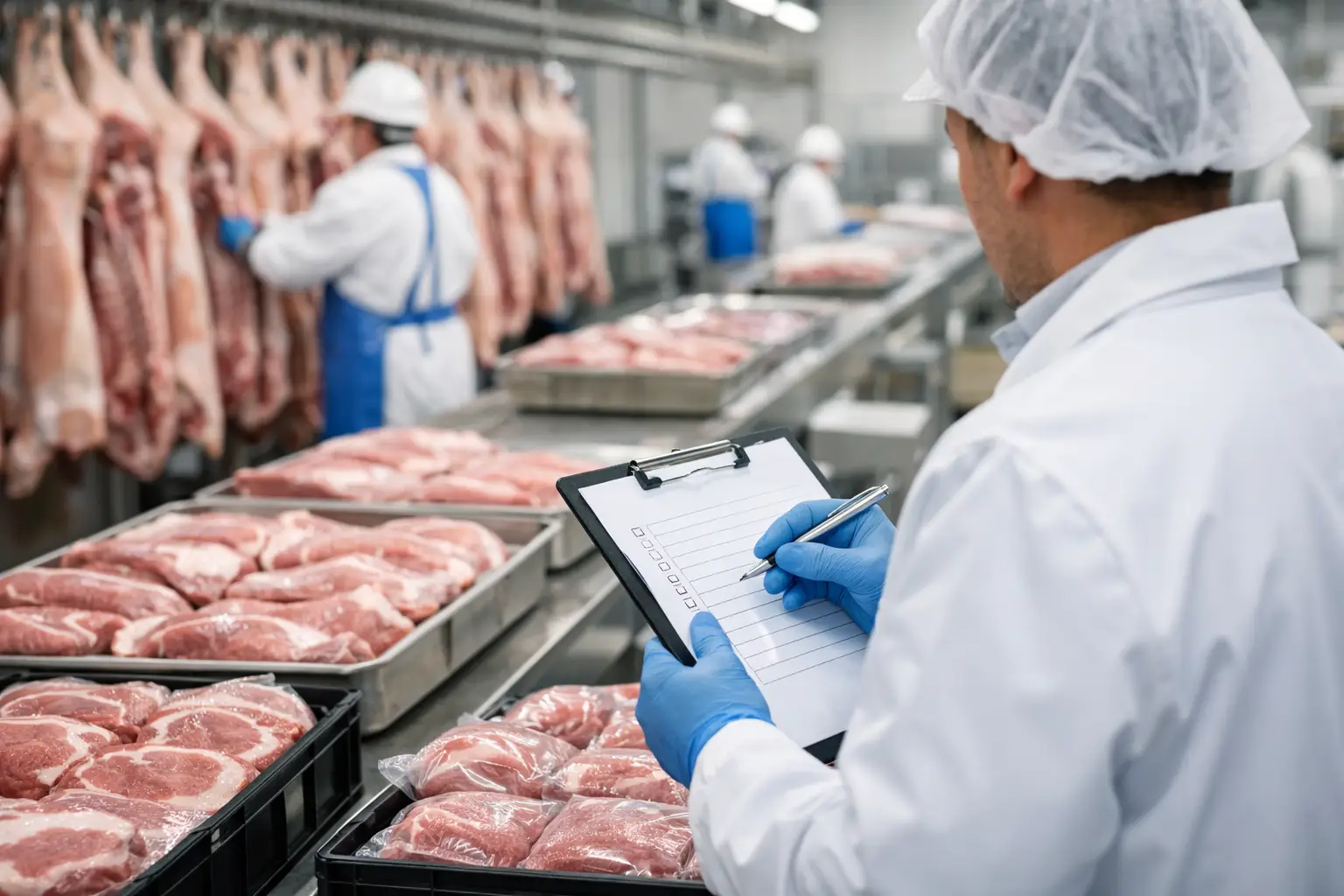
A pork supplier audit checklist should do more than confirm that a facility is clean and its documentation is current. For an importer, distributor, food manufacturer, or retail buyer, it must show whether the supplier can consistently deliver the required specification, volume, temperature control, and export documentation over time.
Pork sourcing decisions often carry operational consequences far beyond the purchase price. A missed shipment, an incomplete health certificate, inconsistent fat coverage, or a break in cold-chain control can affect production schedules, customer commitments, and market access. A structured audit turns broad supplier claims into evidence that procurement teams can assess.
What a Supplier Audit Should Prove
The purpose of an audit is to establish control across the full production chain: animal reception, slaughter, cutting, chilling, packaging, storage, loading, and dispatch. The buyer should be able to see how each stage is monitored, who is accountable for it, and what happens when a result falls outside the required limit.
The depth of the audit depends on the product and destination. Fresh chilled pork for a tightly scheduled retail program requires close examination of shelf-life management and transport timing. Frozen cuts and offal may place greater emphasis on freezing capacity, stock rotation, carton integrity, and container loading procedures. Products intended for regulated export markets also require a detailed review of establishment approvals and market-specific documentation.
A good audit is therefore not a pass-or-fail inspection based only on a certificate. It is a practical assessment of whether the supplier’s systems fit the buyer’s commercial and regulatory requirements.
Pork Supplier Audit Checklist: Documents and Systems
Start with the supplier’s food-safety management framework. Ask for current certificates, audit reports where appropriate, process flow diagrams, hazard-control plans, product specifications, and procedures for nonconforming product. Confirm the scope of each document. A certificate covering one activity or site does not necessarily cover all cutting, freezing, packaging, or storage operations used for your order.
Food Safety and Quality Control
The audit should establish how the facility controls microbiological, chemical, and physical risks. Review sampling plans, laboratory methods, hygiene verification, cleaning validation, foreign-material controls, allergen procedures where relevant, and corrective-action records. Internal laboratory capability can support faster control decisions, but buyers should also understand when external accredited testing is used and how results are reviewed.
Product specifications need equal attention. Define the required cut, trim level, weight range, bone condition, fat cover, packaging format, labeling language, and shelf-life expectation before production is scheduled. Visual standards should be agreed in writing, particularly for items where yield and presentation influence the buyer’s downstream use.
Traceability and Recall Readiness
A supplier must be able to trace a finished carton back through processing and, where required, to the source lot. During the audit, test this capability rather than accepting a written procedure alone. Select a pallet or carton and ask the supplier to demonstrate the trace-back record, including production date, line, batch, raw-material lot, and dispatch destination.
Also review the trace-forward process. If an issue is identified after shipment, the supplier should be able to identify affected customers, stock locations, and related production quickly. Check recall and withdrawal procedures, communication responsibilities, mock-recall results, and the process for documenting root cause and preventive actions.
Animal Welfare and Supplier Controls
For pork processors, animal welfare is a material part of supply assurance. The audit should cover animal reception, unloading, lairage conditions, staff training, handling practices, stunning controls, and monitoring records. Buyers should also ask how the processor approves and monitors livestock suppliers, because standards at the plant begin before animals arrive.
Environmental and social controls can also affect supply continuity and customer risk. Depending on the buyer’s policy and destination market, this may include wastewater management, energy initiatives, worker safety, training records, and grievance procedures. The appropriate level of review depends on the commercial relationship, but these issues should not be treated as separate from operational resilience.
Verify Controls on the Processing Floor
A document review should be followed by a site walkthrough. Observe actual practices at different points in the shift, not only a prepared demonstration. The difference between a written procedure and consistent execution is often most visible on the production floor.
Examine separation between clean and less-clean areas, employee entry controls, protective clothing, handwashing, tool sanitation, and the management of product that falls or becomes damaged. Review how the facility controls cross-contamination during slaughter, cutting, deboning, and packing. Equipment maintenance matters as well: worn conveyors, damaged surfaces, or poorly controlled condensation can create avoidable food-safety risks.
Temperature control should be verified with records and direct observation. Review chilling parameters, product-core temperature checks, cold-room monitoring, alarm response, loading-bay controls, and vehicle inspection procedures. For frozen products, confirm freezing performance, storage temperatures, stock rotation, and procedures for handling temperature deviations.
Packaging is another operational checkpoint. Confirm that materials are suitable for the product and destination, seals are checked, labels remain legible in cold conditions, and carton coding supports traceability. If vacuum-packed or modified-atmosphere products are required, ask how seal integrity and gas control are verified.
Confirm Capacity and Commercial Fit
A technically compliant facility may still be unsuitable if it cannot maintain the required supply pattern. Audit production capacity by product category, cutting-line configuration, freezer and cold-store capacity, labor planning, order lead times, and contingency arrangements. Buyers should distinguish between total plant capacity and capacity genuinely available for their program.
This is particularly relevant for customers requiring multiple specifications, mixed containers, fixed weekly allocations, or seasonal peaks. Ask how the supplier manages forecast changes, short-notice orders, raw-material variability, and equipment downtime. The right answer is not always a promise of unlimited flexibility. Clear production planning and transparent lead times are more reliable indicators.
Industrial scale can provide useful assurance when it is supported by integrated controls. Litera Meat operates in Binéfar, Spain, with an integrated platform covering slaughter, cutting, cold-chain handling, packaging, quality control, and commercial distribution. Its stated processing capacity of 160,000 pigs per week and 22 cutting lines illustrates the type of production infrastructure that buyers should evaluate against their own volume and specification needs.
Audit Export Readiness Before Contracting
International pork trade requires more than the ability to load a refrigerated container. Confirm that the establishment is approved for the intended destination and for the exact product category being purchased. Approval status can differ by market, product, processing activity, and presentation, so it should be checked before commercial commitments are finalized.
Review the supplier’s experience with health certificates, origin statements, veterinary documentation, labeling rules, pallet and container requirements, and pre-shipment inspection procedures. Clarify which party is responsible for document preparation, review, courier handling where necessary, and the cost of corrections or reissued documents.
For long-distance shipments, ask how the supplier manages container pre-cooling, loading temperatures, seal records, data loggers, transit-time planning, and claims investigation. A cold-chain plan should account for delays at port, customs inspection, and destination handling, not only the period between the plant and vessel.
Use an Evidence-Based Audit Method
A practical audit normally combines four forms of evidence:
- document review, including specifications, procedures, certificates, and records;
- site observation across relevant production and storage areas;
- interviews with quality, operations, export, maintenance, and logistics personnel; and
- a traceability exercise using a real production or dispatch lot.
Record findings by risk level and assign an owner, corrective action, due date, and verification method. Critical findings related to legal compliance, food safety, or export approval should be resolved before supply begins. Lower-risk observations may be managed through an agreed improvement plan, particularly when the supplier has demonstrated a disciplined corrective-action process.
The audit should not end with the first shipment. Set performance measures for specification compliance, temperature deviations, on-time delivery, document accuracy, complaint response, and corrective-action closure. Regular review gives both parties a factual basis for improving the program as volumes, products, or destination requirements change.
The most valuable supplier relationship is built on visible control, accurate information, and the willingness to address issues before they become commercial problems. A well-used audit checklist helps buyers select a pork partner capable of protecting product integrity from the processing floor in Spain to the receiving point in the destination market.
See the products we supply, or get in touch with your requirements.