

Latest News
Pork Cold Chain Logistics for Global Buyers

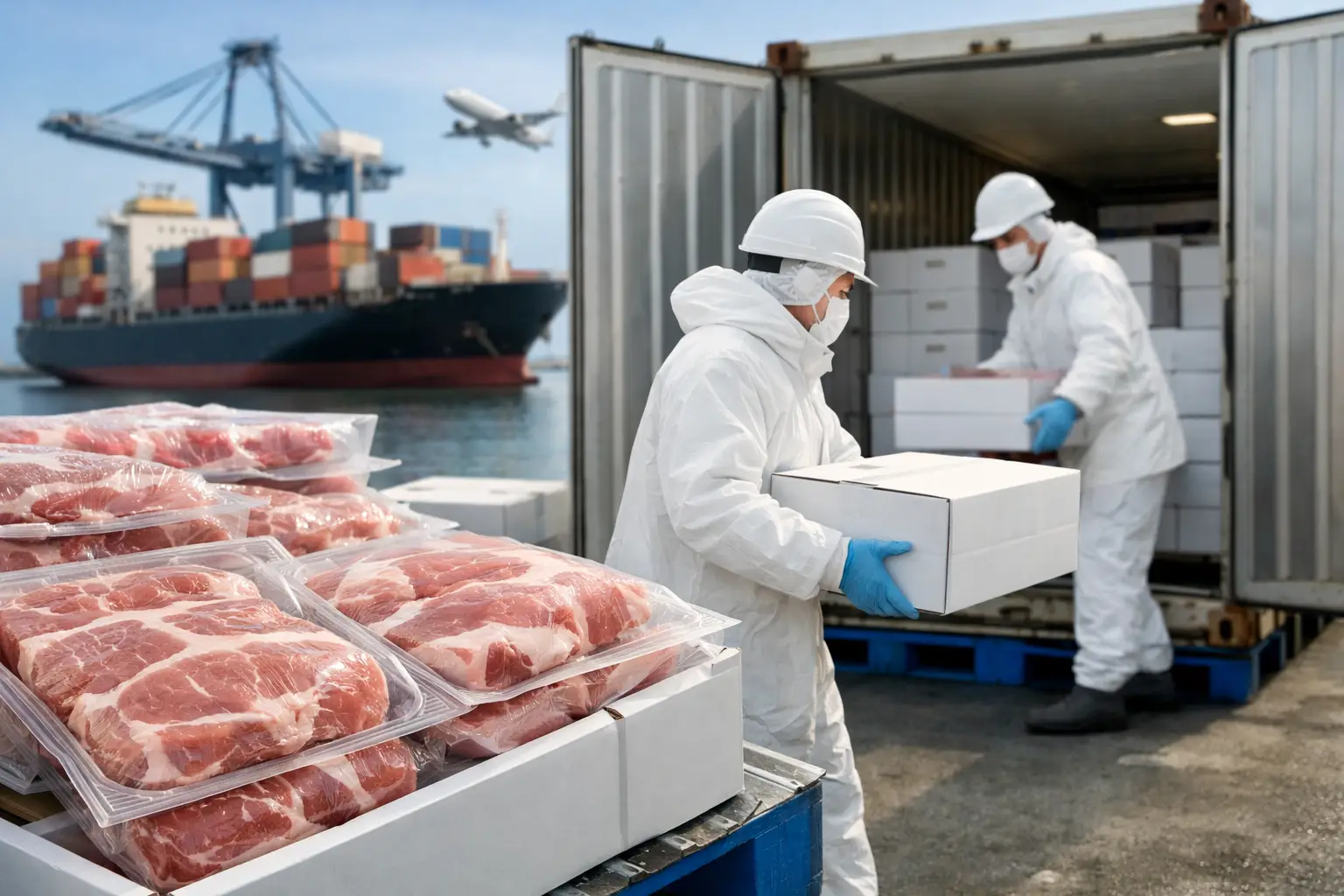
A refrigerated container that arrives one day late, a loading dock that holds product too long, or an incomplete temperature record can turn a sound pork purchase into a commercial risk. Pork cold chain logistics is therefore not simply a transport function. For importers, distributors, and food manufacturers, it is the controlled system that protects food safety, product condition, shelf life, and the value of every shipment from processing plant to final destination.
For international buyers, the key question is not whether a supplier can arrange refrigerated transport. It is whether the supplier can maintain defined conditions, document them, and respond effectively when the planned route changes. That requires coordination between production, quality, packaging, warehousing, freight forwarding, carriers, and receiving teams.
What Pork Cold Chain Logistics Must Protect
Fresh pork is a perishable product with limited tolerance for poor handling. Temperature management helps limit microbiological growth and preserves the expected color, texture, odor, and shelf-life performance of the product. However, temperature alone is not the full picture. Product protection also depends on hygienic handling, correct packaging, orderly loading, suitable air circulation, and reliable traceability.
For fresh chilled pork, the agreed temperature specification should be established according to the product, packaging format, destination market, transport duration, and applicable regulations. Buyers should avoid assuming that one temperature target applies to every shipment. A vacuum-packed primal cut traveling by road within Europe may require a different shelf-life plan from boxed meat moving by sea to an Asian destination.
Frozen pork has different logistics requirements. Product must be frozen and maintained at the agreed frozen condition throughout storage and transport. A reefer set point alone does not prove product condition. The buyer should understand the difference between air temperature in the container, the temperature of the product at loading, and the temperatures recorded during the route. Each measure serves a different control purpose.
Packaging also has a direct effect on logistics performance. It must protect the meat from damage, contamination, dehydration, and leakage while supporting handling in cold stores and distribution centers. Carton strength, pallet configuration, labeling, and load stability become particularly relevant in long-distance export movements, where cargo may be handled several times before arrival.
Cold Chain Control Begins at the Processing Plant
The strongest cold chain cannot correct product that leaves the plant outside specification. Effective control starts after slaughter and cutting, when carcasses and cuts are chilled under defined conditions and moved through processing with minimal unnecessary exposure. From there, packaging, labeling, palletization, and cold storage must operate as connected stages rather than separate activities.
A buyer evaluating a pork supplier should ask how temperature control is managed at each critical handover. This includes the transfer from cutting area to packing, from packing to finished-goods storage, and from storage to the vehicle or container. Delays at loading are a common weak point because doors are open, ambient conditions can vary, and multiple parties may be involved in preparing a shipment.
Quality teams should verify more than the final paperwork. They need defined procedures for product release, lot identification, seal control, hygiene checks, and corrective action. If an issue occurs during loading or transit, the supplier should be able to identify the affected lots quickly and provide relevant records to the buyer.
At industrial scale, this level of control depends on facility design and disciplined operating procedures. Litera Meat operates an integrated pork-processing platform in Binéfar, Spain, covering slaughter, cutting, cold-chain handling, packaging, quality control, and commercial distribution. Its capacity of 160,000 pigs processed weekly and 22 cutting lines illustrates why standardized process control and traceability are essential for supplying commercial volumes across multiple markets.
Traceability Is a Logistics Tool, Not Just a Compliance Requirement
Traceability is sometimes treated as a document needed only for audits or border clearance. In practice, it is also central to operational decision-making. A traceable shipment links the finished product to its production lot, packaging date, storage history, dispatch details, and destination.
For buyers, this information supports faster receiving checks, stock rotation, customer reporting, and any required investigation. It also helps distinguish a localized handling issue from a broader product concern. The required level of detail may vary by market and customer program, but records should be accurate, accessible, and aligned with the labels and shipping documents.
Designing the Route for Product, Market, and Risk
International pork logistics should be planned around the actual product journey, not only the booked port or delivery date. A route can include factory loading, inland trucking, port handling, ocean transit, customs clearance, destination cold storage, and final distribution. Every transfer introduces potential risk.
Transit time is naturally important, but consistency is often more valuable than a nominally faster route with frequent disruption. Procurement teams should consider carrier schedules, transshipment exposure, port congestion history, destination infrastructure, and the ability to maintain refrigerated handling after discharge. For chilled exports, the available shelf life at destination must allow adequate time for customs, warehouse intake, onward delivery, and customer use.
This is where fresh and frozen sourcing decisions differ. Fresh pork can offer a specific commercial and product proposition where the route and market access support it, but it requires precise shelf-life planning. Frozen pork provides greater scheduling flexibility and can be more suitable for longer routes, inventory programs, and markets with variable clearance times. Neither format is automatically better. The appropriate choice depends on the end use, sales velocity, storage capacity, and buyer’s distribution model.
Container Preparation and Loading Discipline
A refrigerated container is not designed to rapidly pull down the temperature of warm product. It is designed to maintain cargo that has already been prepared at the required condition. Loading product that is too warm can compromise the shipment even if the reefer is operating correctly.
Before loading, the container should be clean, odor-free, structurally sound, and pre-cooled according to the agreed operating procedure. The selected set point, ventilation settings where relevant, and data-recording arrangements should match the product specification. Pallets must be loaded to preserve airflow, without blocking floor channels or placing cartons in positions that prevent effective circulation.
The commercial specification should clearly state the product description, cut, packaging format, net weight, pallet configuration, labeling requirements, temperature condition, shelf life, and documentation needed for the destination. Ambiguity at this stage can create claims later, even when the physical cold chain has been maintained.
Records That Give Buyers Confidence
Temperature records are most useful when they can be interpreted alongside the shipment timeline. A graph without loading time, port events, container release details, or receiving measurements may not explain what happened to the product. Conversely, one isolated temperature reading does not necessarily indicate a product failure. Investigation should consider duration, location of the reading, product type, and whether the issue affected product condition.
A practical pork cold chain logistics program should allow a supplier and buyer to review five core points: product temperature at dispatch, container or vehicle settings, continuous monitoring records where agreed, seal and handover controls, and temperature checks at receipt. These records should be retained and available in a format that supports customer quality systems and market-specific requirements.
Buyers should also agree in advance on escalation procedures. If a vessel is delayed, a container alarms, or a destination inspection takes longer than expected, the responsible contacts need to know who will assess the situation, what evidence will be reviewed, and how decisions will be documented. Clear communication protects both parties from making assumptions under time pressure.
Supplier Assessment Beyond Freight Capacity
When sourcing pork for international distribution, logistics capability should be assessed together with processing capability. A supplier may have access to refrigerated transport, yet lack the production planning, laboratory support, quality controls, or export documentation experience required for repeat programs.
Useful evaluation questions include whether the supplier can maintain lot-level traceability, provide specifications in the buyer’s required format, coordinate packaging for the target channel, and plan volumes around vessel schedules or destination demand. Buyers should also understand the supplier’s approach to nonconforming product, customer complaints, and market-specific export requirements.
The objective is not to eliminate every disruption. Global freight networks can be affected by weather, port capacity, inspections, and schedule changes. The objective is to work with a supplier that recognizes those risks early, plans realistic shelf-life and inventory margins, and provides reliable evidence that product conditions have been controlled.
For procurement teams, the most productive next step is to treat cold-chain requirements as part of the purchasing specification from the first quotation. When product, packaging, route, documentation, and receiving controls are aligned before dispatch, the cold chain becomes a managed commercial asset rather than a problem discovered at destination.
Browse the frozen pork range from Litera Meat or send us an enquiry.