
Latest News
Pork Export Documentation Guide for B2B Buyers

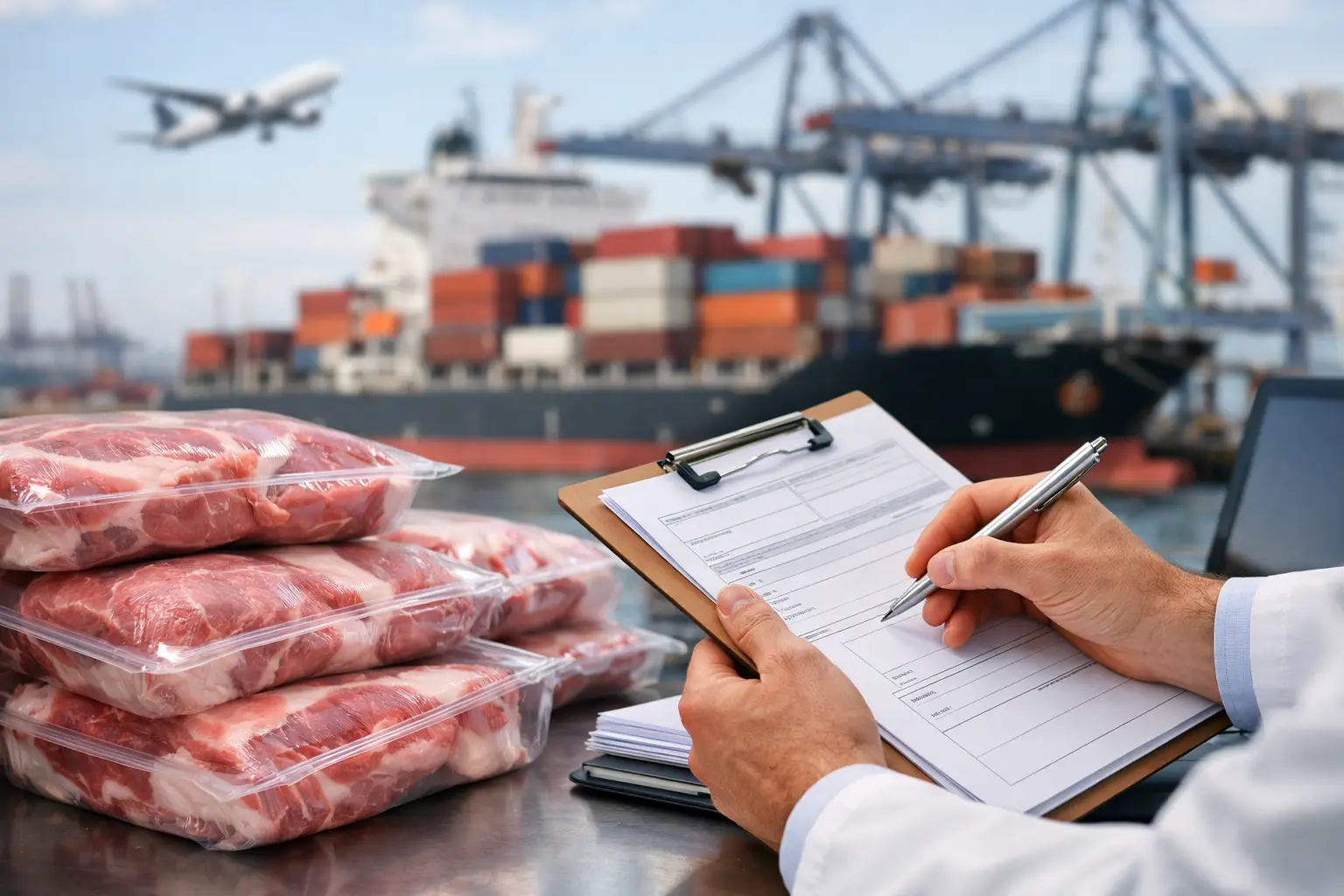
A delayed container of pork is rarely caused by one missing page alone. More often, the issue is a mismatch between the veterinary certificate, product labels, invoice, packing list, and destination-market requirements. This pork export documentation guide helps B2B buyers establish the documentation controls needed before fresh or frozen pork leaves the supplier’s facility.
For importers, distributors, food manufacturers, and retail purchasing teams, documentation is part of product compliance. It confirms what was produced, where it was produced, how it was controlled, and whether it is authorized for the intended market. The correct document set depends on the destination, product category, processing status, transport mode, and commercial terms.
Start with destination-market eligibility
Documentation cannot correct a basic market-access problem. Before confirming a purchase order, buyers should verify that the exporting country, establishment, product type, and relevant production date are eligible for import into the destination market.
This is particularly relevant for animal-origin products. Some markets approve specific establishments, require an official certificate model, restrict certain cuts or offal, or apply conditions related to animal health status. Requirements may also differ between chilled and frozen pork, or between meat for retail sale and material intended for further processing.
The buyer, exporter, and local import agent should agree on the import conditions in writing before production is allocated. This review should cover the applicable tariff classification, labeling language, certificate wording, import permits, inspection procedures, and whether original documents must travel with the cargo. A shipment should not be loaded on the assumption that a substitute document will be accepted at destination.
Core documents in a pork export documentation guide
The documents below form the usual foundation of an international pork shipment. They should be consistent with one another in product descriptions, quantities, weights, dates, lot references, consignee details, and container information.
Official veterinary health certificate
The official veterinary health certificate is commonly the central regulatory document for pork exports. It is issued or endorsed by the competent veterinary authority and certifies compliance with the importing market’s sanitary and animal-health conditions.
Buyers should check the certificate model before shipment, not after it has been issued. Important points include the authorized establishment number, species, cut or product description, production dates where required, country of origin, destination, and any required declarations. A certificate designed for one market may not be valid for another, even when the physical product is identical.
Where destination authorities require an original signed certificate, the parties should define the courier process, document handover point, and responsible contact. Delays in releasing originals can create avoidable storage costs at port or airport.
Commercial invoice and packing list
The commercial invoice supports customs valuation and identifies the commercial transaction. It should show the seller and buyer, invoice number and date, agreed currency, product description, unit and total price, Incoterms, payment terms where appropriate, country of origin, and the applicable tariff code when requested.
The packing list provides the physical breakdown of the shipment. For pork, it should clearly identify the number of cartons or pallets, net and gross weights, packaging format, lot or batch references, and marks or labels. If the cargo contains several cuts, grades, or temperature categories, those lines should be separated clearly.
Weight discrepancies are a frequent source of questions. The invoice, packing list, veterinary certificate, and transport document do not always use the same weight field, but any difference must be explainable. Buyers should agree in advance whether commercial settlement is based on net weight, catch weight, shipped weight, or another defined measure.
Transport document and shipping instructions
For ocean freight, the bill of lading records carriage and may control release of the cargo. Air shipments use an air waybill, while road and rail movements have their own transport records. The consignee name, notify party, container number, seal number, port details, and shipment references must align with the commercial and regulatory file.
Shipping instructions should also reflect the agreed temperature set point and product condition. Chilled pork and frozen pork have different cold-chain expectations, transit windows, and contingency requirements. A buyer should receive draft transport details early enough to review them before final issuance.
Certificate of origin and market-specific declarations
Some importing countries or customers require a certificate of origin, either for customs purposes or to support a trade preference. Origin should not be confused with the country of dispatch. The correct origin determination depends on the applicable rules and the nature of the product.
Other documents may be required by a destination authority, bank, retailer, or food manufacturer. These can include halal documentation, laboratory reports, residue-monitoring declarations, statements on product treatment, or attestations related to animal feed, animal health, and processing controls. These requests should be confirmed against the current importing-market rules. A customer preference does not replace an official legal requirement, and an official certificate does not automatically satisfy every private specification.
Make traceability usable at the receiving end
Traceability is most valuable when it allows the importer to connect a delivered carton to a controlled production history. At minimum, export documentation and labeling should enable the buyer to identify the production establishment, production or packing date where applicable, lot number, product code, storage condition, and shipment reference.
For large-volume programs, a traceability matrix is useful. This is a controlled file that links purchase-order lines to product specifications, production lots, carton counts, pallet IDs, container numbers, certificate references, and shipping documents. It gives quality and customs teams a common record when they need to investigate a discrepancy, hold a lot, or respond to an authority inquiry.
At Litera Meat, integrated slaughter, cutting, packaging, cold-chain handling, quality control, and laboratory capability support the level of process control international buyers expect from an industrial Spanish pork supplier. For any supplier, however, buyers should assess the evidence provided for the specific shipment rather than relying only on general capability statements.
Verify product identity before documents are finalized
A clear product specification reduces documentation errors. The specification should define the anatomical cut, whether it is bone-in or boneless, fresh or frozen condition, target weight range, trim standard, packaging type, labeling format, storage temperature, shelf-life requirements, and intended use.
Product naming deserves close attention. Commercial names can vary between countries, while customs and veterinary documents may use more formal descriptions. For example, an offal item, a primal cut, and a processed pork product can each be subject to different requirements even if they are loaded in the same container. The description on the invoice should be accurate enough for customs and consistent with the certificate and labels.
Buyers should also review label artwork or label data before packing begins. Destination markets may require local-language information, establishment identification, date format, origin statements, storage instructions, or importer information. Re-labeling at destination may be possible in some markets, but it adds cost, time, and handling risk.
Control cold-chain evidence and shipment release
Documentation confirms the shipment on paper. Temperature records help confirm that the product was protected in transit. For chilled and frozen pork, buyers should agree on pre-cooling requirements, loading temperature, reefer set point, acceptable tolerances, data-logger placement, and the procedure for reviewing an exception.
A temperature logger should be linked to the shipment reference, container number, and loading date. If a deviation occurs, the response should be based on documented facts: the duration, measured temperatures, product condition, destination requirements, and the buyer’s quality protocol. Not every alarm means a product is unsafe, but every relevant deviation requires a controlled assessment.
Before release, the exporter and buyer should complete a final document check. This is the point to compare names and addresses, product codes, lot numbers, weights, container and seal numbers, certificates, and transport details. A two-person verification process is often justified for high-value or highly regulated shipments.
Set responsibilities before the first load
The most effective documentation process is agreed during supplier approval, not while a container is waiting at the terminal. Procurement teams should define who obtains permits, who approves certificate drafts, who pays for legalization or courier services, who submits pre-arrival data, and who receives originals. Incoterms should be understood alongside these tasks, because responsibility for transport does not always determine responsibility for import compliance.
Maintain a current document checklist for each destination and product family, with version control and named contacts on both sides. Review it whenever regulations, certificate models, packaging, ports, or product specifications change.
A reliable pork export program is built on aligned data as much as on product availability. When buyers and suppliers validate requirements early, keep traceability references consistent, and treat documentation as a controlled part of the cold chain, shipments are better positioned to clear efficiently and arrive ready for the next stage of distribution or production.
Browse the frozen pork range from Litera Meat or send us an enquiry.
One thought on “Pork Export Documentation Guide for B2B Buyers”