

Latest News
Pork Consumption in China: What Buyers Should Track

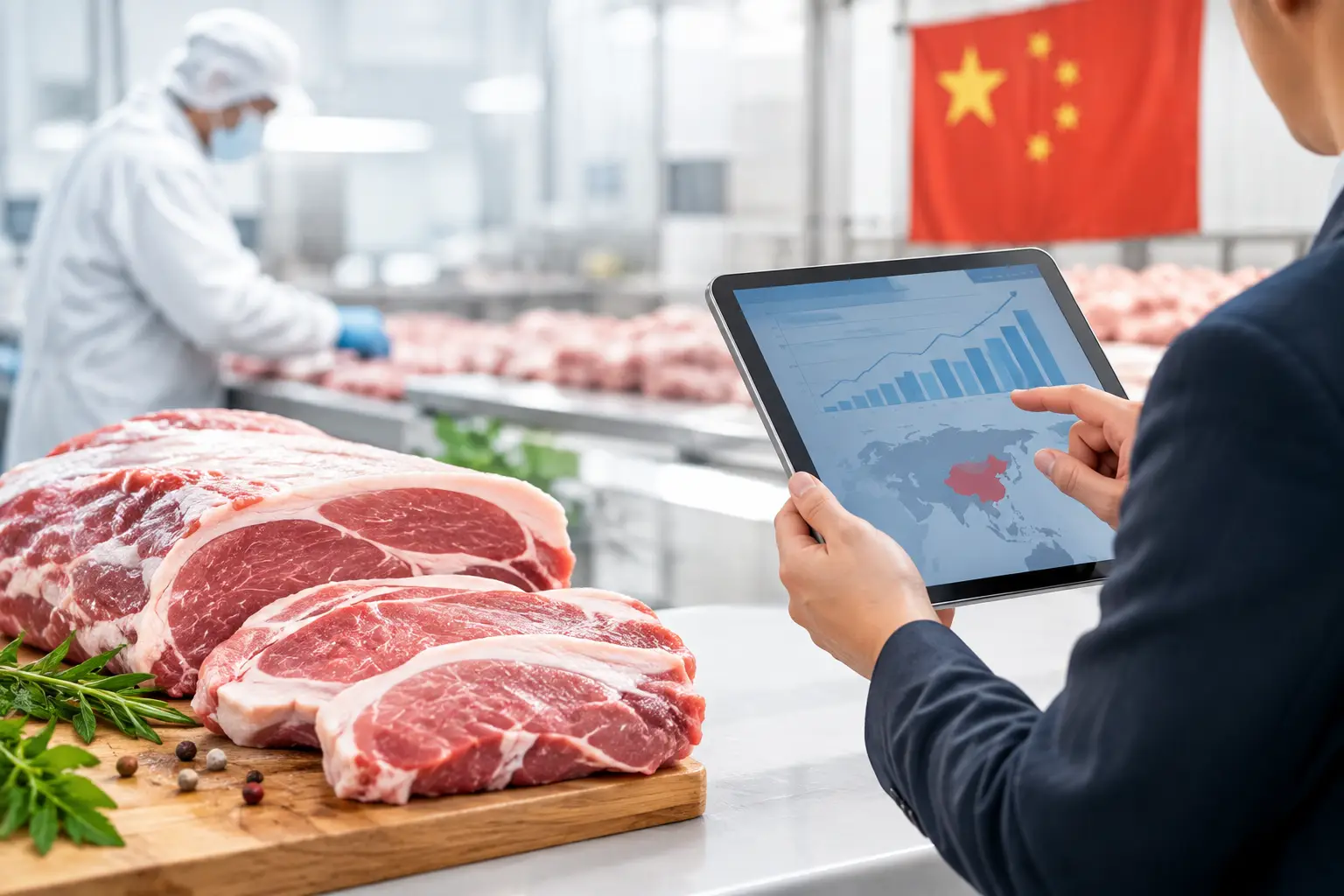
A change in pork consumption in China can quickly affect international raw-material prices, export availability, and purchasing plans far beyond Asia. For importers, distributors, and food manufacturers, China is not simply a large destination market. It is a market whose domestic production cycles, consumption patterns, and regulatory requirements can influence the global pork trade.
For suppliers and buyers working with commercial volumes, the practical question is not whether Chinese demand matters. It is how to interpret demand accurately, align product specifications with the market, and build supply programs that can manage changing conditions.
Why pork consumption in China influences global markets
Pork has a central role in Chinese food consumption. It is used across household cooking, foodservice, processing, and traditional product categories, creating demand for a far wider range of cuts than in many export markets. Carcasses, primal cuts, secondary cuts, fat, skin, bones, and edible offal can all have meaningful commercial value depending on the channel and region.
China also has a substantial domestic pork sector. When local production is stable and profitable, import demand may focus on specific items, price gaps, or products that support processing. When domestic supply is disrupted by disease pressure, weather events, feed-cost changes, or herd-cycle adjustments, the market can seek additional imported volume. These shifts do not always happen evenly across every product category.
That distinction matters in procurement. A buyer sourcing pork shoulders for further processing may face a different market than a buyer importing feet, stomachs, heads, or frozen belly. Country-level import data is useful, but product-level demand and approved establishment access provide a more actionable view.
Demand is broad, but it is not uniform
China should not be treated as a single consumption profile. Demand differs by province, city tier, season, distribution format, and end use. Large urban markets may place greater emphasis on cold-chain reliability, standardized packing, and consistent specification. Regional processors may prioritize particular fat levels, skin-on presentation, bone configuration, or offal selection.
Fresh pork remains highly relevant in many sales channels, while frozen pork has a major role in import trade, food manufacturing, foodservice, and inventory management. Imported frozen pork offers advantages in shipping efficiency, storage life, and purchasing flexibility. It can support industrial users that require dependable supply across long production schedules.
The key is to avoid assuming that a cut with strong demand in one market will have the same value in China. For example, a product that is less favored in a European retail program may be commercially important for Asian distribution or processing. This broader carcass utilization can improve export economics, but only when specifications, documentation, and customer expectations are well aligned.
Product specification is a commercial requirement
Chinese buyers commonly assess more than product name and price. They may require detailed alignment on cut definition, skin status, bone content, fat cover, trimming level, weight range, freezing method, glazing where applicable, packaging format, carton weight, labeling, and shelf-life conditions.
A purchase order should translate these points into a clear technical specification before production begins. Ambiguity on a term such as “belly,” “collar,” or “offal mix” can create avoidable disputes because commercial terminology differs between countries. Photographic references, approved samples, and written tolerances are especially useful for repeat programs.
For importers serving several channels, it can also be effective to separate sourcing by intended use. Retail-ready items, foodservice packs, and industrial raw materials have different presentation and handling needs. A supplier capable of cutting, packing, freezing, and documenting product within an integrated operation can help reduce handoffs and maintain consistency.
The supply cycle matters as much as consumption
Pork markets move in cycles. Breeding decisions, sow inventories, feed prices, slaughter weights, and producer margins affect the volume of domestic pork that reaches the market months later. In China, these cycles can influence imported pork demand, inventory levels, and the relative value of local versus imported product.
Animal health is another material factor. African swine fever demonstrated how disease events can reshape supply expectations and trade flows. The lesson for buyers is not to make purchasing decisions based on headlines alone. It is to maintain scenario planning: assess stock coverage, alternative origins, frozen storage capacity, and contractual flexibility before a supply disruption becomes urgent.
Seasonality should also be considered. Demand can strengthen around major holidays and periods of higher foodservice activity, while cold-storage decisions may change according to domestic supply expectations. These factors can alter the timing of orders even when annual consumption remains relatively stable.
For a procurement manager, this means that a competitive price today should be reviewed against delivery timing, inventory carrying costs, currency exposure, and replacement risk. The lowest unit price is not necessarily the lowest landed cost.
Import access and compliance require close control
China is a demanding food-import market. Market access depends on the exporting country, the approval status of the processing establishment, applicable veterinary arrangements, and current Chinese import requirements. Conditions can change, including product eligibility, inspection focus, labeling rules, and documentation procedures.
Buyers should confirm establishment approval and product eligibility before committing commercial volumes. They should also ensure that contracts reflect the exact product description, production dates, storage conditions, certificate requirements, carton marks, and destination-port instructions. Documentation discrepancies can delay customs clearance and affect cold-chain integrity.
Traceability is equally important. A professional pork supplier should be able to connect each shipment to defined production and batch records, from raw-material control through cutting, packing, storage, and dispatch. This supports customer assurance, recall readiness, and efficient investigation if a quality question arises.
Food safety control cannot be separated from export execution. Microbiological monitoring, residue-control programs, temperature management, hygiene procedures, and laboratory verification all contribute to whether product arrives in condition and with the supporting evidence a buyer needs. For high-volume trade, consistency is often more valuable than a one-time commercial opportunity.
What international buyers should evaluate in a supplier
A China-focused pork sourcing program needs a supplier with more than available product. Buyers should evaluate operational scale, technical capability, export experience, and the ability to maintain agreed specifications over time.
First, review the production model. Integrated slaughter, cutting, cold-chain handling, packaging, and quality control can provide greater visibility across the supply chain than fragmented operations. It also allows product allocation to be coordinated across fresh, frozen, retail, foodservice, and industrial requirements.
Second, assess whether the supplier has the capacity to manage commercial continuity. Large programs depend on reliable planning, sufficient cold storage, disciplined loading procedures, and communication when schedules change. Capacity alone is not enough, but it is an important foundation for predictable supply.
Third, examine quality systems in operational terms. Ask how batches are identified, how nonconformities are managed, who approves product release, and how temperature records are controlled. These details show whether quality management is embedded in daily production rather than treated as a document exercise.
Spanish processors can offer a useful combination of pork-production expertise, established cold-chain infrastructure, and broad carcass utilization. At Litera Meat, the integrated platform processes 160,000 pigs weekly and includes 22 cutting lines, in-house laboratory capability, and 130,000 square meters of facilities. For international buyers, this type of industrial structure supports the consistent preparation of fresh and frozen cuts and offal for commercial export programs, subject to destination-specific approvals and specifications.
Building a more resilient China purchasing program
Purchasing for China works best when supplier selection is paired with disciplined market intelligence. Track domestic hog and pork prices, feed-cost direction, local production signals, cold-storage trends, exchange rates, freight conditions, and changes in import policy. No single indicator explains demand, but together they provide a better basis for planning.
It is also prudent to define alternatives before they are needed. This may include approved substitute cuts, secondary origins, adjusted pack sizes, or a combination of contracted and spot volume. Flexibility is valuable, but it must be designed into specifications and agreements in advance.
The most durable commercial relationships are built around accurate product definitions, realistic lead times, documented controls, and transparent communication. In a market as influential as China, disciplined sourcing is not only a compliance task. It is a way to protect supply continuity and create better value from every part of the pork carcass.