
Latest News
Best Pork Cuts for Manufacturing and Processing

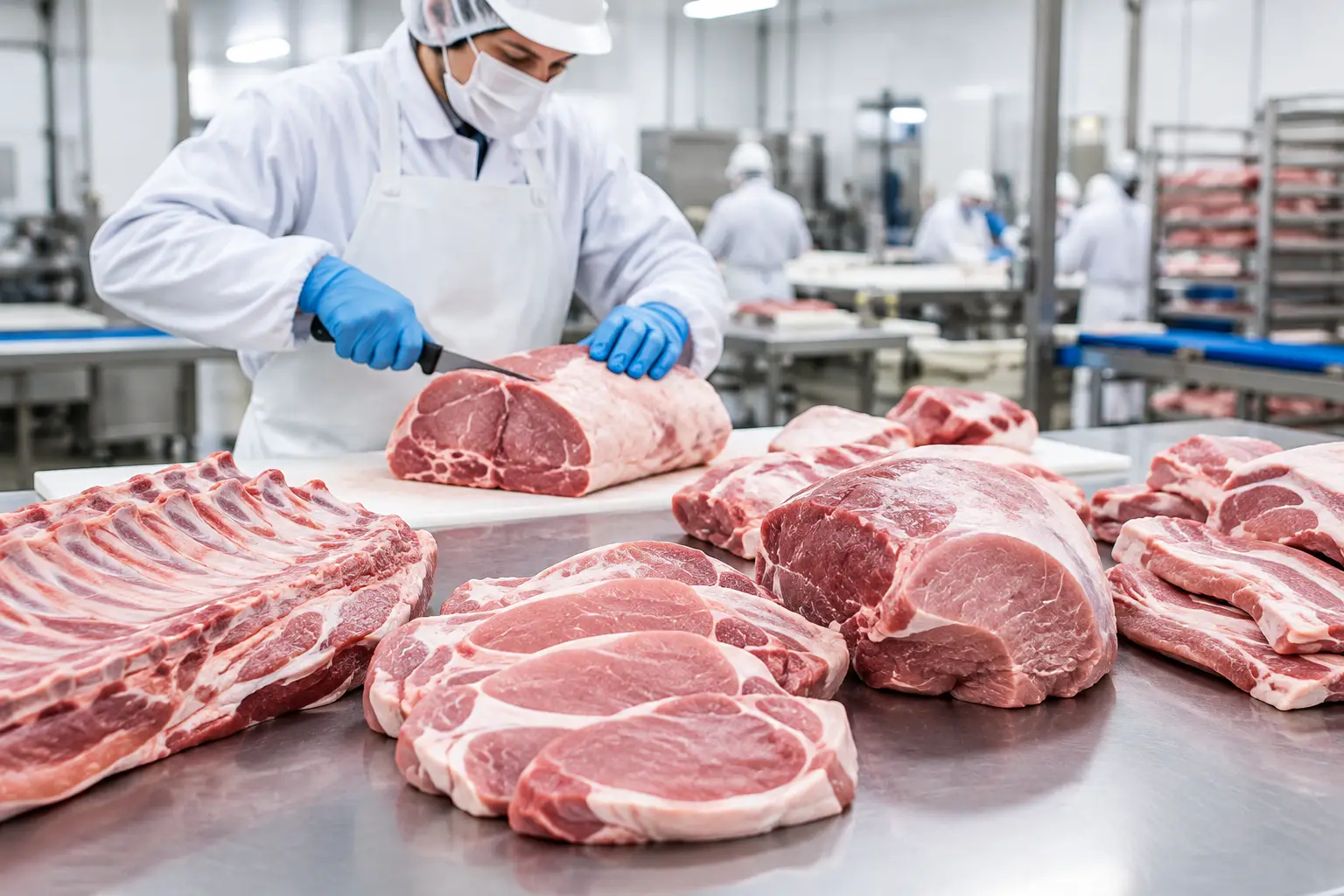
A pork manufacturing program can lose margin long before production begins. The cause is often not the recipe or the line efficiency, but a cut specification that does not match the intended product. Selecting the best pork cuts for manufacturing requires buyers to assess muscle composition, fat level, yield, trim standard, packing format, and consistency across commercial volumes.
For manufacturers, importers, and distributors, there is no single cut that is right for every application. A lean cooked-ham program, a sausage formulation, a bacon line, and a retail portioning operation each require a different balance of meat quality, fat, texture, and cost. The most effective buying decision starts with the final use, then defines the raw-material specification needed to support it.
Selecting the Best Pork Cuts for Manufacturing
The commercial value of a pork cut is determined by how reliably it performs after processing. Buyers should look beyond the initial price per pound or kilogram and consider usable yield, labor required for further trimming, formulation needs, expected cooking loss, and the availability of the cut in the required volume.
A clear specification is central to this process. It should identify whether the product is bone-in or boneless, skin-on or skinless, fresh or frozen, and the required trim level. Weight ranges, fat coverage, packing configuration, labeling, shelf-life expectations, and destination-market documentation should also be agreed before production is scheduled.
For international programs, consistency matters as much as cut selection. A supplier that controls slaughter, cutting, cold-chain handling, packaging, and quality monitoring can provide better continuity between approved samples and ongoing deliveries. Full lot traceability also supports efficient management if a buyer needs to investigate a quality issue, verify origin, or meet customer requirements.
Pork Shoulder for Ground and Further-Processed Products
Shoulder is one of the most versatile raw materials for food manufacturing. It contains a practical combination of lean meat, intramuscular fat, and connective tissue, making it suitable for ground pork, fresh sausage, cooked sausage, patties, meatballs, marinated products, and slow-cooked prepared foods.
Boneless shoulder can provide a useful base for formulations that need flavor and moisture retention without relying entirely on added fat. Its natural variation, however, means buyers should define the desired lean-to-fat ratio rather than purchasing only by anatomical name. A shoulder specification for a coarse-ground sausage will not necessarily suit a finely emulsified product.
Shoulder also requires a decision on labor. A more tightly trimmed cut may have a higher purchase price but reduce in-house trimming and improve production planning. A less-trimmed specification can be appropriate when the buyer has efficient cutting capacity and can use the resulting fat and trimmings internally.
Pork Leg for Lean, High-Yield Manufacturing
Pork leg, commonly supplied as ham or individual leg muscles, is a principal choice for lean cooked products. Its relatively uniform muscle structure and lower fat content make it appropriate for cooked ham, deli meats, sliced products, diced pork, cured products, and portion-controlled retail programs.
For buyers manufacturing whole-muscle products, leg offers strong visual appeal and efficient slicing performance when the raw material is selected and handled correctly. It is also valuable where a formulation requires lean pork as a base ingredient. The trade-off is that very lean material may need support from other ingredients or cuts when moisture retention, texture, or fat content is critical.
The required degree of separation should be established early. Some manufacturers purchase complete boneless legs, while others require specific muscles to achieve a consistent product shape or recipe. This choice affects yield, labor allocation, and availability, particularly when production is planned at scale.
Pork Belly for Bacon, Curing, and Fat Management
Pork belly is the key cut for bacon and many cured, smoked, or sliced pork programs. Its alternating layers of lean and fat create the texture and appearance expected in these products. Belly may also be used in ground formulations where a richer fat contribution is needed.
Belly purchasing is highly specification-driven. Thickness, length, rind condition, lean-to-fat balance, and the degree of squaring or trimming can materially affect downstream performance. A bacon manufacturer may prioritize a uniform slicing profile, while a foodservice buyer may value larger, less-processed pieces for further preparation.
Because fat distribution varies naturally, buyers should use agreed tolerance ranges and representative product approval rather than relying on a general description. This approach reduces disputes and helps align raw material with finished-product expectations.
Pork Loin for Portioning and Whole-Muscle Products
Pork loin is generally selected for higher-value whole-muscle applications rather than bulk ground manufacturing. Boneless loins, rib sections, and tenderloin products are relevant for retail portioning, marinated items, foodservice packs, and prepared meals where appearance and tenderness are central to the offer.
Its lean profile and relatively low connective tissue support clean portion cuts and predictable presentation. At the same time, loin is usually not the most cost-effective choice for products that will be ground, heavily seasoned, or mixed with other ingredients. In those cases, shoulder, leg material, or specified trimmings often provide better value.
For portioning operations, buyers should define weight bands, length, fat cap requirements, and whether the product must be ready for immediate cutting or suitable for aging and further handling. The cold-chain plan matters here: fresh chilled pork may support a short, coordinated production cycle, while frozen loin can offer inventory flexibility for programs with variable demand.
Trimmings, Backfat, and Jowl for Formulated Products
Manufacturing specifications are not limited to primal cuts. Pork trimmings, backfat, and jowl are essential inputs for many value-added products. They allow processors to manage formulation targets more precisely, especially where fat percentage, particle definition, texture, or flavor must remain consistent across batches.
Lean trimmings can support sausage, ground meat, and prepared-food production, while backfat is often used to adjust fat content in controlled formulations. Jowl can contribute a distinctive fat profile for certain cured and processed products. These materials should be purchased with clear requirements for lean content, particle size where relevant, temperature condition, and intended use.
Buyers should not treat trimmings as a secondary purchasing decision. Poorly defined trimming specifications can create variability in yield and recipe performance. Properly specified raw materials, by contrast, can reduce the need for last-minute adjustments on the production floor.
Fresh or Frozen Pork: Match the Format to the Supply Chain
Fresh chilled pork is often preferred when processing is scheduled close to delivery and the buyer seeks direct control over cutting, marinating, or further manufacturing. It can support fast product flow, but it requires disciplined transportation planning, reliable receiving capacity, and close attention to shelf life.
Frozen pork offers different advantages. It can stabilize inventory, support long-distance export programs, and give manufacturers greater flexibility when production schedules change. For ingredients that will be ground, cooked, cured, or incorporated into formulated products, frozen material can be an effective option when freezing, storage, and thawing procedures are managed correctly.
The choice depends on the product, destination, lead time, and the buyer’s cold-storage capacity. A supplier should be able to provide clear product-condition information and maintain documented temperature control throughout the agreed logistics chain.
Build a Specification Around the Final Product
The most useful procurement brief connects every purchase requirement to a manufacturing outcome. Instead of requesting simply boneless shoulder or frozen belly, define what the material must achieve in production. This may include a target fat range, trimming level, weight tolerance, absence or presence of rind, packaging type, and microbiological criteria agreed for the application and market.
For export purchases, the specification should also address the destination country’s import conditions, veterinary documentation, labeling rules, and approved establishment requirements. These details can differ significantly between markets and should be confirmed before loading, not after the product reaches the port.
At Litera Meat, industrial-scale operations integrate slaughter, cutting, cold-chain handling, packaging, quality control, and commercial distribution. With in-house laboratory capability and full-process traceability, this integrated approach supports buyers who require clearly defined fresh and frozen pork cuts, offal, and manufacturing raw materials for international supply programs.
The right pork cut is not simply the most expensive, leanest, or lowest-cost option. It is the cut that meets the finished product’s technical requirements with dependable yield and repeatable supply. A detailed specification, verified through product approval and maintained through transparent quality controls, gives manufacturing teams a stronger basis for consistent production.
One thought on “Best Pork Cuts for Manufacturing and Processing”