
Latest News
How Offal Suppliers Support Reliable Pork Trade

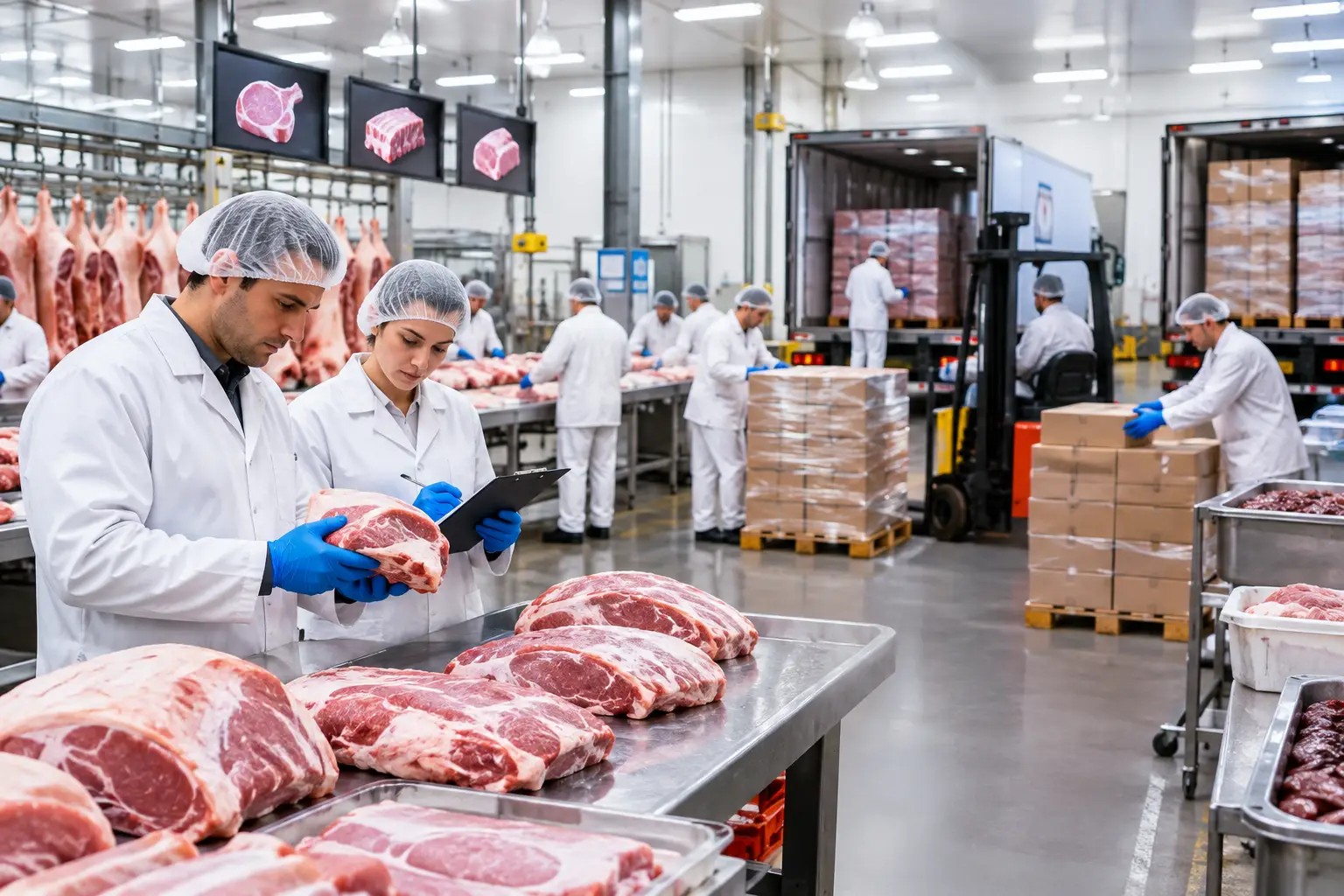
For international buyers, selecting offal suppliers is not simply a question of finding available product. Pork offal requires close control from slaughter through packing, storage, documentation, and shipment. A supplier’s ability to maintain clear specifications and a dependable cold chain can directly affect yield, shelf life, customs clearance, and customer acceptance in the destination market.
Offal is a commercially important part of the pork supply chain. Products such as liver, heart, kidney, tongue, stomach, intestines, feet, ears, and heads serve different food manufacturing, retail, foodservice, and further-processing markets. Demand, preferred presentation, pack weight, and freezing requirements can vary substantially by country. For this reason, sourcing decisions should be based on operational capability as well as price.
What Buyers Should Expect From Offal Suppliers
Reliable offal suppliers begin control at the point of production. Offal is handled soon after slaughter and must move through hygienic separation, inspection, chilling, sorting, packing, and storage processes without unnecessary delay. Each stage matters because these products can have different physical characteristics and shelf-life requirements than standard muscle cuts.
Buyers should ask how the supplier identifies, separates, and handles each product category. A clear specification should state the anatomical item, trimming standard, accepted weight range where relevant, freshness or frozen status, packaging format, labeling requirements, and temperature conditions. Ambiguous product descriptions create avoidable risk, particularly when a distributor is purchasing for several customers or a processor is planning fixed production runs.
The supplier should also be able to align the product with the commercial use. A food manufacturer may need uniform raw material for further processing. A wholesaler may require retail-ready cartons with consistent piece counts. An importer may prioritize container loading plans, frozen shelf life, and documents suited to the destination market. These are different requirements, even when the product name is the same.
Product Availability Must Be Matched to Production Reality
Offal availability is linked to slaughter volumes and the balance of the whole animal. A supplier with integrated slaughter and cutting operations can provide greater visibility over supply planning than a trader sourcing from multiple, changing origins. This does not mean every item is always available in every volume. It does mean the buyer can have a more informed discussion about production schedules, lead times, seasonality, and feasible order quantities.
Procurement teams should share expected demand early, especially for specialized items or fixed monthly programs. Forecasts allow suppliers to plan sorting, packing materials, storage capacity, and shipment consolidation. Short-notice buying may still be possible for some products, but it can limit the choice of specification, pack format, or shipping date.
Quality Control Starts Before Packaging
A sound quality program for pork offal is based on process discipline, not a final visual check alone. Veterinary inspection, hygienic handling, temperature management, and lot identification are essential from the beginning. The objective is to ensure that product condition can be verified and that any issue can be traced quickly to its production batch.
For B2B buyers, traceability should be practical and documentable. Carton labels and shipping records should support identification by production date, lot, product description, and origin. The exact information needed depends on the importing country and customer requirements, but the principle remains consistent: product history should be accessible without uncertainty.
In-house laboratory capability can add further support to a processor’s quality management system. Testing and monitoring help verify that operating procedures are being followed and that the business can respond effectively when a deviation is identified. Buyers should discuss what product controls are applied, how nonconforming goods are managed, and how complaints are investigated.
Quality expectations also need to be agreed before the first shipment. Terms such as clean, well-trimmed, or export grade can mean different things in different markets. A written specification with product photographs, where appropriate, reduces the risk of disagreement. It should also state tolerances for matters such as residual fat, connective tissue, cut presentation, carton condition, glazing for frozen products, and labeling language.
Fresh and Frozen Offal Require Different Planning
Fresh pork offal can offer a valuable route to nearby markets where fast logistics and controlled distribution are available. Its commercial advantage is tied to speed and coordinated temperature management. Loading schedules, transit time, border procedures, and receiving capacity must all be confirmed before dispatch.
Frozen offal generally offers greater flexibility for long-distance export, stock planning, and containerized trade. However, freezing does not remove the need for control. Buyers should define freezing method, target product temperature, carton configuration, palletization, storage conditions, and the required remaining shelf life at arrival. Maintaining the frozen chain through port handling and inland transportation is as important as the supplier’s dispatch condition.
The correct choice depends on destination, intended use, order volume, and the buyer’s own distribution infrastructure. A supplier should be able to discuss these trade-offs directly instead of proposing one format for every market.
Documentation Is Part of the Product
In international pork trade, a shipment is only commercially useful when its documentation is accurate, complete, and aligned with destination requirements. Health certificates, commercial invoices, packing lists, origin records, labels, and shipping documents must correspond to the actual product and the approved market-access conditions.
Requirements differ between countries and can change over time. Importers should therefore confirm current rules with their competent authorities and agree document needs before production and loading. A capable exporter will coordinate its commercial, quality, logistics, and documentation teams so that the shipment information remains consistent from order confirmation to arrival.
This coordination is especially important for mixed loads. When cartons contain multiple offal items, every line on the packing list must match the labels, net weights, and container loading records. Small discrepancies can delay clearance and create costs that outweigh a favorable purchase price.
Evaluating an Offal Supplier Beyond Price
Price remains a central procurement factor, but it should be evaluated alongside product condition, supply continuity, technical communication, and export execution. The lowest quoted price can become expensive if the product arrives outside specification, lacks required documents, or cannot be traced efficiently.
During supplier evaluation, buyers should examine the full operating model. Questions worth addressing include whether slaughter, processing, cold storage, and packing are managed within one controlled platform; how the supplier plans commercial volumes; what traceability information is available; and how it manages deviations. It is also useful to review experience with the target destination and the supplier’s ability to communicate clearly across quality, sales, and logistics teams.
Industrial scale can be an advantage when it is supported by disciplined process control. Litera Meat, headquartered in Binéfar, Spain, operates an integrated pork-processing platform covering slaughter, cutting, cold-chain handling, packaging, quality control, and commercial distribution. With 22 cutting lines and capacity to process 160,000 pigs weekly, its model illustrates why integrated operations matter to buyers seeking planned volumes and consistent handling across the supply chain.
Build the Relationship Around Specifications
The strongest supplier relationships are built before the first container is loaded. Buyers should provide a precise product brief, expected volumes, delivery windows, destination requirements, packaging expectations, and a clear process for approving samples or first shipments. Suppliers, in turn, should communicate realistic lead times, feasible specifications, and any limitations early.
Offal procurement works best when commercial and technical teams treat specification control as a shared responsibility. A well-defined order gives both sides a practical basis for managing quality, logistics, and future growth in demanding international pork markets.