

Latest News
Why Pork Shipments Fail and How Buyers Prevent It

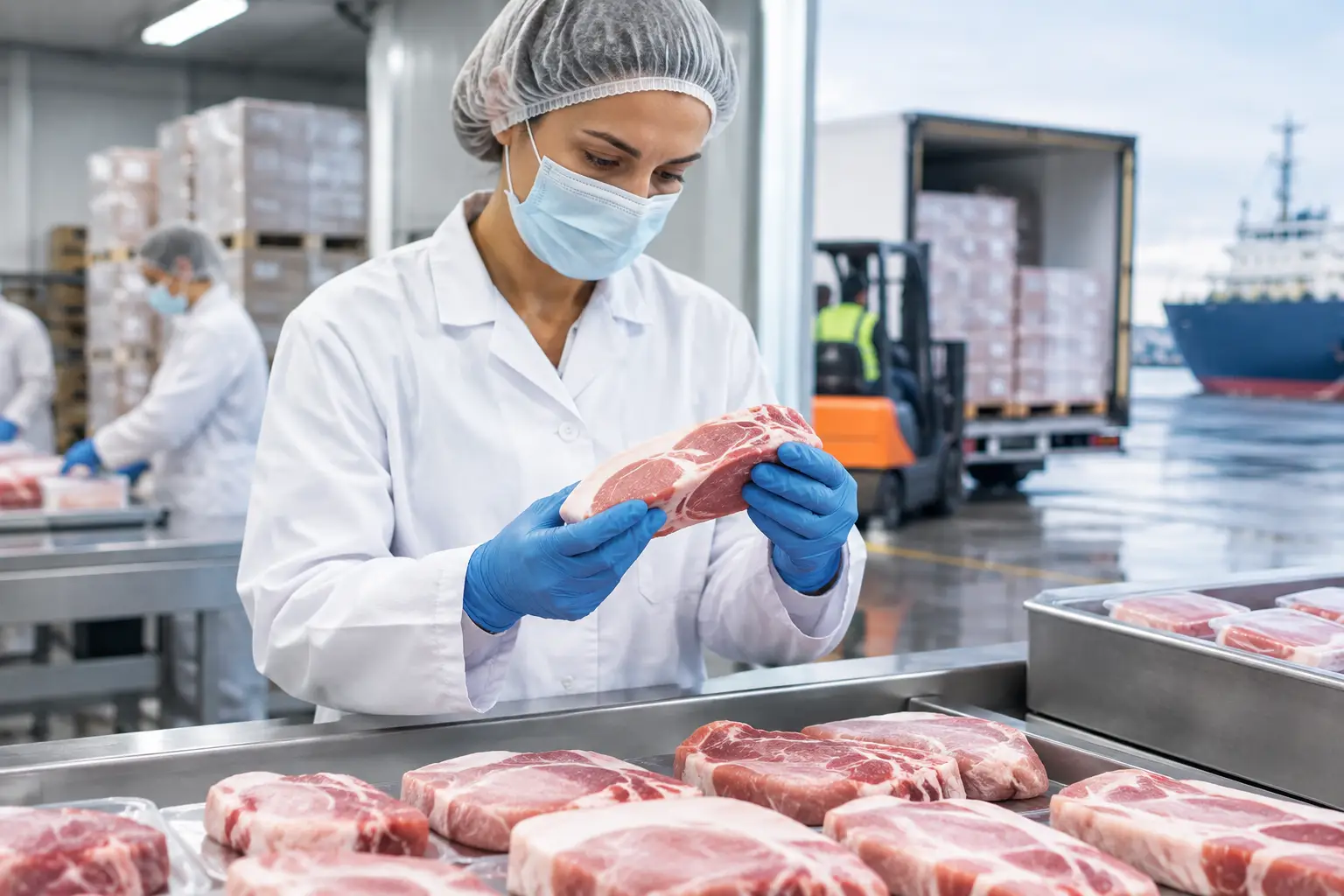
A pork shipment can meet specification when it leaves the plant and still fail before it reaches the buyer. That is why pork shipments fail: not usually because of one dramatic event, but because a small control gap in temperature, documentation, loading, routing, or communication becomes costly across a long international supply chain.
For importers, distributors, and food manufacturers, the commercial impact extends beyond a rejected container. A failed shipment can interrupt production, create retail shortages, trigger demurrage charges, damage customer relationships, and complicate regulatory reporting. Managing this risk starts with understanding where failures occur and what a capable supplier and buyer must control together.
Why Pork Shipments Fail in International Trade
Cold-chain deviations compromise product condition
Temperature control is the most visible requirement, but it is not limited to setting a reefer container at the correct temperature. Product must enter the cold chain at the required core temperature, remain protected during staging and loading, and travel in equipment that can maintain the agreed set point throughout the route.
Failures can occur when a container is not pre-cooled, doors remain open too long during loading, airflow is blocked by incorrect pallet placement, or the refrigeration unit is disconnected during terminal handling. For chilled pork, even a short disruption can reduce remaining shelf life. For frozen product, temperature abuse may lead to surface dehydration, ice crystal formation, package damage, or quality concerns at destination.
Buyers should distinguish between a reefer set point and actual product performance. A container temperature record is useful, but it should be assessed alongside loading conditions, product temperature at dispatch, seal integrity, and any alerts recorded during transport. The appropriate monitoring approach depends on the product format, agreed shelf-life model, voyage duration, and destination inspection requirements.
Documentation does not match the cargo or destination rules
Many shipments fail at the border, not because the meat is unsafe, but because documents are incomplete, inconsistent, or issued for the wrong market requirement. Export health certificates, veterinary declarations, commercial invoices, packing lists, bills of lading, certificates of origin, labeling data, and import permits must align with one another and with the destination country’s rules.
A minor mismatch in product description, establishment approval number, net weight, production date, consignee name, or tariff classification can place a container on hold. In some markets, documentation must also follow a required format, language, validation process, or pre-notification procedure. Requirements may change after a supplier has planned production, particularly where animal-health measures, market-access conditions, or local import controls are updated.
The practical discipline is to confirm destination requirements before production is allocated and documents are prepared. Buyers should not assume that paperwork accepted for one port or product category will be accepted for another. A shipment of frozen offal, for example, may have different documentary and inspection conditions from chilled primal cuts.
Product specification is unclear or poorly controlled
Commercial disputes often begin with an imprecise specification. Terms such as “trimmed,” “skin-on,” “standard cut,” or “export grade” can mean different things to different businesses. Without a written agreement, the buyer may receive a technically compliant product that does not suit its processing line, retail format, customer expectations, or yield target.
Specifications should define the cut, anatomical presentation, trim level, weight range, bone status, fat tolerance, packaging format, labeling, storage temperature, pallet configuration, and permitted production dates. For offal, they should also define cleaning, sizing, packing weight, and intended use. Photos and approved reference samples can help, but they should support, not replace, measurable criteria.
Supplier-side controls matter equally. A processor must be able to maintain lot identification from raw material through cutting, packing, cold storage, and dispatch. Full-process traceability allows a shipment to be verified quickly if a buyer raises a question about a carton, pallet, or production lot.
Port delays create shelf-life and cost pressure
Port congestion, vessel rollovers, customs examinations, labor disruption, missed transshipments, and inland transport shortages can extend a planned journey by days or weeks. Frozen cargo generally offers more flexibility, but delays still create storage costs, schedule uncertainty, and potential reefer-power risk. Chilled pork is particularly exposed because transport time uses part of its available shelf life.
A buyer should assess route reliability rather than focusing only on freight price. The lowest-cost route may involve extra transshipment points, tighter connection windows, or terminals with limited reefer capacity. Direct services can reduce handling risk, while some indirect services may be commercially necessary for certain destinations. The correct choice depends on product shelf life, order urgency, volume, port infrastructure, and the buyer’s ability to receive cargo promptly.
Packaging and loading are treated as secondary details
Packaging protects product quality and enables efficient handling. If vacuum bags are damaged, cartons are not suitable for the humidity and handling conditions of ocean freight, or pallet stability is weak, the shipment may arrive with contamination concerns, damaged labels, collapsed cartons, or refused pallets.
Loading must also allow proper air circulation in reefer equipment. Cargo should be stowed according to the container’s load line and airflow design, with appropriate clearance and secure pallet placement. Overloading a container or placing product in a way that obstructs airflow can create localized temperature variation even when the refrigeration unit appears to operate normally.
Supplier Controls That Reduce Shipment Risk
The strongest prevention begins before the container arrives at the plant. A reliable export process connects production planning, quality assurance, commercial teams, logistics providers, documentation specialists, and the buyer’s import operation. Each party needs a clear handover point and a named contact able to make decisions when an issue arises.
At industrial scale, consistency depends on controlled systems rather than individual effort alone. Litera Meat operates an integrated pork-processing platform in Binéfar, Spain, covering slaughter, cutting, cold-chain handling, packaging, quality control, and commercial distribution. This type of integrated structure supports traceability and helps reduce the handoffs that can create uncertainty between processing and export dispatch.
Quality controls should include verification of product and packaging condition before loading, confirmation of pallet and carton counts, seal application, reefer settings, and dispatch documentation. For higher-risk or longer routes, a documented pre-shipment checklist and independent temperature monitoring can provide useful evidence if a claim later arises.
The supplier should also be transparent about what it can and cannot control. A processor controls product preparation, packing, cold storage, loading, and export documentation within its scope. It may coordinate freight, but shipping lines, terminals, customs authorities, and destination-side transport providers introduce external variables. Clear allocation of responsibility in the sales contract prevents disputes when delays occur.
What Buyers Should Confirm Before Placing an Order
A procurement decision should evaluate more than price per kilogram. Before confirming a pork order, buyers should establish whether the supplier is approved for the destination market and for the specific product category requested. They should confirm the agreed specification, labeling rules, production and shelf-life expectations, packing format, Incoterms, shipment schedule, port pair, and document package.
It is equally useful to agree how exceptions will be managed. If a vessel is rolled, who informs whom and how quickly? If destination authorities request additional information, who prepares it? If a temperature alert occurs, what evidence will be reviewed before the cargo is released or a claim is considered? These discussions are easier before goods are loaded than after a container is held at port.
For repeat programs, buyers can use performance data to improve reliability. Reviewing transit times, document-error rates, temperature records, inspection outcomes, and claim causes reveals whether a problem is isolated or systemic. This approach also helps identify when a route, packaging format, or shipping schedule should change.
Traceability Makes Problems Containable
No supply chain can eliminate every disruption. Weather events, port closures, regulatory changes, and inspections may occur despite careful planning. The difference between a manageable incident and a major loss is often the speed and quality of available information.
Traceability enables the supplier and buyer to identify the affected lot, confirm its production and dispatch history, assess related inventory, and provide evidence to the relevant authorities or insurers. It also supports targeted action instead of broad, unnecessary holds. For international buyers, this is a practical purchasing requirement, not simply a quality-system statement.
The most reliable pork shipments are built through shared preparation: a precise product specification, verified market access, disciplined cold-chain practices, accurate documentation, and timely communication on both sides. When these controls are agreed before dispatch, buyers are in a far stronger position to protect product quality, continuity of supply, and customer confidence.