
Latest News
Meat Procurement for Reliable Pork Supply

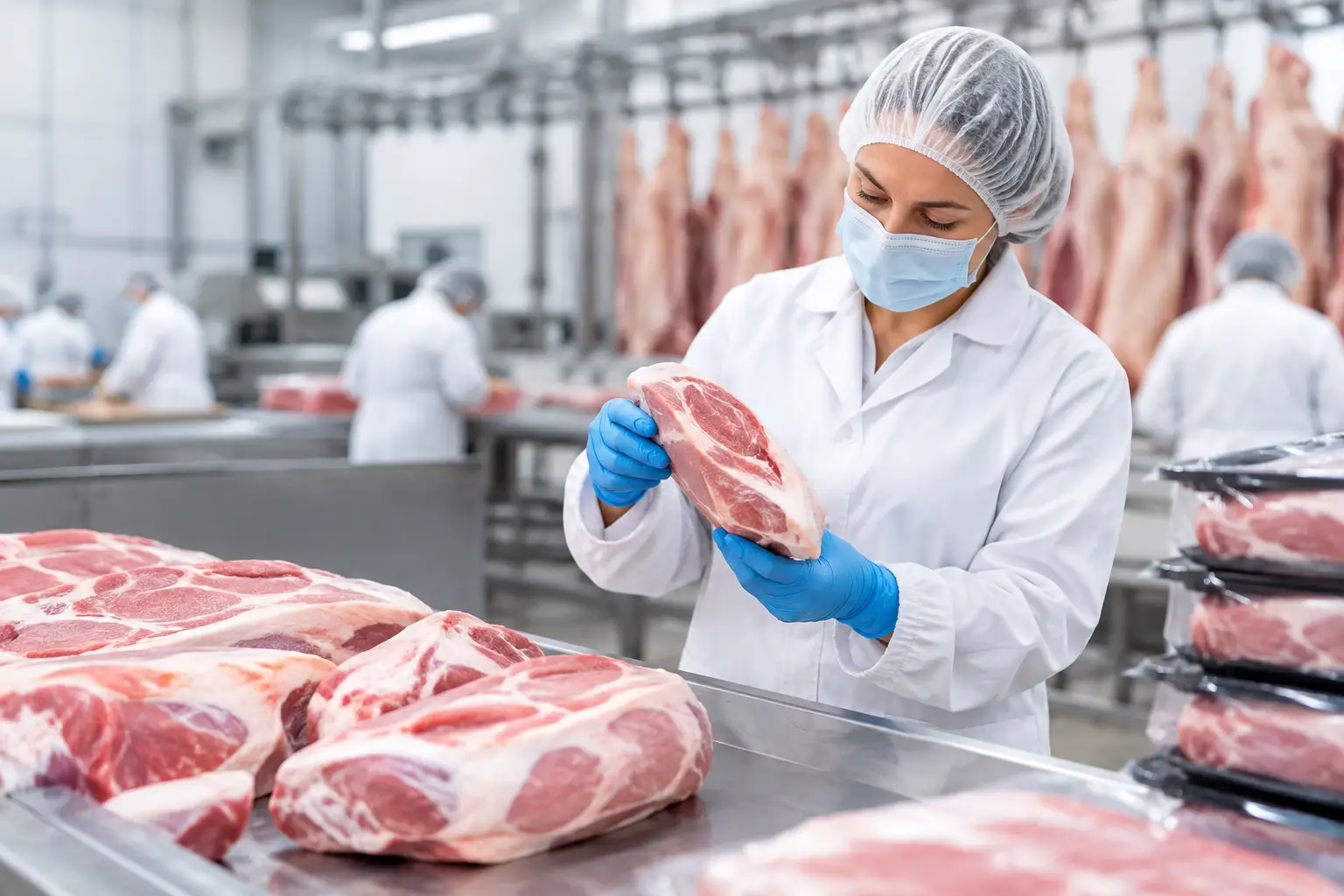
A pork purchase order can look straightforward until product arrives with a different trim, temperature history, label format, or shelf-life profile than the buyer expected. Effective meat procurement prevents these failures before production begins. It connects commercial requirements with product specifications, food safety controls, logistics planning, and the export documentation required at destination.
For importers, distributors, food manufacturers, and retail purchasing teams, the objective is not simply to secure a competitive price per kilogram. The objective is to establish a repeatable supply program that delivers the required pork cuts, offal, packaging, condition, and documentation at the agreed volume and schedule.
Start Meat Procurement With a Clear Product Brief
The most useful procurement documents begin with the intended use of the product. A boneless shoulder for further processing, for example, may require a different trim standard, fat range, pack weight, and storage condition than a shoulder supplied to a wholesale distributor. The same applies to loins, bellies, hams, ribs, heads, feet, and edible offal.
A complete product brief should define the cut and anatomical description, fresh or frozen condition, required trim, target weight range, packaging format, labeling language, pallet configuration, and minimum residual shelf life on arrival. It should also state any destination-specific veterinary, health, or import requirements. Leaving these details to interpretation can create costly differences between an approved sample and commercial production.
Buyers should also clarify tolerances. Weight ranges, fat cover, carton weights, and delivery windows are rarely absolute in industrial production. The question is whether the acceptable variation is documented, measured, and commercially understood by both parties. Clear tolerances allow the supplier to plan efficiently and allow the buyer to control yield and production costs.
Evaluate Food Safety as an Operating System
Food safety should be assessed as a daily operating discipline, not as a document supplied during onboarding. A reliable pork supplier needs controls that cover animal reception, slaughter, cutting, packing, chilled and frozen storage, loading, and transport. The strength of the system is reflected in how consistently each stage is monitored and recorded.
Procurement teams should ask how product identification is maintained from incoming animals through to finished cartons. They should understand how non-conforming product is segregated, how temperature deviations are handled, and how the supplier investigates complaints. Laboratory capability also matters because microbiological and chemical monitoring supports verification of the production process rather than relying on visual inspection alone.
For international trade, the supplier’s approvals for the destination market are equally relevant. Import conditions can differ by country and may change over time. The required health certificate, plant approval, labeling declaration, residue controls, and document format should be confirmed before production is scheduled, not when the container is ready to depart.
Traceability Must Work at Commercial Speed
Traceability has two practical purposes: protecting food safety and protecting business continuity. If a quality issue is identified, the buyer and supplier must be able to identify affected production quickly, isolate relevant inventory, and determine the appropriate response. A traceability system is most valuable when it works across high production volumes without delaying communication.
Ask suppliers to explain the level at which they trace finished product. Depending on the product and market, this may include production date, shift, batch, cutting line, packaging date, and dispatch details. The information should align with the labels and documents received by the buyer.
Traceability also supports claims management. When a buyer reports a concern, a useful response includes the product code, lot reference, photographs where relevant, temperature information, loading records, and a clear corrective-action process. A vague assurance that the product was checked is not enough for a distributor or manufacturer managing downstream customers.
Match Supplier Capacity to Your Supply Pattern
Capacity is not only about the maximum number of tons a facility can produce. It is about whether the supplier can provide the required mix of cuts at the required frequency while maintaining product consistency. Buyers sourcing multiple items should discuss the relationship between the requested cuts and the overall carcass balance. This is especially relevant for specialized cuts, specific weight bands, and offal programs.
A processor with integrated slaughter, cutting, cold-chain handling, packaging, quality control, and commercial distribution has greater control over the journey from raw material to dispatch. That can reduce handovers and make planning more direct. However, buyers should still confirm production lead times, order minimums, allocation procedures, and the process for managing changes in demand.
Litera Meat operates an integrated pork-processing platform in Binéfar, Spain, with 22 cutting lines and the capacity to process 160,000 pigs weekly. For buyers evaluating industrial-scale supply, indicators of this kind are meaningful because they show whether a processor has the operational base to support recurring commercial volumes across a broad pork range.
Treat the Cold Chain as Part of the Product
Fresh pork is highly dependent on time and temperature. The procurement specification should therefore define the product temperature at dispatch, the transport mode, expected transit time, receiving temperature requirements, and the process for recording deviations. The cold chain does not begin at the port or end at the warehouse door. It is a controlled sequence that begins in processing and continues through loading, transport, customs clearance, and final receipt.
Frozen pork requires the same discipline, with different risks. Buyers should confirm freezing methods, storage conditions, container settings, and procedures for avoiding temperature abuse during loading or transshipment. Carton integrity, pallet stability, and airflow within the container can affect arrival condition, particularly on long international routes.
Shelf life should be evaluated against the real logistics route, not only the planned sailing time. Port congestion, inspection holds, customs processes, and inland transport can consume several days. Procurement managers should build an appropriate buffer into the required shelf-life specification for fresh product and confirm documentation readiness well before shipment.
Compare Total Landed Cost, Not Only the Offer Price
The lowest quoted price does not always produce the lowest cost in use. Procurement decisions should consider yield, trim consistency, carton weight accuracy, rejection risk, freight, insurance, duties, inspection costs, and working-capital requirements. A product with better consistency may reduce labor, waste, and production variation at the buyer’s facility.
Commercial terms also need to reflect the reality of the supply chain. Agree on the Incoterm, payment terms, currency exposure, loading point, claim period, and responsibility for export documentation. These details are particularly significant for buyers importing from Europe into Asian markets, where documentation and transit planning can determine whether a shipment clears efficiently.
Price formulas can be useful for long-term programs when market conditions are volatile. Whether pricing is fixed, indexed, or reviewed periodically depends on the product, duration, and volume commitment. The key is transparency: both parties should understand which factors may change the price and when adjustments take effect.
Build Supplier Relationships Around Measurable Performance
Once supply begins, procurement should move from qualification to performance management. Regular reviews can cover delivery accuracy, fill rate, temperature compliance, product claims, document accuracy, response time, and forecast quality. A small set of agreed measures is more useful than a large scorecard that no one uses.
Forecast sharing is especially valuable for pork programs. It helps the processor plan slaughter, cutting, packaging materials, cold storage, and shipping capacity. In return, the buyer should expect early communication about potential allocation pressures, production constraints, or regulatory changes that could affect supply.
Responsible sourcing is also increasingly part of commercial assessment. Buyers may need information on animal welfare practices, environmental management, renewable-energy initiatives, and workforce development. These subjects should be addressed with operational evidence and realistic commitments, rather than broad statements that cannot be verified.
Strong pork procurement is built before the first container or truck leaves the facility. When specifications are precise, controls are visible, and communication is timely, buyers can focus less on correcting supply problems and more on serving their own customers with confidence.