
Latest News
Meat Quality Assurance Guide for Pork Buyers

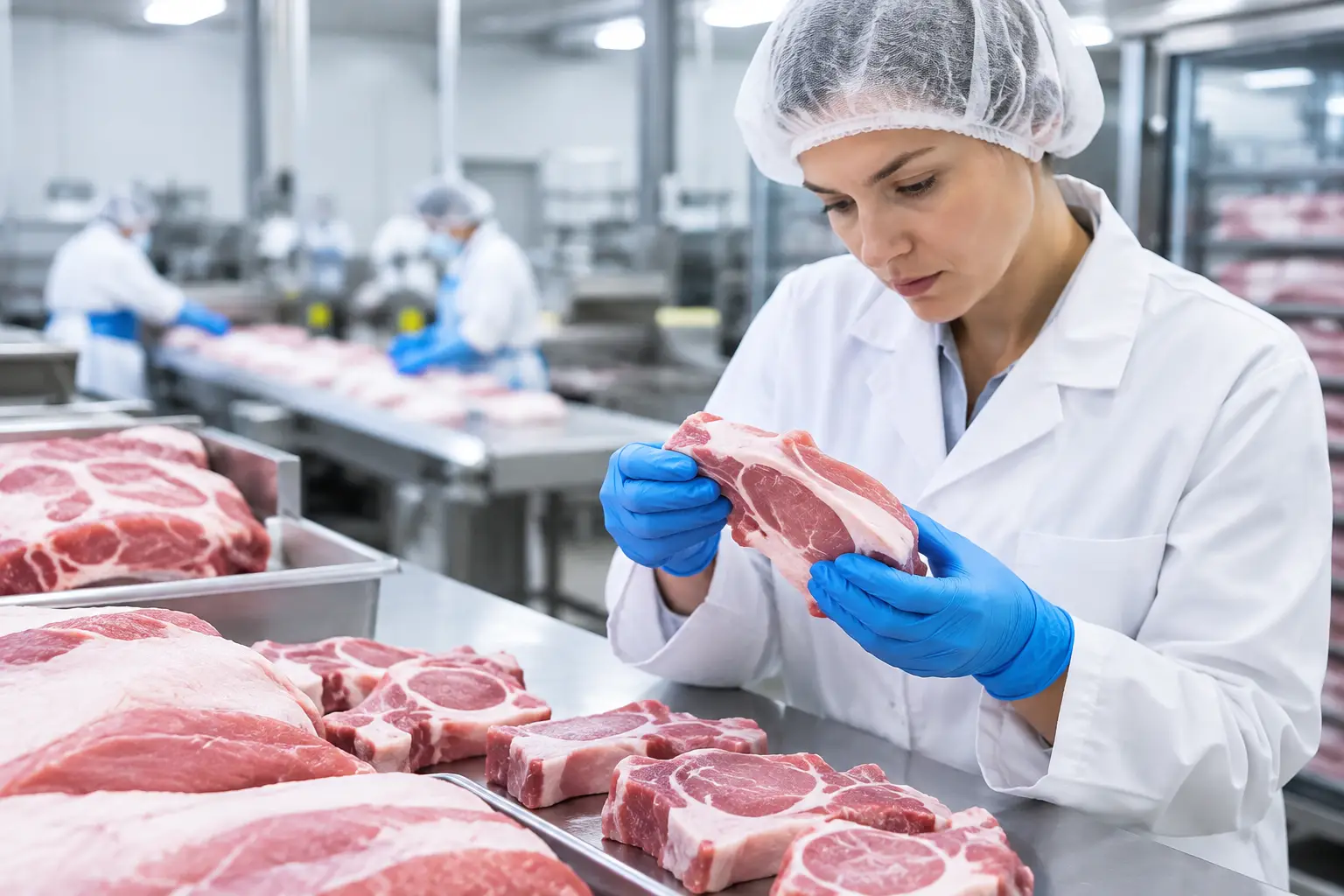
A container of pork can meet the agreed cut description and still create a costly problem for the buyer. Temperature history may be incomplete, lot identification may not match shipping documents, or the product may arrive with a shelf-life window too short for the intended distribution route. A practical meat quality assurance guide therefore looks beyond appearance at loading. It assesses the controls that protect product integrity from livestock reception through processing, storage, transport, and delivery.
For importers, distributors, food manufacturers, and retail procurement teams, quality assurance is a purchasing discipline as much as a production function. The objective is not simply to reject defective product. It is to establish measurable requirements, verify that the supplier can consistently meet them, and create records that allow issues to be investigated quickly when they occur.
What Quality Assurance Means in Commercial Pork Supply
Quality assurance is the planned system used to prevent food-safety, quality, legality, and specification failures. Quality control, by contrast, is the inspection and testing activity used to confirm whether a product or process meets established limits. Both are necessary, but they do different jobs.
In pork procurement, assurance begins before production. The buyer and supplier need to agree on the product specification, approved labeling, packaging format, temperature condition, shelf life, delivery terms, and documentation. The supplier then applies controlled procedures throughout production. Quality control verifies critical points through inspections, measurements, sampling, and laboratory analysis where appropriate.
This distinction matters for international trade. A final visual check cannot correct an earlier break in the cold chain or recreate missing traceability. Buyers should evaluate the system behind the shipment, not only the shipment itself.
Build a Meat Quality Assurance Guide Around the Specification
The written specification is the operational reference for every commercial lot. Vague descriptions such as “fresh pork shoulder” leave too much room for different interpretations across markets, cutting rooms, and distribution channels. A useful specification translates the buyer’s commercial needs into objective, verifiable requirements.
It should identify the cut precisely, including anatomical definition, trim level, bone-in or boneless status, target weight range, and acceptable tolerance. It should also state whether the product is chilled, frozen, or intended for further processing. For frozen items, specify the freezing method if relevant to the application, along with storage and delivery temperature requirements.
Packaging requirements deserve the same precision. Confirm the primary pack type, vacuum or modified-atmosphere format where applicable, pack weight, number of units per carton, carton markings, pallet configuration, and label language. For food manufacturers, requirements may also include fat limits, connective tissue expectations, particle size for prepared raw material, or other parameters linked to the finished product.
Shelf life should be discussed in practical distribution terms. The key question is not only the total shelf life at dispatch, but the remaining life required on arrival at the destination. This depends on transit time, customs clearance, local warehousing, and the customer’s onward delivery schedule. A specification should set a minimum remaining shelf life at delivery and define how it is calculated.
Assess the Supplier’s Food-Safety Control System
A supplier assessment should focus on whether food-safety risks are identified, controlled, monitored, and documented. Buyers will commonly review the facility’s food-safety management system, hazard analysis, sanitation programs, allergen controls where relevant, pest management, foreign-material prevention, and microbiological monitoring approach.
The level of detail needed depends on the product and market. Fresh chilled pork shipped over a long route requires particularly disciplined temperature management and dispatch planning. Frozen pork may offer greater logistical flexibility, but it still depends on stable storage temperatures, package integrity, and controls that prevent unauthorized thawing and refreezing.
Ask how deviations are handled. A capable supplier should be able to explain who has authority to place product on hold, how the affected lot is identified, what investigation is performed, and how release or disposal decisions are recorded. Corrective action is more meaningful when it addresses the cause of a failure rather than only replacing the affected shipment.
Laboratory capability also has value when it is connected to a clear sampling plan and release process. In-house scientific laboratory resources can support timely verification, trend analysis, and investigation. However, buyers should understand which tests are performed, how samples are selected, and how results influence production decisions.
Traceability Must Work in Both Directions
Traceability is tested by speed and accuracy, not by the existence of a lot code alone. A supplier should be able to trace a finished carton backward to the relevant production records and forward to the customer, shipment, and destination. The traceability chain may include livestock intake, slaughter date, cutting date, packaging date, ingredients or packaging materials where applicable, storage location, and dispatch records.
For buyers, the practical requirement is clear: each pallet, carton, and pack should carry identification that matches commercial and health documentation. Lot coding must remain readable through storage and handling. When product is repacked or distributed in smaller quantities, the buyer’s own system must preserve that connection.
Traceability becomes especially valuable during a quality claim or recall scenario. Clear records reduce the quantity of product that must be isolated and help both parties communicate accurately with authorities, customers, and logistics providers. Procurement teams should ask suppliers how often they test traceability procedures and how they measure the time needed to account for an affected lot.
Verify the Cold Chain, Not Just the Delivery Temperature
A satisfactory temperature reading at unloading does not confirm that the product remained within the agreed range throughout the journey. A meaningful cold-chain review covers pre-cooling, cold storage, loading practices, vehicle or container condition, temperature recording, transit management, and receiving checks.
For chilled product, loading discipline is particularly significant. Product should enter transport at the specified temperature, loading should be organized to limit exposure, and the transport unit should be pre-cooled. Temperature records should be retained and available in the event of a claim. If a route includes port handling, transshipment, or extended customs procedures, contingency planning becomes part of quality assurance.
At receipt, buyers should inspect seals, vehicle condition, pallet stability, carton condition, labeling, temperature evidence, and any signs of leakage or damage. These checks should be recorded consistently. A rejection decision based on informal observations is difficult to defend; a documented receiving procedure protects both buyer and supplier.
Align Quality Documentation With Import Requirements
International pork trade requires more than a commercial invoice and packing list. Required documents vary by destination and can include veterinary health certificates, certificates of origin, product labels, export approvals, and market-specific declarations. The applicable requirements may change with legislation, animal-health conditions, or customer policies.
The supplier’s export team and the buyer’s import compliance team should confirm documentation before production or dispatch, not after the container is at the port. This is particularly relevant when a product is supplied to demanding markets in Asia or to customers with detailed retailer or manufacturing specifications.
Document control should include version management. If a label, carton mark, or certificate wording changes, the buyer must know which production dates and lots are affected. Small administrative inconsistencies can delay clearance even when the product itself meets all physical and food-safety requirements.
Use Audits and Performance Data to Manage Supplier Risk
A supplier audit gives buyers direct visibility of how procedures operate in practice. It should examine the flow of product and information: receiving, processing, hygiene zoning, packaging, labeling, cold storage, dispatch, laboratory support, nonconformance handling, and traceability. The purpose is not to create a long list of observations. It is to determine whether control measures are proportionate to the risks of the product and market.
For ongoing supply, performance data is equally useful. Review complaint rates, claim categories, response times, delivery conformity, temperature deviations, document accuracy, and corrective-action closure. Trends reveal more than isolated incidents. A repeated labeling issue, for example, may signal a weak handover between production planning and dispatch rather than a one-time operator error.
Scale can support consistency when it is matched by controlled processes. Litera Meat operates an integrated Spanish pork-processing platform covering slaughter, cutting, cold-chain handling, packaging, quality control, and commercial distribution. For buyers, the relevant question is how such integration supports lot control, production planning, and the consistent execution of agreed specifications across commercial volumes.
Make Quality Assurance a Shared Operating Process
The strongest supplier relationships treat quality assurance as a routine exchange of information, not an activity reserved for claims. Buyers should communicate forecast changes, product use, labeling requirements, destination conditions, and expected delivery windows early. Suppliers should communicate production constraints, specification questions, deviations, and document requirements with the same discipline.
Not every purchase requires the same level of control. A standard frozen cut for a stable distribution program may rely on an established specification and periodic performance review. A new chilled program, a complex retail pack, or a market with strict import conditions needs closer validation before launch. The right level of assurance depends on product risk, route complexity, intended use, and the cost of failure.
A well-managed pork supply program is built on evidence: a precise specification, controlled production, traceable lots, documented cold-chain performance, and prompt corrective action when expectations are not met. When these elements are agreed before the first shipment, quality becomes easier to verify and far easier to protect across borders.