
Latest News
Animal Welfare Practices in Pork for Buyers

For international pork buyers, animal welfare is not a separate corporate statement. It is a practical sourcing criterion that affects supplier approval, operational continuity, product consistency, regulatory confidence, and reputation. Strong animal welfare practices in pork are built into daily decisions from farm reception through transport, lairage, handling, and processing.
A supplier’s welfare program should therefore be assessed as part of its wider food-safety and quality-management system. The relevant question is not simply whether a policy exists, but how clearly procedures are defined, monitored, documented, and corrected when performance falls outside the required standard.
Why animal welfare matters in commercial pork supply
Animal welfare has direct operational relevance in a high-volume pork supply chain. Poor handling, unsuitable loading conditions, excessive waiting times, or ineffective equipment can increase animal stress and create avoidable variation before processing. For procurement teams, this can affect product specifications, supply reliability, audit outcomes, and confidence in a supplier’s overall process control.
Welfare performance also matters because pork is traded across markets with different legal requirements, customer specifications, and retailer expectations. Importers and food manufacturers need partners that can work consistently within demanding international food-safety standards while providing the documentation needed for customer audits and market-access reviews.
The most credible approach is integrated rather than isolated. Animal care should connect with staff training, transport coordination, maintenance, hygiene, traceability, quality assurance, and management review. A facility may have modern equipment, for example, but its welfare outcomes still depend on correct use, preventive maintenance, and trained personnel who can recognize abnormal animal behavior.
Animal welfare practices in pork processing
Animal welfare begins before animals arrive at the processing site. While the processor may not control every farm-level decision, it should establish clear reception requirements and work with approved supply-chain partners. These requirements commonly address fitness for transport, vehicle suitability, loading density, journey planning, contingency procedures, and the handling of animals requiring special attention.
Controlled transport and reception
Transport is a critical transfer point. Animals should be moved using procedures that minimize unnecessary stress, with appropriate vehicle conditions and handling methods. On arrival, efficient unloading is essential. Congestion, noise, abrupt movement, poor footing, and long delays can all compromise welfare and disrupt the flow of operations.
A well-managed reception area uses trained staff, suitable ramps and passageways, and operating procedures designed around calm movement. The aim is not speed at any cost. At industrial scale, predictable and orderly movement is generally more effective than rushed handling, because it supports both welfare and process stability.
Buyers should ask how a supplier records transport arrivals, evaluates animals at reception, and manages exceptions. A useful answer will explain responsibilities, escalation procedures, and the records available for review. Broad statements of commitment are less useful than evidence of routine control.
Lairage conditions and daily observation
Lairage provides animals with a controlled environment before processing. Its management includes space, ventilation, water availability, temperature conditions, cleanliness, lighting, and separation where needed. The appropriate arrangements can vary according to weather, transport duration, animal condition, and the planned production schedule.
Daily observation is central to this process. Personnel should be able to identify signs of injury, fatigue, distress, or illness and follow defined procedures. This may involve separating an animal, seeking veterinary guidance where applicable, adjusting operational priorities, or applying approved emergency measures. The key point for buyers is that exceptions are managed through a documented system rather than improvised on the floor.
Competent handling and equipment design
People remain one of the most significant factors in welfare performance. Employees working with live animals require role-specific training in animal behavior, safe movement, use of handling tools, emergency actions, and reporting responsibilities. Refresher training matters because production environments, team structures, and legal expectations change over time.
Facility design also has a practical role. Non-slip flooring, well-planned corridors, appropriate gates, ventilation, and lighting help reduce avoidable obstacles. Equipment must be inspected and maintained, since a damaged gate, unsuitable surface, or ventilation failure can quickly become a welfare and safety issue.
For a large processor, standardized procedures are particularly important. High throughput increases the need for consistent controls across shifts, departments, and operating conditions. Scale is not a substitute for care. It raises the standard required for supervision, training, maintenance, and recordkeeping.
Humane slaughter and verification
The processing stage requires effective procedures to protect animal welfare at the point of slaughter. These include suitable equipment, trained operators, verification of effective stunning, and immediate action where any deviation is identified. Oversight should be structured, with clearly assigned responsibilities and records that demonstrate checks were performed.
The technical details may differ by facility, applicable legislation, customer requirements, and approved production methods. What does not change is the need for validated procedures, competent personnel, equipment control, and continuous verification. Buyers should expect suppliers to explain how welfare-critical steps are monitored without requesting commercially sensitive operational details.
What procurement teams should evaluate
Animal welfare assessment should be proportionate to the product category, destination market, volume, and commercial risk. A buyer sourcing frozen pork cuts for manufacturing may focus on a different set of specifications than a retailer developing a welfare-focused fresh-meat program. Nevertheless, the supplier review should cover the same core controls.
First, examine governance. Identify who is accountable for animal welfare, how responsibilities are communicated, and how management reviews performance. Second, review written procedures for transport reception, lairage, handling, stunning, emergency response, and incident reporting. Third, consider evidence: training records, maintenance schedules, monitoring logs, internal inspections, corrective actions, and traceability data.
It is also reasonable to ask how the supplier responds when conditions do not meet expectations. A mature system does not assume deviations will never occur. It identifies them early, protects animal welfare, records the event, investigates the cause, and prevents recurrence where possible.
Audits remain useful, but they should not become a box-checking exercise. A site visit can reveal whether written procedures match operating reality: whether staff understand their responsibilities, whether facilities are maintained, whether animal movement is calm, and whether records are current. For buyers unable to visit regularly, transparent reporting and a clear audit protocol become even more valuable.
Traceability connects welfare, quality, and export readiness
Traceability is often discussed in relation to food safety and origin, but it also strengthens welfare management. When supplier lots, transport information, reception records, production batches, and quality data are connected, a processor can investigate issues with greater accuracy. This supports targeted corrective action instead of broad assumptions.
For international trade, traceability helps buyers demonstrate control across the supply chain. It can support destination-market documentation, customer assurance programs, recall readiness, and consistent product release decisions. The level of detail required depends on the destination and customer specification, but the underlying principle is consistent: relevant information should be available, reliable, and retrievable.
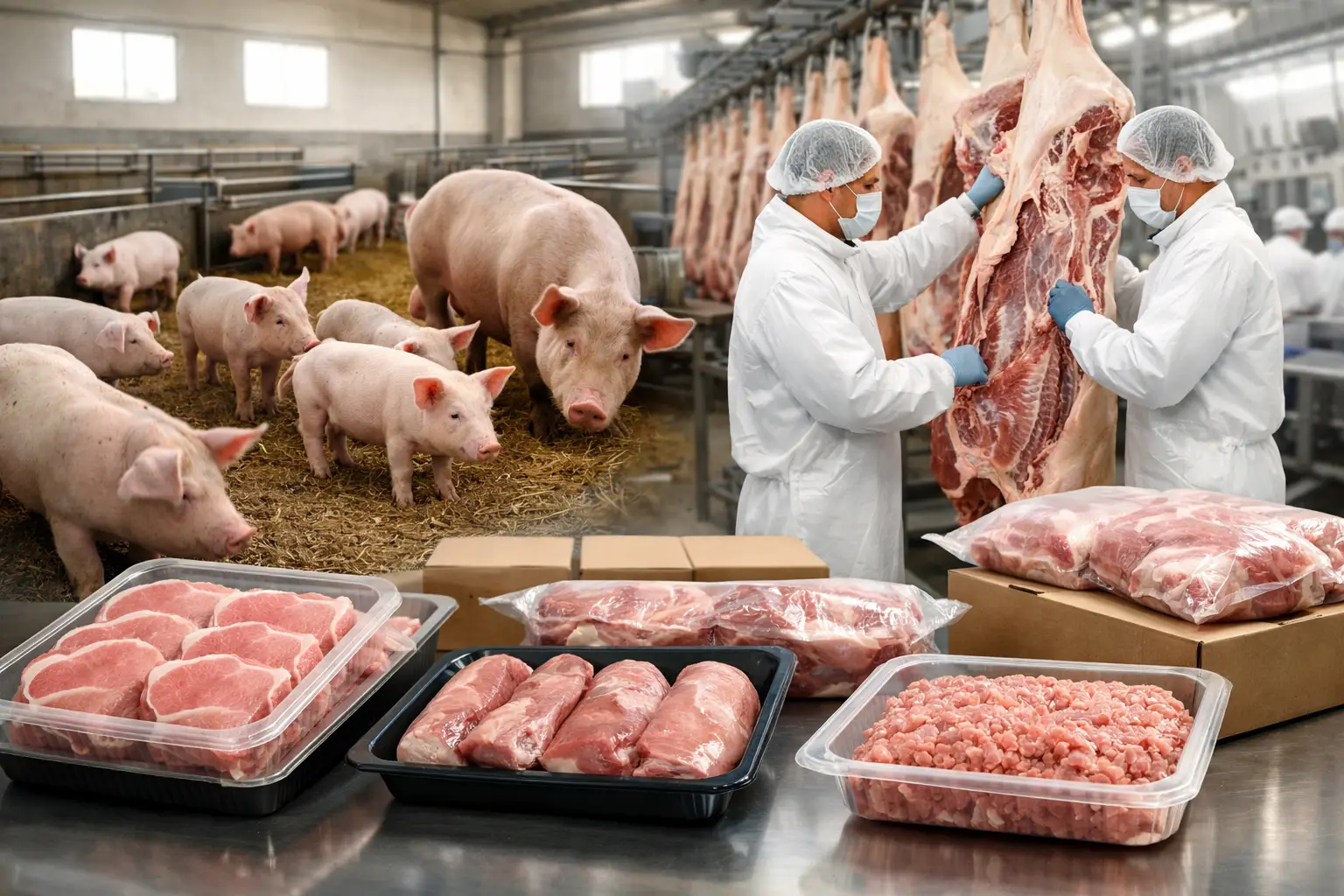
At Litera Meat, this integrated perspective is especially relevant to industrial fresh-pork production. Its platform in Binéfar, Spain combines slaughter, cutting, cold-chain handling, packaging, quality control, and commercial distribution, supported by full-process traceability and in-house laboratory capability. For buyers sourcing commercial volumes of fresh or frozen pork cuts and offal, coordination across these functions is essential to maintaining control from reception to dispatch.
Building welfare expectations into supplier agreements
The clearest procurement relationships set expectations before the first shipment. Animal welfare requirements should be reflected in supplier qualification, product specifications where relevant, audit rights, documentation expectations, and incident-notification procedures. This is particularly important when products are supplied across multiple markets or when a buyer is serving retailers and food manufacturers with their own assurance standards.
Requirements should be specific enough to evaluate but practical enough to operate. A supplier cannot credibly meet vague demands for “high welfare” without defined criteria, reporting methods, and responsibilities. Conversely, overly prescriptive requirements may not account for local legal conditions, facility design, or the realities of a particular product flow. The strongest agreements establish measurable expectations while allowing a qualified processor to manage its operations effectively.
For procurement managers, animal welfare is ultimately a test of operational discipline. Ask for evidence, understand how exceptions are handled, and assess whether welfare controls are connected to traceability, food safety, and staff competence. A supplier that can explain those connections clearly is better positioned to support dependable pork supply over the long term.
Browse the frozen pork range from Litera Meat or send us an enquiry.