
Latest News
Vacuum Packaging Fresh Pork for Global Export

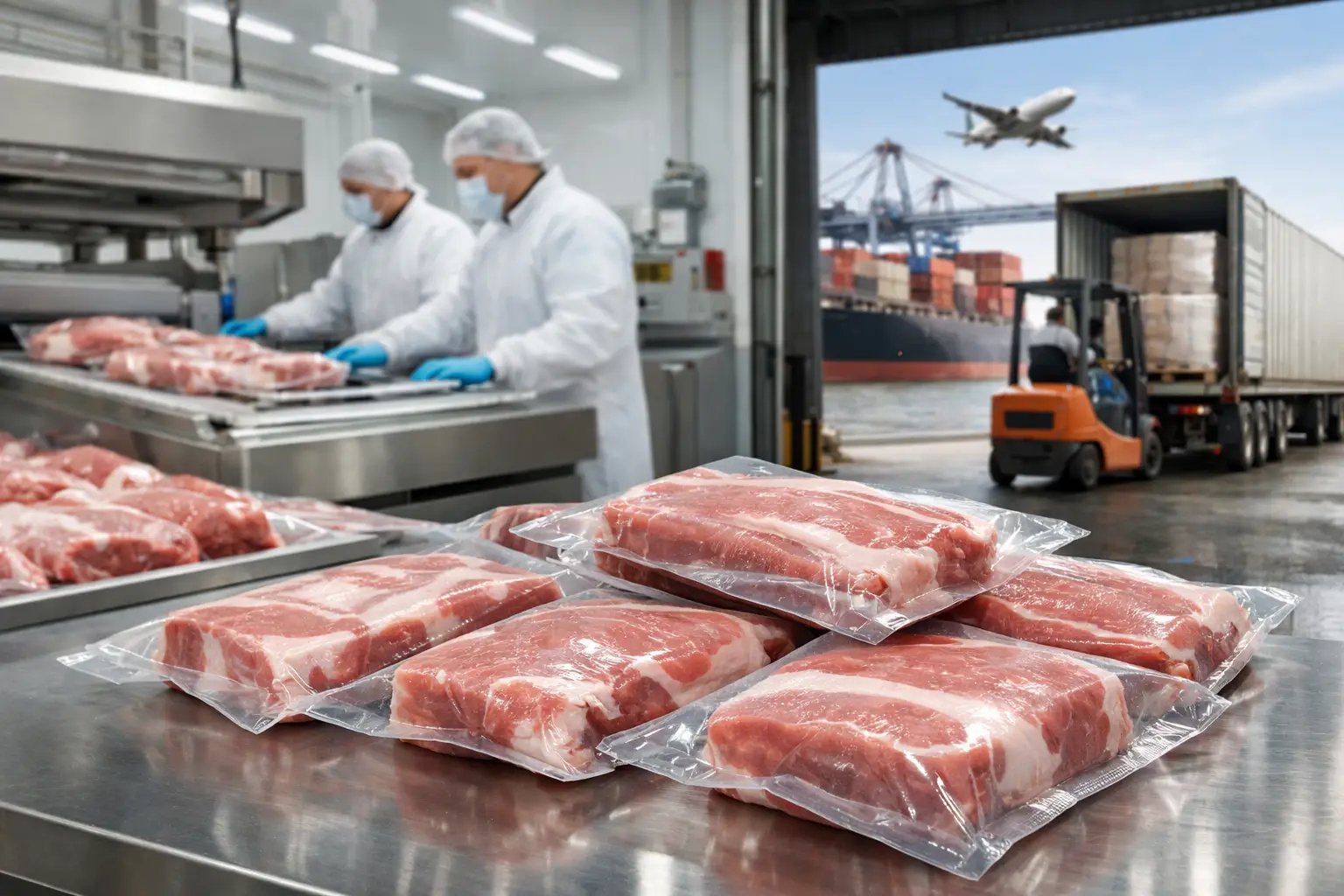
A fresh pork shipment can lose commercial value long before it becomes visibly unacceptable. Small failures in pack integrity, oxygen control, temperature management, or handling can affect color, purge, shelf life, and buyer confidence. For importers and distributors, vacuum packaging fresh pork is therefore not simply a packing decision. It is a controlled part of the supply chain that connects cutting-room performance with reliable delivery in the destination market.
For international procurement, the objective is clear: receive pork cuts that meet the agreed specification, remain protected throughout transport and storage, and provide workable shelf life after arrival. Achieving this requires more than selecting a vacuum bag. It requires coordination between product preparation, packaging materials, sealing parameters, chilling, quality control, and export logistics.
Why Vacuum Packaging Fresh Pork Matters
Vacuum packaging removes most of the air surrounding the product and seals the pork in a barrier pack. Lower oxygen exposure helps limit oxidative changes and slows the growth of many aerobic spoilage organisms. This can support a longer refrigerated shelf life when the entire cold chain is maintained correctly.
The format also provides practical advantages for commercial pork distribution. A tightly packed product occupies less volume than tray-packed meat, reduces exposure to external contamination after packing, and can improve case handling and pallet stability. For boneless cuts, primal cuts, trim, and selected offal products, vacuum packaging can be adapted to the product’s shape, weight, and intended route to market.
However, vacuum packing is not a substitute for hygienic production or temperature control. It does not sterilize fresh pork, remove pathogens, or correct poor raw-material handling. Its value depends on starting with properly processed product and maintaining validated operating conditions from the cutting line to the customer’s cold store.
The Packaging System Starts Before the Sealer
A reliable pack begins with process control in the slaughterhouse and cutting room. Fresh pork must move through defined hygienic zones, be handled with disciplined time-temperature control, and be prepared according to an agreed cut specification. Product temperature at packing, surface condition, and the amount of free moisture can all influence seal quality and the appearance of the packed cut.
For B2B buyers, specifications should identify more than the cut name and weight range. They should also address trimming requirements, bone-in or boneless status, fat cover, acceptable tolerance, labeling language, carton configuration, and whether the product is intended for chilled retail distribution, further processing, or foodservice. A vacuum pack that works well for a short regional route may not be the right solution for a longer export program.
Packaging material selection is equally important. The film or bag must provide suitable barrier properties, mechanical strength, seal performance, and puncture resistance for the product being packed. Bone-in items and irregularly shaped cuts place greater stress on the material than smooth boneless portions. If a pack is vulnerable to abrasion or bone puncture, the risk is not only product leakage but also reduced shelf life and rejected cartons.
Seal Integrity Is a Quality Requirement
A vacuum pack should be assessed as a functional food-safety barrier, not only as a presentation format. Seal contamination from fat, moisture, or product fragments can compromise the closure. Incorrect sealing time, pressure, or temperature can create weak seals that may fail later during loading or transport.
Quality programs commonly include visual checks, leak testing, and routine verification of packaging equipment performance. The right approach depends on the product and production system, but the principle is consistent: pack integrity should be monitored during production, not assumed after a carton has been closed.
Buyers should also clarify how nonconforming packs are identified and managed. This includes procedures for rework where permitted, product segregation, traceability records, and corrective action when a recurring defect is found.
Color, Purge, and Shelf Life: What Buyers Should Expect
Fresh pork in vacuum packaging can develop a darker purple-red color because of the low-oxygen environment. When the pack is opened and the meat is exposed to air, the surface color may bloom. This is a normal characteristic of vacuum-packed meat and should be understood by receiving teams and downstream customers.
Purge, the liquid released in the pack, is another common procurement concern. Some purge is expected in fresh meat, especially after transport and storage. Excessive purge can indicate issues involving product handling, temperature fluctuation, freezing and thawing, packaging conditions, or the characteristics of the cut itself. It should be evaluated against an agreed specification rather than judged only by visual impression.
Shelf life cannot be defined by packaging alone. It depends on initial microbiological condition, product temperature, pack integrity, storage conditions, distribution time, and the destination market’s regulatory requirements. A supplier should establish and verify shelf-life performance through appropriate validation methods, while buyers should ensure their own warehousing and distribution operations can maintain the required temperature range.
For imported chilled pork, usable shelf life at delivery is often as important as total declared shelf life. Procurement teams should agree on minimum remaining shelf life on arrival, expected transit duration, and procedures for delays at ports, inspections, or customs clearance. These points are especially relevant when supplying markets with long sea routes or complex border procedures.
Cold Chain Control Determines the Result
Vacuum packaging provides protection, but refrigeration preserves its benefit. Temperature abuse can accelerate spoilage and increase purge even when the pack remains intact. The cold chain must be planned as a continuous system, covering post-pack chilling, pallet staging, loading, refrigerated transport, port handling, shipping, unloading, and destination storage.
Carton design and pallet configuration matter because they affect airflow and product cooling. Overly dense loading, warm staging areas, or poorly managed loading operations can create temperature variation within a shipment. Temperature monitoring provides useful evidence that the agreed transport conditions have been maintained and helps investigations if a quality concern is reported.
There is also a commercial choice between chilled and frozen supply. Chilled vacuum-packed pork can offer flexibility for customers requiring fresh product, but it demands dependable logistics and careful shelf-life planning. Frozen pork provides a longer distribution window and can reduce risk on distant or variable routes. The appropriate format depends on destination, customer operations, volume planning, and the end use of each cut.
What to Define in an Export Specification
The most effective purchasing specifications connect product quality with logistics reality. In addition to the cut description, buyers should agree on packaging format, net weight, units per carton, pallet pattern, storage temperature, labeling requirements, production and use-by dating, and documentation required for the importing market.
Traceability should allow product to be linked back through the production process, including the relevant production lot and packing date. For a distributor managing multiple customers or a manufacturer using pork as an ingredient, this information supports stock rotation, complaint management, and targeted product control if needed.
It is also useful to define acceptance criteria before the first shipment. These may cover pack appearance, seal condition, carton damage, temperature records, remaining shelf life, and claim procedures. Clear criteria reduce disputes because supplier and buyer assess the same evidence against the same specification.
Industrial Capability and Consistent Supply
At industrial scale, consistency comes from repeatable processes rather than individual inspection alone. Automated packaging systems, controlled cutting operations, trained personnel, and in-house laboratory capability all contribute to managing variation across high volumes. For international buyers, this is particularly relevant when the same specification must be supplied across recurring orders, multiple destinations, or different product categories.
Litera Meat operates an integrated fresh-pork platform in Binéfar, Spain, combining slaughter, cutting, cold-chain handling, packaging, quality control, and commercial distribution. With 22 cutting lines and capacity to process 160,000 pigs weekly, its operation is structured to support commercial-volume programs while maintaining full-process traceability. Its range includes fresh and frozen pork cuts and offal for customers requiring varied specifications and export-ready handling.
A capable supplier should be prepared to discuss the practical details behind the product offer: pack format, cut availability, shelf-life parameters, temperature controls, documentation, and destination-market requirements. This level of preparation is more valuable than a generic promise of freshness.
When vacuum-packed pork reaches a customer in the expected condition, the result is usually the product of many controlled decisions made well before dispatch. Buyers who align packaging requirements with product specifications and cold-chain capability are better positioned to protect quality, reduce claims, and build dependable long-term supply programs.
See the products we supply, or get in touch with your requirements.
One thought on “Vacuum Packaging Fresh Pork for Global Export”