
Latest News
Industrial Pork Processor Review for B2B Buyers

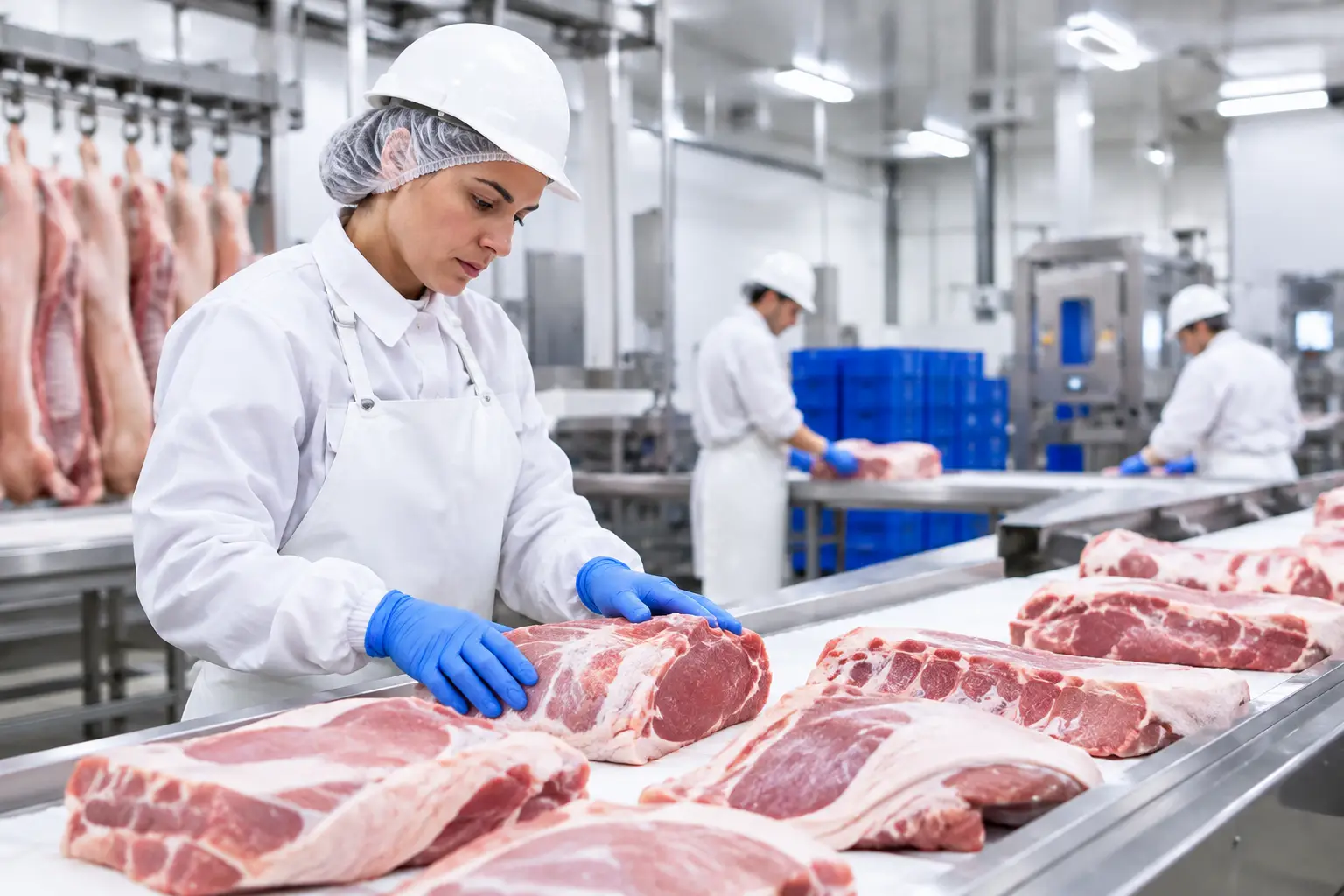
A useful industrial pork processor review should go beyond a supplier’s product catalog or quoted price. For importers, distributors, food manufacturers, and retail buyers, the real question is whether the processor can deliver the required specification, volume, documentation, and cold-chain consistency over time. This requires a close look at how the operation works from animal intake through cutting, packing, dispatch, and export.
For international sourcing, Spain offers an established pork-production base and access to demanding export markets. However, processors differ substantially in scale, technical integration, product flexibility, and market approvals. A disciplined supplier assessment helps buyers identify the operational details that protect continuity and product performance after the shipment arrives.
Industrial Pork Processor Review: What Buyers Should Assess
The strongest reviews are based on evidence from the production process rather than broad commercial statements. A processor may offer an attractive range of pork cuts, but buyers should confirm how those products are controlled, packed, stored, and made available for their destination market.
Production scale and operational continuity
Production capacity matters when a buyer needs regular commercial volumes, but capacity alone is not enough. The relevant issue is whether the supplier has sufficient slaughter, cutting, packing, and cold-storage capability to maintain supply during seasonal changes, demand peaks, and varying customer programs.
An integrated industrial site can reduce handovers between separate operators. When slaughter, cutting, cold-chain handling, quality control, and commercial distribution are coordinated within one platform, the processor has greater visibility over timing and product flow. This can support more reliable planning for fresh pork programs, as well as for frozen orders that require consolidation and scheduled export dispatch.
Buyers should ask how capacity is organized across cutting lines, how production is allocated among customers, and whether the facility can manage different packaging formats or cut specifications. A supplier that handles high volumes may be a good fit for large orders, but it must also demonstrate control over segregation, identification, and specification management.
Litera Meat operates in Binéfar, Huesca, Spain, with 130,000 square meters of facilities, 22 cutting lines, and a weekly processing capacity of 160,000 pigs. For buyers evaluating large-scale sourcing, these figures are relevant because they indicate a platform designed to support industrial volumes across multiple commercial requirements.
Product range and specification control
A review should examine the practical usefulness of a processor’s portfolio. International buyers may require fresh or frozen pork, primal cuts, retail-ready formats, manufacturing materials, fat, bones, or edible offal. The correct supplier is not simply the one with the longest list of products. It is the one that can define the requested item clearly and repeat it consistently.
The purchase specification should cover the cut, trim level, weight range, fat cover where relevant, packaging format, storage condition, labeling, pallet configuration, and shipment temperature. For offal, buyers should also be explicit about presentation, cleaning requirements, size grading, and destination-market documentation.
Small differences in terminology can create costly misunderstandings across markets. A buyer should not assume that a local cut name has the same meaning in every country. Product descriptions, approved samples where appropriate, and written tolerances give procurement teams a clearer basis for receiving checks and supplier performance reviews.
Fresh and frozen programs also require different planning. Fresh pork depends on tightly managed processing and transport timing, while frozen pork may offer greater flexibility for stockholding and longer international transit. The preferred option depends on the buyer’s distribution model, shelf-life needs, inventory strategy, and destination requirements.
Food safety systems and laboratory capability
Food safety should be assessed as a working system, not as a claim on a presentation. Buyers need to understand how the processor monitors hygiene, verifies production conditions, manages nonconformities, and releases product for dispatch.
An in-house scientific laboratory can be particularly valuable within a high-volume operation. It supports ongoing analytical control and gives the processor technical capability closer to the production floor. For buyers, the important questions are how results are used in operational decisions, how deviations are investigated, and how corrective actions are documented.
It is also reasonable to request clarity on the controls applied at critical stages, including slaughter hygiene, chilling, cutting-room practices, packaging integrity, temperature monitoring, and cold-storage management. The exact documentation required will depend on the importing country and the customer’s own assurance program. A capable export supplier should be able to work through those requirements precisely rather than relying on generic statements.
Traceability from source to shipment
Traceability is central to industrial pork procurement because it connects the physical product with production, quality, and commercial records. In a well-managed system, a buyer should be able to identify the relevant batch and follow it through the process, from raw material origin and production date to packing and dispatch.
This capability becomes especially important when a customer needs to investigate a quality issue, verify a shipment detail, or conduct a recall exercise. The value is not only regulatory. Fast, accurate traceability reduces uncertainty and helps both parties make decisions based on verified information.
During an industrial pork processor review, ask how lots are identified through cutting and packaging, how records are retained, and how the processor manages product segregation. If a buyer orders multiple specifications or serves several downstream customers, clear traceability and labeling discipline are essential to avoid avoidable claims or rework.
Export Readiness Is More Than Logistics
A processor can be technically strong and still be the wrong export partner if it cannot meet the destination’s market-access and administrative requirements. International buyers should confirm that the supplier is approved for the intended market and that the relevant product category can be shipped under current conditions.
This review should cover export documentation, health certificates where required, labeling language, carton marks, container loading plans, and temperature records. It should also consider the supplier’s experience in communicating with freight partners, inspectors, and the buyer’s import team. Clear coordination before production is usually more effective than correcting documents after a container is ready to leave.
Market familiarity can add practical value. A processor serving markets in Europe and Asia will understand that requirements may differ by destination, product type, and importing customer. China, Japan, South Korea, the Philippines, Vietnam, Singapore, and Hong Kong, for example, may each require careful confirmation of current market conditions and product eligibility. Buyers should verify the requirements for each shipment program rather than apply assumptions from another market.
Animal Welfare and Environmental Responsibility
For many procurement teams, supplier evaluation now includes how production performance is achieved. Animal-welfare practices, employee training, environmental management, and energy use are relevant because they reflect the discipline of the wider operation.
These subjects should be reviewed with the same practical approach used for food safety. Ask how policies are applied in daily operations, how personnel are trained, and how performance is monitored. Environmental initiatives, including renewable-energy commitments, should be considered in the context of measurable operational management rather than treated as a substitute for product and service controls.
A responsible industrial processor recognizes that long-term supply depends on more than output. It depends on trained people, controlled facilities, animal care, and careful use of resources. For B2B buyers managing their own supplier standards, this broader view can help align procurement decisions with commercial and stakeholder expectations.
Building a Supplier Review That Supports Better Buying
The most effective supplier review combines technical questions with commercial realism. Price remains important, but it should be evaluated alongside yield, trim consistency, pack weight accuracy, shelf-life performance, shipment reliability, and the cost of handling deviations. A lower purchase price can lose value quickly if product specifications are unclear or delivery performance is inconsistent.
Buyers should also consider the level of communication they need. Some programs require regular forecasts, rolling order schedules, and detailed approval processes. Others are built around spot volumes or frozen stock availability. Neither model is inherently better, but the processor’s planning methods should match the buyer’s purchasing pattern.
A well-chosen industrial pork supplier provides more than product availability. It gives the buyer a controlled production base, reliable product information, and the operational discipline needed to support trade across borders. Start with the evidence behind capacity, quality, traceability, and export execution, then build the commercial program around specifications both parties can measure and maintain.