
Latest News
Pork Sourcing Comparison for Global Buyers

A useful pork sourcing comparison begins before reviewing a price list. For importers, distributors, processors, and retail buyers, the real question is whether a supplier can repeatedly deliver the agreed specification, volume, documentation, and cold-chain condition for the destination market. Unit price matters, but it is only one part of the commercial decision.
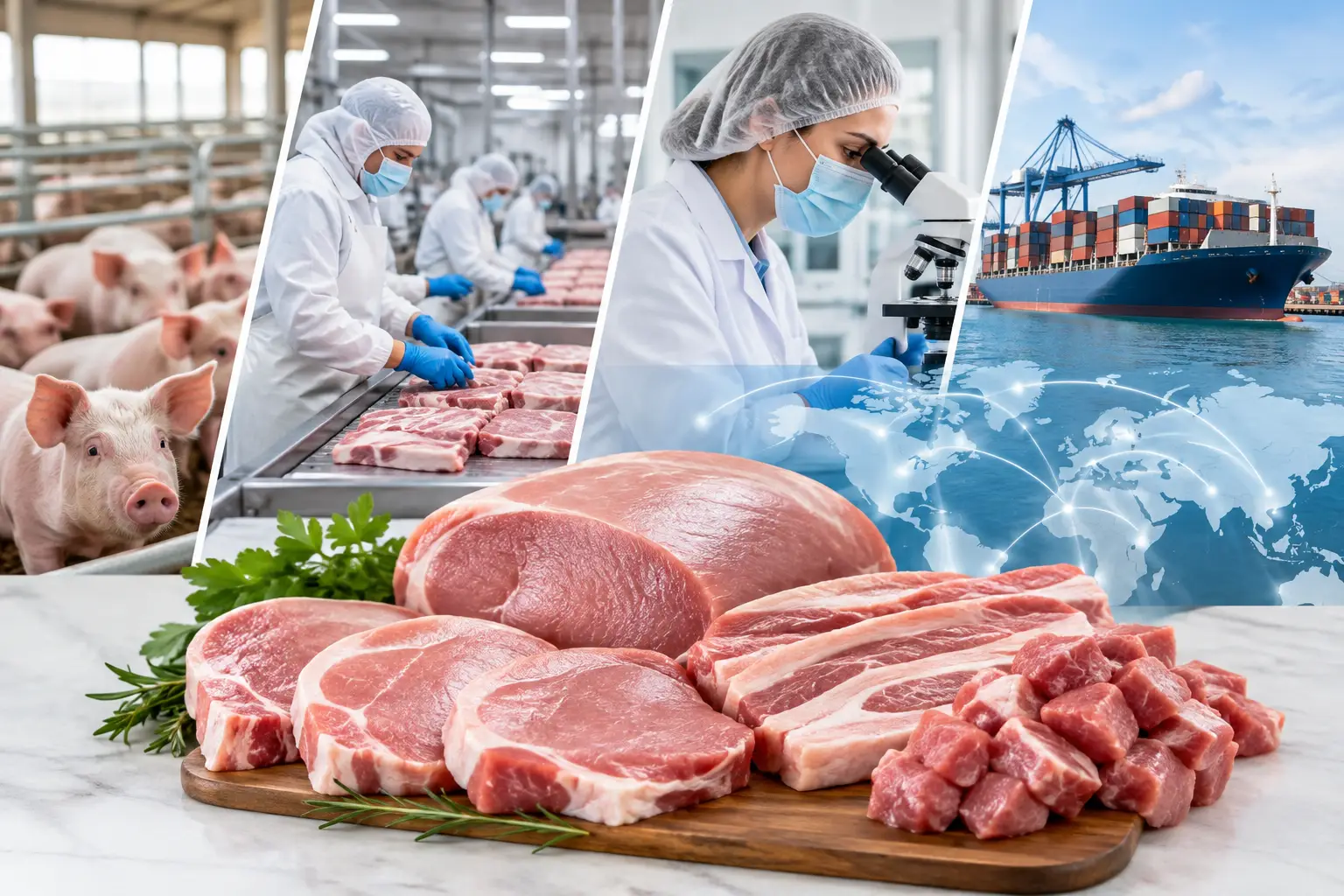
The strongest sourcing decisions compare suppliers across their full operating model: raw-material control, processing capacity, quality systems, product range, logistics discipline, and market access. This approach helps buyers identify the supplier that best fits their product program, risk profile, and long-term demand.
Start the Pork Sourcing Comparison With Requirements
Before comparing suppliers, define the purchasing requirement in operational terms. “Fresh pork” is too broad for an effective request for quotation. The specification should identify the required cuts or offal, weight ranges, trim standard, fat level, packaging format, labeling language, storage temperature, shelf-life requirement, and destination port or delivery point.
Buyers should also determine whether fresh, chilled, frozen, or a combination of formats is appropriate. Chilled pork can support retail and foodservice programs where short lead times and controlled distribution are available. Frozen pork generally offers more flexibility for long-distance shipping, inventory management, and manufacturing applications. Neither format is inherently better. The correct choice depends on transit time, local cold storage, demand planning, and the buyer’s final use.
Volume planning is equally important. A supplier may be able to quote a container, but a recurring program requires reliable capacity through seasonal demand changes, holidays, and shifts in export conditions. Procurement teams should provide realistic forecasts and clarify minimum order quantities, loading plans, and call-off expectations from the start.
Compare Process Control, Not Only Product Claims
Pork is a perishable product produced through a series of connected operations. The supplier’s level of control over those operations affects consistency, food safety, product availability, and response speed when an issue requires investigation.
An integrated processor that manages slaughter, cutting, cold-chain handling, packaging, quality control, and commercial distribution can provide a more direct view of the product journey. This does not automatically make every integrated supplier the right choice, but it can reduce handovers between independent parties and simplify accountability.
Ask each supplier how it controls critical points from livestock reception through dispatch. A meaningful response should explain process monitoring, hygiene procedures, temperature management, segregation practices, sample handling, nonconformance procedures, and release controls. General statements about quality are less useful than a clear explanation of how the process is managed every day.
Traceability Must Work at Lot Level
Full-process traceability is central to professional pork sourcing. Buyers should be able to understand how a production lot is identified, linked to processing records, and connected to the documents provided with the shipment. This capability supports inventory control, customer assurance, and efficient action if a product query arises.
During supplier evaluation, request an explanation of the traceability exercise rather than simply asking whether traceability exists. Can the processor trace a finished carton back through packaging and cutting records? How quickly can the relevant information be retrieved? What information appears on labels, pallet records, and commercial documents? These details show whether traceability is an active management system or only a compliance statement.
Food Safety Evidence Should Be Specific
International buyers need evidence that food safety systems are suitable for the requirements of their market and customer base. This evidence may include current certificates, audit information where appropriate, laboratory procedures, hygiene plans, monitoring records, and destination-market approvals. The exact documents needed will vary by country, product category, and customer policy.
In-house laboratory capability can be particularly valuable because it supports routine verification and faster technical assessment within the production environment. Buyers should still confirm the scope of testing, the procedures used for results outside specification, and the process for communicating relevant findings.
A comparison should also consider how suppliers manage change. New packaging, revised trim requirements, different labeling, or a customer-specific microbiological plan can create risk if they are introduced informally. A capable supplier has documented review and approval processes that protect the agreed product specification.
Assess Scale Alongside Flexibility
Large-scale pork production can offer important advantages: continuity of supply, efficient cutting operations, broad product availability, and the ability to support recurring commercial volumes. However, scale should be assessed together with flexibility. A buyer may need mixed loads, several pork cuts, defined carton configurations, or a program that combines high-volume items with selected offal.
The most useful questions are practical. How many cutting lines operate? What packaging formats can be handled? Can the supplier build mixed orders within operational limits? How are allocation decisions made during periods of high demand? What lead time is required for nonstandard specifications?
Litera Meat, headquartered in Binéfar, Spain, operates an integrated platform with 22 cutting lines, 130,000 square meters of facilities, and capacity to process 160,000 pigs weekly. For buyers evaluating commercial-scale programs, such indicators provide a concrete basis for assessing production depth. They should still be matched to the specific order profile, specification, and destination requirements.
Product Range Creates Commercial Options
A broad product portfolio can help buyers improve carcass utilization and consolidate procurement. Depending on the supplier’s approved range and market access, this may include fresh and frozen pork cuts as well as offal for industrial, distribution, retail, or foodservice channels.
The comparison should go beyond a product catalog. Confirm trim definitions, average weights, pack counts, carton dimensions, glazing where relevant, labeling, and available shelf-life or frozen-storage parameters. For manufacturing buyers, consistency in raw-material characteristics can be more valuable than a wider nominal range. For distributors, the ability to source multiple items from one controlled processor may reduce administrative complexity and improve container utilization.
Examine Export Readiness and Cold-Chain Discipline
Export performance depends on more than arranging freight. The processor must prepare product, documents, loading, and communication to meet the importing country’s conditions. Requirements can differ significantly between markets, including health documentation, plant eligibility, labeling, inspection arrangements, and certificate wording.
Buyers should ask whether the supplier has experience with the intended destination and whether its facilities and products are approved where approval is required. It is also wise to clarify who is responsible for document review, pre-shipment checks, original certificate handling, and communication if a border authority requests additional information.
Cold-chain handling deserves the same level of attention. Review product temperature targets, storage controls, loading procedures, reefer set points, sealing practices, and contingency procedures. A technically correct product can lose value if the cold chain is not maintained through the point of handover. The buyer’s logistics provider and the supplier should work from the same written temperature and documentation expectations.
Compare the Total Cost and the Cost of Disruption
The lowest quoted price does not always produce the lowest landed cost. Freight efficiency, carton design, yield, payment terms, claim rates, storage life, customs delays, and rejected loads can all affect the final economic result. A lower-priced product with inconsistent weights or repeated documentation corrections may create greater cost than a higher-priced, stable program.
Build the comparison around comparable assumptions. Use the same Incoterm, currency basis, product specification, packaging, shipment size, and delivery period for each quotation. If prices differ, identify why. The difference may reflect trim level, product format, service scope, payment conditions, or market access rather than simple supplier margin.
For recurring business, establish performance measures before the first shipment. These can cover order accuracy, specification compliance, document accuracy, on-time loading, temperature records, response time, and claim resolution. Clear measures make supplier discussions more objective and help both parties improve the program over time.
Make the Final Decision on Fit
A well-structured pork sourcing comparison does not produce one universal winner. A regional distributor with frequent smaller deliveries may prioritize flexibility and local warehousing. A food manufacturer may prioritize raw-material consistency, technical support, and frozen inventory security. A retailer may focus on packaging, labeling, shelf life, and auditable traceability.
The right supplier is the one whose operating model supports the buyer’s defined requirements without relying on assumptions. Start with a precise specification, verify the evidence behind quality and export claims, and test the process with a controlled first order. That practical approach creates a stronger foundation for long-term pork supply than price comparison alone.
See the products we supply, or get in touch with your requirements.
One thought on “Pork Sourcing Comparison for Global Buyers”