

Latest News
What Pork Sells in Japan for Global B2B Buyers

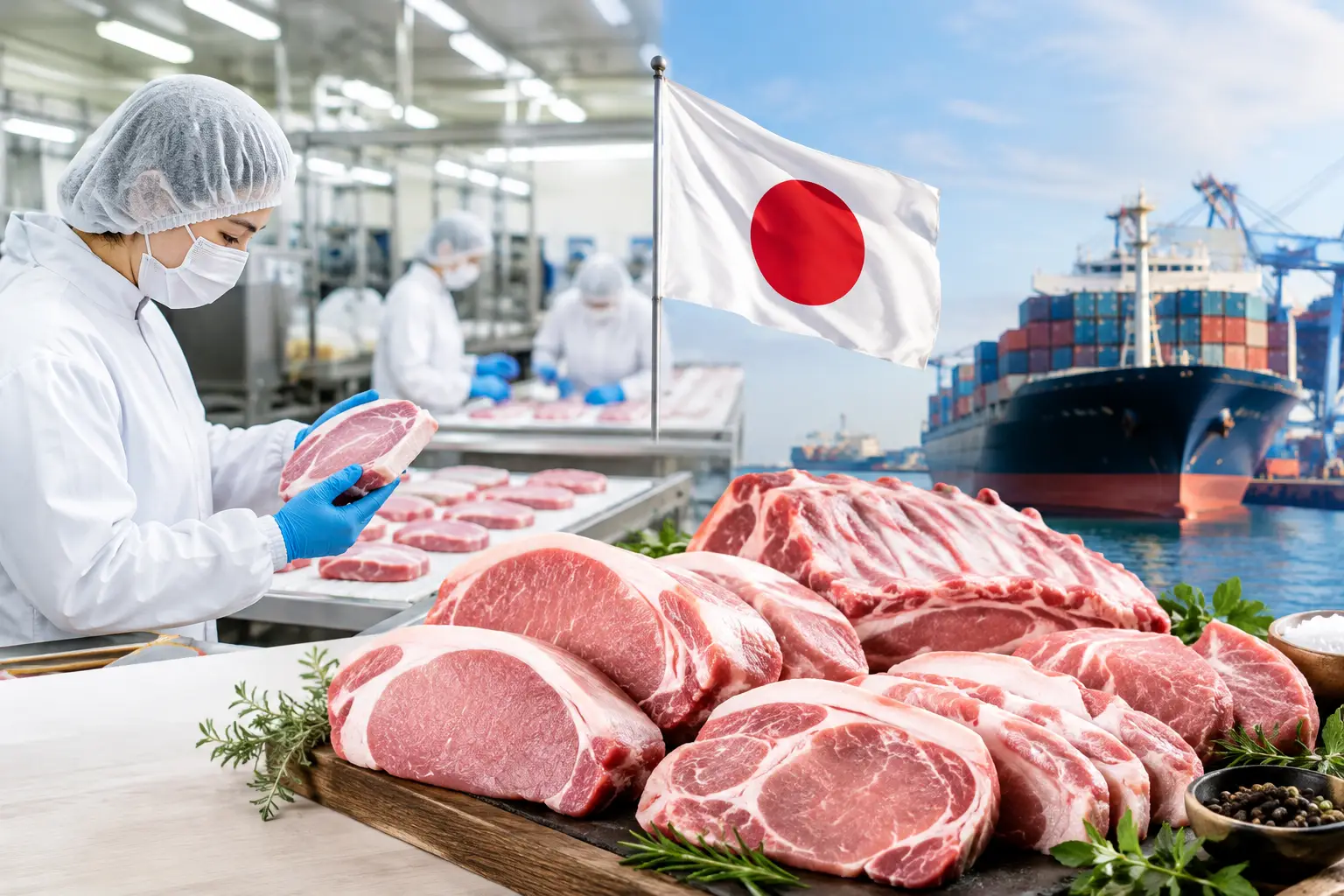
Japan’s pork market rewards precise product planning. For international suppliers asking what pork sells in Japan, the answer is not one individual cut or one purchasing format. Demand is shaped by how pork is used: thinly sliced for retail meals, portioned for foodservice, and converted into sausages, ham, bacon, prepared foods, and other processed products.
For B2B buyers, the commercial opportunity lies in matching the right cut, trim, pack format, and temperature condition to the intended channel. A supplier may offer an excellent carcass balance, but Japan-specific success depends on whether each product meets local expectations for appearance, fat cover, slicing performance, consistency, food safety documentation, and delivered cost.
What Pork Sells in Japan Across Major Buying Channels
Pork is a staple protein in Japan, used across household cooking, restaurants, convenience-oriented food formats, and large-scale manufacturing. Imported pork plays an important role alongside domestic production, particularly where buyers require consistent volumes and defined specifications throughout the year.
Retail demand is strongly linked to familiar meal occasions. Thin-sliced pork is widely used for shabu-shabu, sukiyaki-style dishes, stir-fries, ginger pork, and everyday pan cooking. Buyers serving this segment usually prioritize cuts that slice evenly, retain an attractive color, and provide a predictable lean-to-fat ratio after portioning.
Foodservice demand is broader. Restaurants, caterers, and prepared-food operators purchase pork for tonkatsu, ramen toppings, grilled dishes, dumplings, skewers, and buffet applications. Product requirements vary substantially by operator. A tonkatsu program may require a consistent loin or tenderloin portion, while ramen and grilled-pork applications may favor belly with controlled fat layers and reliable cooking yield.
The food manufacturing segment creates another important demand stream. Japanese processors use imported pork for sausages, ham, bacon, cured products, dumplings, croquettes, convenience meals, and seasoned products. In this channel, repeatable raw-material specifications, microbiological control, traceability, and dependable frozen supply can matter as much as visual presentation.
The Pork Cuts Japanese Buyers Commonly Source
Belly for slicing, grilling, and processing
Pork belly, known in Japan as bara, is one of the most commercially versatile imported cuts. It is used in thin-sliced retail packs, yakiniku-style grilling, ramen, bacon production, and prepared foods. Buyers evaluate belly closely for layer definition, fat thickness, lean color, rind requirements, bone status, and dimensional consistency.
Belly demand is not uniform. Retail slicing programs may favor a balanced visual ratio of lean and fat, while manufacturing customers may place greater value on fat specification and batch consistency. For this reason, suppliers should avoid treating “belly” as a single standard product. A clear specification should define trimming, weight range, skin condition, packing method, and whether the product is intended for slicing or further processing.
Loin, shoulder loin, and tenderloin
Loin products have strong relevance in Japan because they support high-value portioned applications. Pork loin, or rosu, is widely associated with tonkatsu, cutlets, grilling, and thin slicing. A consistent cross-section and manageable fat cover are important where buyers portion the product into retail or restaurant servings.
Shoulder loin, often called kata rosu, can offer a useful balance of flavor, tenderness, and value. It is commonly suitable for sliced applications, grilling, and prepared foods. Tenderloin, or hire, is used where a lean, tender product is required, particularly for cutlets and foodservice portions. Because tenderloin volumes are naturally limited, supply planning and specification discipline are essential for regular programs.
Shoulder and collar cuts
Shoulder and collar cuts are relevant across retail, foodservice, and processing. Their stronger meat texture and moderate fat content can suit thin slicing, ground-meat applications, dumpling fillings, seasoned products, and cooked preparations. Depending on the customer, buyers may request whole cuts, boneless specifications, or raw material prepared for further trimming and processing.
For exporters, these cuts can be commercially valuable because they support several end uses. The key is to align trim levels with the buyer’s labor model. A processor with automated further-processing lines may prefer a different format from a distributor supplying smaller foodservice customers.
Leg and ham material
Leg cuts, often referred to as momo in Japanese retail terminology, are typically valued for their lean profile. They can be supplied for slicing, diced applications, ground pork, and processed ham products. Manufacturing buyers may source defined leg muscles or grouped raw material according to fat, connective tissue, and moisture requirements.
Leg products can be an effective part of a full-carcass export program, but they must be positioned correctly. They may not command the same use profile as belly or loin in all channels, yet they are important for processors seeking lean, economical pork inputs at scale.
Offal and variety meats
Japan also has established demand for pork offal, especially in foodservice and products associated with horumon-style cooking. Items such as intestines, stomachs, hearts, livers, kidneys, tongues, and other edible offal may have commercial potential where regulatory access, handling standards, and customer specifications are fully aligned.
Offal trade requires particular care. Buyers should confirm approved product categories, required veterinary documentation, cleaning standards, freezing requirements, packaging, and destination-specific import conditions before building a program. It is a specialized category, but it can improve carcass utilization and support customers looking for differentiated foodservice products.
Fresh, Chilled, or Frozen: The Practical Choice
Temperature condition is a commercial decision, not simply a quality label. Chilled pork may be appropriate for programs with a validated cold chain, suitable transit times, and customers that require a defined remaining shelf life. It can support certain retail and foodservice applications, but it demands disciplined logistics and accurate planning.
Frozen pork is often the practical option for international supply programs, particularly for manufacturers, distributors, and customers managing inventory across multiple locations. Correctly frozen and packed pork provides planning flexibility, supports longer-distance shipment, and allows buyers to build stable production schedules. It is widely used for processing, foodservice, and portion-control operations.
The preferred format depends on the final use. A retailer supplying daily thin-sliced packs has different needs from a manufacturer producing sausages or prepared meals. Procurement teams should therefore define the required temperature condition together with shelf life, thawing process, production schedule, pack size, and storage capacity.
Import Economics and Specifications Matter as Much as the Cut
Japan applies a differential tariff mechanism to imported pork, under which duty treatment can be affected by the declared import price and product classification. This makes landed-cost modeling essential. Buyers and suppliers should assess not only the quoted meat price, but also tariff exposure, freight, insurance, handling, yield after trimming, currency movement, and the expected selling price of the finished product.
A lower-priced raw material is not always the lower-cost solution. For example, a cut with inconsistent dimensions may require more labor, create variable slice weights, or increase trim loss. Conversely, a tighter specification can support higher throughput and more predictable yields. This is particularly relevant for Japanese customers operating high-volume slicing, retail packing, or further-processing lines.
Product specifications should be detailed before commercial terms are finalized. Useful points include cut definition, bone and skin status, weight range, fat cover, trim level, freezing method, net weight, carton configuration, pallet requirements, labeling, production date coding, and acceptable shelf life on arrival. Photographic specifications and approved reference samples can reduce avoidable disputes.
Food Safety, Traceability, and Plant Eligibility
Japanese importers need confidence that every shipment can clear the required official and commercial controls. Country authorization and establishment eligibility should be verified for the exact product category before supply is committed. Veterinary health certificates, product labels, import notifications, and documentation must match the shipment precisely.
Beyond market access, buyers should assess a supplier’s process controls. This includes segregation of products, temperature management, laboratory capability, microbiological monitoring, residue-control systems, traceability from raw material through dispatch, and corrective-action procedures. These controls are especially important when purchasing commercial volumes for retail or food manufacturing.
Spanish suppliers can be well positioned when they combine access to consistent pig supply with industrial cutting capacity and export-ready cold-chain operations. Litera Meat operates an integrated platform in Spain covering slaughter, cutting, packaging, quality control, and distribution, supporting buyers that require traceable fresh and frozen pork cuts and offal at commercial scale.
How Buyers Can Build a Strong Japan Pork Program
The most effective purchasing programs begin with the final application rather than a generic request for pork. A buyer should identify whether the product is intended for thin slicing, tonkatsu portions, grilling, sausage production, bacon, dumplings, or offal foodservice. That decision determines the appropriate cut, trim, fat specification, packing format, and shipment condition.
It is also sensible to begin with a controlled trial. A trial should test more than eating quality. It should measure thaw loss where relevant, slicing behavior, trim yield, visual appearance, production-line performance, carton condition, documentation accuracy, and supply consistency across batches. These operational results provide a stronger basis for long-term procurement than price comparison alone.
For Japan, the pork that sells is the pork that performs reliably in its intended channel. Suppliers that understand the end use, document their controls, and maintain stable specifications give buyers a clearer path from import planning to repeatable commercial sales.