
Latest News
How Spanish Abattoirs Serve Global Pork Buyers

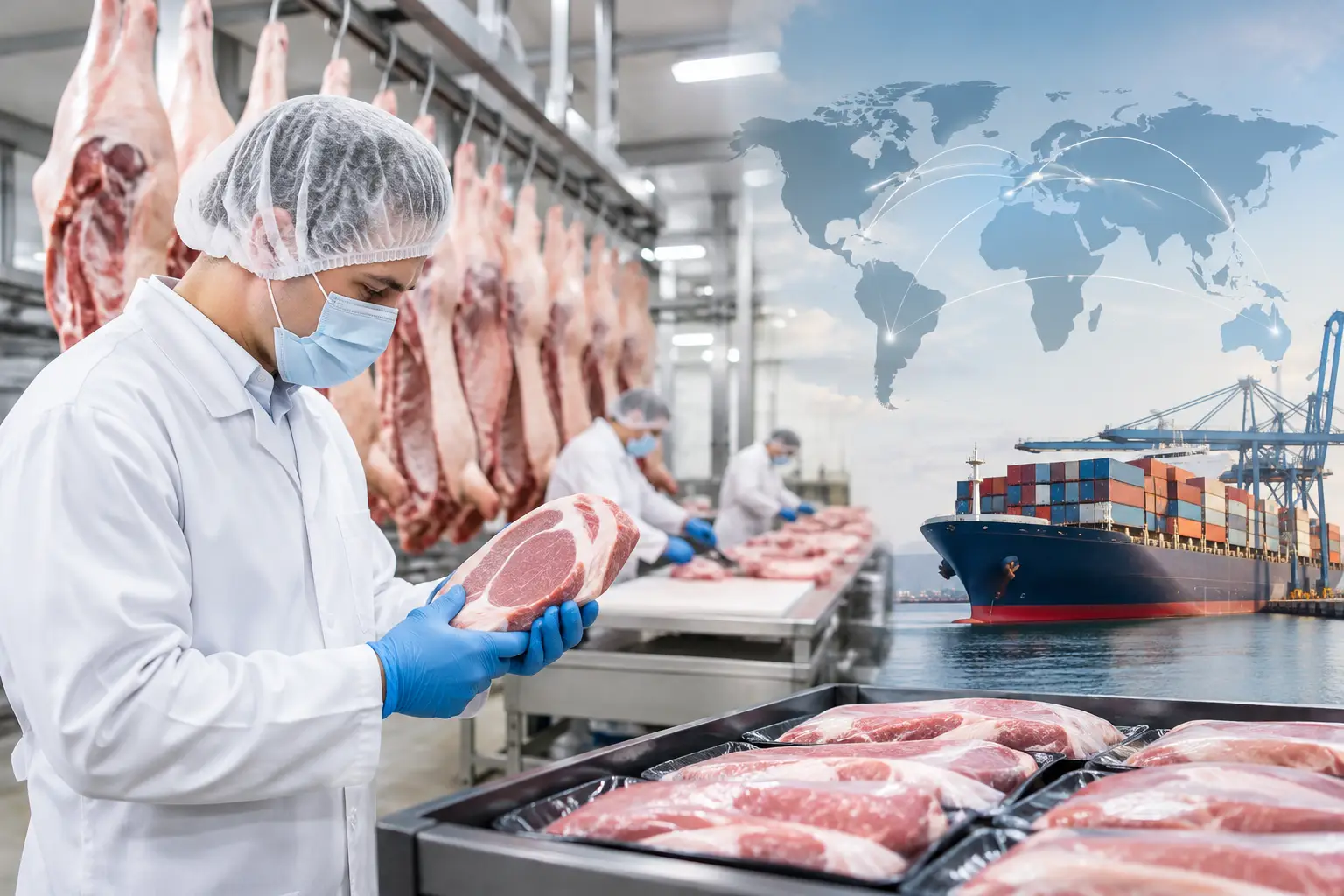
For an international procurement team, Spanish abattoirs are not evaluated only by slaughter capacity. They are assessed by their ability to deliver a defined pork specification, protect product integrity through the cold chain, provide complete documentation, and maintain consistent supply over time. The slaughterhouse is the starting point of a much larger industrial process that determines the reliability of every fresh, frozen, and offal shipment.
Spain is an important pork-producing country within Europe, supported by an established livestock sector, modern processing infrastructure, and strong export experience. For buyers serving distribution, food manufacturing, retail, or foodservice markets, the right supplier relationship depends on understanding how a facility manages the full process from animal reception to dispatch.
What International Buyers Expect From Spanish Abattoirs
A commercial pork supplier must convert live-animal supply into products that meet precise customer requirements. That involves more than processing volume. It requires controlled procedures for animal handling, hygienic slaughter, carcass classification, cutting, chilling, packaging, storage, and transport preparation.
For international customers, consistency is usually the central concern. A distributor may need standardized chilled cuts for a retail program, while a manufacturer may require frozen raw material with a specific fat range, trim standard, or packing format. Other customers source heads, feet, ears, stomachs, livers, kidneys, and other edible offal for markets where these products have established demand. Each program requires clear product specifications and reliable execution.
The strongest Spanish processors organize these activities as an integrated system. Slaughter, cutting, cold-chain handling, packaging, laboratory control, and commercial planning must work together. If one stage is poorly coordinated, the effect can reach the customer as variable weights, a shorter usable shelf life, documentation discrepancies, or delayed loading.
Scale Must Be Matched With Process Control
Large-scale processing can offer important advantages to B2B buyers. A high-throughput facility can support regular supply, broader product availability, and more efficient planning for full-container or high-volume orders. It can also allow the processor to allocate different pork cuts and offal products to markets that value them most.
However, volume alone is not a sourcing guarantee. Buyers should assess whether operational scale is supported by defined controls at every stage. This includes segregation of products, temperature management, sanitation procedures, traceability records, and quality verification before release.
Automation can improve consistency in repetitive activities such as cutting, weighing, labeling, and packaging. Yet it does not remove the need for trained personnel, active supervision, and quality decisions made by experienced teams. The relevant question is not simply how advanced a facility appears. It is whether its technology, people, and operating procedures produce dependable results for the buyer’s required specification.
At Litera Meat in Binéfar, Huesca, this integrated model includes slaughter, cutting, cold-chain handling, packaging, quality control, and commercial distribution. The company processes 160,000 pigs weekly across 130,000 square meters of facilities, with 22 cutting lines and a workforce of 1,600 employees. For buyers with substantial volume requirements, this type of industrial configuration can support continuity while allowing products to be prepared for different commercial channels.
Traceability Starts Before the Carcass Is Cut
Traceability is one of the most practical indicators of supplier control. In pork processing, it should enable a processor to follow product movement from the incoming animal through slaughter and cutting to packaging, storage, and shipment. The purpose is not only regulatory compliance. Effective traceability supports quicker investigation, more accurate stock management, and clearer communication when a customer requests information.
Procurement teams should ask how a supplier identifies lots, records production dates, connects packing labels to internal records, and manages product release. They should also understand how traceability is maintained when products are moved between chilling, cutting, freezing, and dispatch areas.
A well-documented system benefits both parties. It allows the buyer to match received goods to purchase specifications and shipping documents. It also gives the supplier a structured basis for responding to claims, verifying product history, or assessing the scope of any issue. This is particularly relevant for import programs, where multiple parties may handle the product before it reaches the final customer.
Laboratory Capability and Food Safety Verification
Food safety management needs practical verification, not only written procedures. In-house scientific laboratory capability can provide processors with timely information to support hygiene monitoring, product assessment, and process control. The scope and frequency of testing should align with the facility’s risk management program and the requirements of the destination market.
International buyers should discuss how the processor manages microbiological controls, sanitation verification, temperature monitoring, and corrective actions. They should also clarify what documentation can accompany shipments and what records are available when customers conduct supplier audits.
European food safety requirements provide a significant operating framework, but destination-country requirements may add further conditions. Approval to produce for one market does not automatically mean a facility is authorized for every other market. Buyers should therefore confirm that the establishment and products are approved for the intended destination before commercial planning begins.
Cold Chain and Packaging Are Commercial Requirements
Fresh pork is highly dependent on temperature discipline. Controlled chilling after slaughter, refrigerated cutting environments, cold storage, loading procedures, and transport coordination all contribute to product condition at arrival. A strong cold chain protects safety and quality, but it also supports predictable inventory management for the buyer.
The right format depends on the final use. Vacuum-packed fresh cuts may suit customers managing refrigerated distribution. Frozen products can offer longer storage flexibility and are often preferred for longer supply chains or manufacturing programs. Carton configuration, net weight, labeling, pallet pattern, and container loading plans should be agreed before production, rather than treated as administrative details after the order is placed.
Packaging also affects handling efficiency. Retail programs may require precise labeling and unit formats, while industrial customers may prioritize standardized bulk packs that reduce labor in their own plants. A capable processor should be able to discuss these choices in practical terms, including the effects on shelf life, logistics, storage, and order economics.
Animal Welfare and Environmental Management Matter to Buyers
Animal welfare is a core operating responsibility in slaughter facilities and an increasingly relevant supplier-assessment topic. Buyers should expect controlled animal reception, trained handling personnel, procedures designed to reduce avoidable stress, and monitoring throughout the pre-slaughter and slaughter process. These practices support responsible operations and are closely connected to process discipline.
Environmental performance is also relevant, particularly for customers with supplier codes, reporting obligations, or long-term sustainability targets. Water use, energy management, waste handling, by-product management, and emissions control are all part of how an industrial site manages its footprint. Renewable-energy initiatives can be meaningful where they are integrated into measurable facility operations rather than used as a general marketing statement.
The most useful approach is to ask for clear information about the supplier’s policies, operating measures, and reporting practices. Requirements vary by customer and market, so procurement criteria should reflect the needs of the finished product and the expectations of the final buyer.
Questions That Strengthen a Pork Sourcing Decision
Before appointing a Spanish pork supplier, purchasing teams should establish a detailed commercial and technical brief. This should cover the requested cuts or offal, fresh or frozen condition, trim and weight tolerances, packing format, labeling language, expected volume, delivery schedule, destination approval, and required shipment documents.
It is equally useful to discuss how forecasts are managed. Pork availability can be influenced by production planning, market demand, seasonality, and the product mix required across multiple destinations. A supplier that understands forecast visibility and communicates early about allocation can help customers avoid unnecessary supply interruptions.
Buyers should also define the procedure for nonconformities before the first shipment. Clear expectations for inspection, evidence, response times, and corrective action create a more effective working relationship if an issue occurs. This is not a sign of distrust. It is standard commercial discipline in an international cold-chain business.
For procurement teams, the most valuable Spanish supplier is one that can translate a product specification into a repeatable operational plan. When slaughter capacity, food safety controls, traceability, laboratory oversight, cold-chain management, and export documentation are aligned, pork sourcing becomes easier to plan and more dependable to scale.