

Latest News
Pork Traceability Example for International Buyers

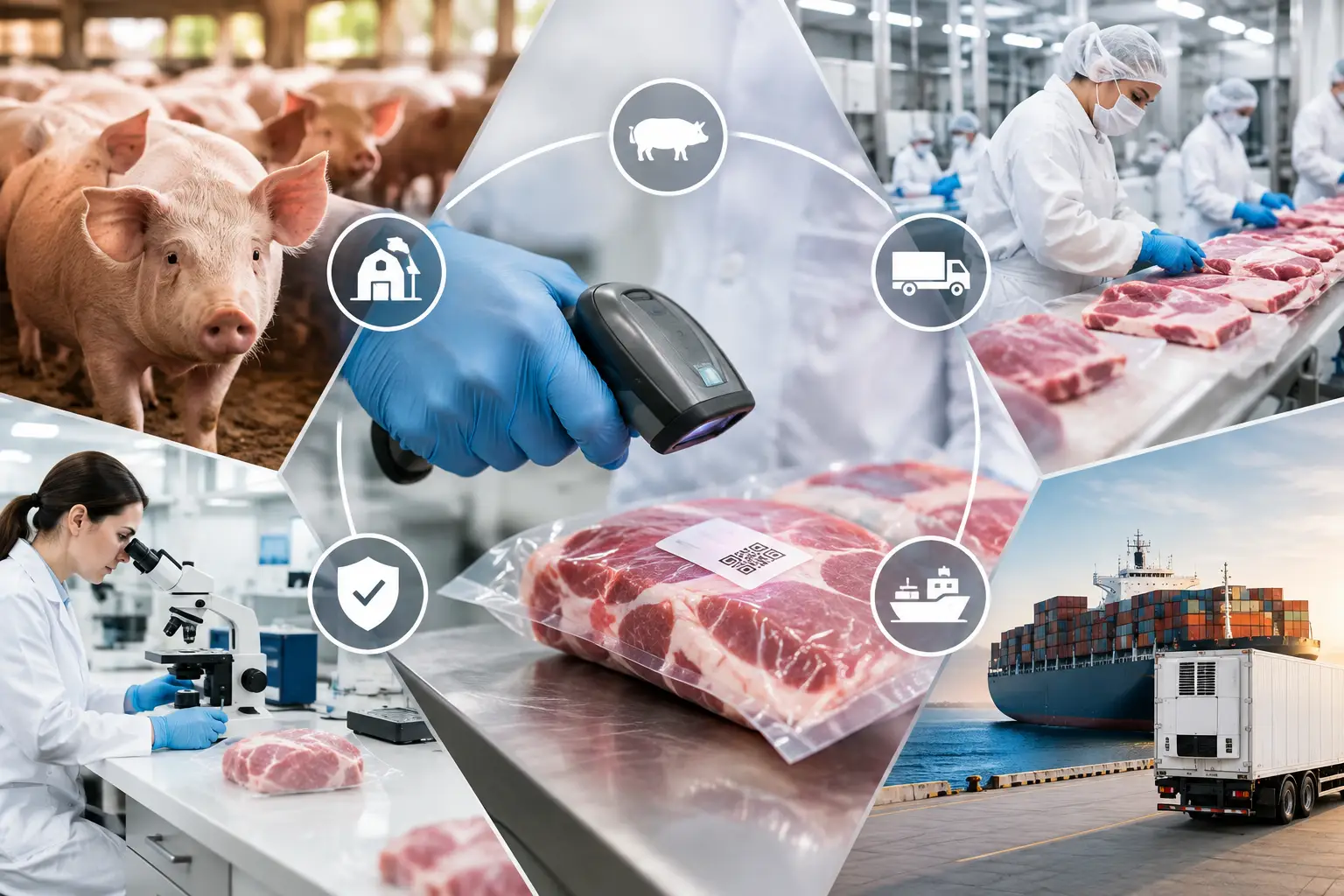
A container of frozen pork may look like a single commercial shipment, but it represents thousands of linked production and control records. A practical pork traceability example shows how a buyer can connect a carton on arrival with the production lot, processing date, animal-origin information, laboratory controls, storage history, and export documents behind it.
For importers, distributors, and food manufacturers, traceability is not simply a compliance item. It is the evidence needed to manage specifications, investigate a quality issue quickly, protect customers, and maintain confidence in a supply program. The required depth of information depends on the destination market, product type, and customer agreement, but the principle remains the same: each step must be identifiable and documented.
What a pork traceability example should show
Traceability is the ability to follow a product backward and forward through the supply chain. Backward traceability identifies where the product came from. Forward traceability identifies where it went after leaving the processing plant. Internal traceability connects the stages inside the facility, from receipt through slaughter, cutting, packaging, cold storage, and dispatch.
Consider a buyer receiving cartons of frozen boneless pork shoulder from Spain. Each carton should carry a lot or batch reference, product description, weight, production or packing date, storage conditions, and establishment identification as required by the applicable market. That information is the starting point, not the full traceability record.
When the lot number is entered into the supplier’s system, it should lead to a defined production batch. The batch record can then connect the finished cartons to the cutting line, packaging run, and the source raw material used during production. From there, the system should link back to the slaughter and receiving records associated with that material.
A reliable traceability process does not depend on one label alone. It depends on controlled links between physical product, digital or documented records, and defined procedures for handling exceptions.
From farm to export: a practical traceability flow
The following example reflects the information path an international buyer should expect to be available from an integrated pork processor. Exact record formats and retention periods vary by regulation and contract.
1. Farm and livestock intake records
The traceability chain begins before animals arrive at the plant. Approved livestock suppliers provide identification and movement information required under the relevant animal health and food-safety rules. Records may include the holding of origin, transport documentation, dates, and veterinary or health declarations where applicable.
At intake, the processor records the animals or supplier group received, the arrival time, transport details, and inspection outcomes. This establishes the connection between the incoming livestock group and subsequent production records. For buyers, this matters most when an authority, customer, or internal quality team needs confirmation of origin during an investigation.
2. Slaughter and carcass identification
After ante-mortem controls, animals enter the slaughter process under controlled plant procedures. The plant records the slaughter date, shift, production sequence, and relevant inspection decisions. Carcasses are identified or associated with a production group so their origin is not lost as they move through chilling and further processing.
This stage requires disciplined separation. If products from different production groups are handled in the same operational period, the processor must maintain a clear method to prevent confusion and preserve the correct link between the carcass, the lot, and its records.
3. Cutting, deboning, and product formation
Once carcasses enter cutting, one carcass can become many products: shoulders, loins, bellies, hams, ribs, trim, fat, and offal. Conversely, one commercial production lot may include material from a controlled group of carcasses processed during a defined time window.
The cutting record should identify the date, line, shift, product code, and source material batch. If boneless shoulder is packed in a particular run, the system should show which chilled material batches fed that run and which finished-product lot was created. This is the internal connection that makes a recall or quality inquiry targeted rather than unnecessarily broad.
4. Packaging and labeling controls
During packaging, the processor assigns the finished lot code and verifies that product labels match the approved specification. The record may include carton count, net weight, packaging format, packing date, use-by or best-before information where relevant, and pallet identification.
For a frozen export shipment, pallet labels are especially useful. They allow warehouse teams and customers to identify the location and composition of stock without opening cartons. If a buyer reports an issue with one pallet, the supplier can determine whether it concerns a single packaging run, a broader production lot, or only a specific shipment segment.
5. Quality-control and laboratory records
Traceability becomes more useful when it is connected to quality evidence. Depending on the product, market requirements, and sampling plan, records may include temperature checks, visual inspection results, microbiological monitoring, foreign-material controls, seal integrity checks, and weight verification.
A result alone is not enough. It needs a reference to the product, date, sample point, and lot or production period. This enables the quality team to assess whether an observation affects a limited quantity, related stock in storage, or product that has already been dispatched.
In-house laboratory capability can shorten the path between testing, review, and corrective action. However, buyers should distinguish between routine internal monitoring, customer-specific testing, and official export controls. They serve different purposes and may have different reporting requirements.
6. Cold-chain storage and dispatch
After packing, product moves to chilled or frozen storage. Warehouse records should preserve lot identity during palletizing, stock movements, loading, and dispatch. Temperature monitoring supports the cold-chain record, while stock management records show where each lot was held and when it left the facility.
At dispatch, the shipment is connected to the customer order, transport information, container number when applicable, seal number, loading date, and commercial documentation. Export health certificates and other official documents must correspond to the shipment and destination requirements. A carton lot number should therefore be traceable not only to its production history, but also to the specific consignee and transport movement.
What buyers should request before approving a supplier
A traceability claim is easier to evaluate when the buyer asks practical questions. Request a sample carton label and ask how the lot code is structured. Confirm whether the supplier can trace one carton back to its production batch and identify all customers who received the same affected lot.
It is also useful to discuss response time. During a food-safety incident, a supplier should be able to retrieve relevant information promptly, even outside normal commercial hours where the supply agreement requires it. Ask how mock recalls are performed, how nonconforming product is blocked, and how changes in packaging, specifications, or raw-material allocation are recorded.
For export programs, documentation must match the destination market. An importer should verify the establishment’s eligibility for the market, the product description used in certificates and invoices, labeling language requirements, freezing and storage specifications, and any customer-specific restrictions on origin or production dates. Traceability does not replace import compliance, but it provides the evidence needed to support it.
Traceability at industrial scale
High-volume processing creates a particular challenge: information must remain accurate while product moves quickly through multiple lines, rooms, warehouses, and loading operations. Manual records alone can create avoidable risk when volumes are large. Barcode systems, controlled lot allocation, integrated production records, and defined verification points help maintain accuracy across the process.
At Litera Meat, an integrated platform in Binéfar, Spain, brings slaughter, cutting, cold-chain handling, packaging, quality control, and commercial distribution together within one operating model. With 22 cutting lines and 160,000 pigs processed weekly, traceability depends on disciplined process controls and the ability to connect data across each production stage.
Scale can support traceability when the underlying system is designed for it. It can also expose weaknesses quickly if lot definition, segregation, or warehouse controls are unclear. Buyers should therefore focus on how the supplier manages information and exceptions, not only on the size of its facilities.
When traceability records are needed
The clearest test of a traceability program is what happens when a question arises. A buyer may receive a customer complaint about packaging, a temperature concern during transit, a labeling discrepancy, or a request from an authority. The supplier should be able to identify the relevant lot, confirm the product status, review associated controls, and communicate the scope of any potential action.
Not every issue requires a recall. A damaged outer carton, for example, may be a logistics matter limited to a few units. A confirmed food-safety concern may require wider action. Good traceability allows the response to match the actual risk, reducing unnecessary disposal while protecting public health and commercial relationships.
For international pork procurement, the most useful question is not whether a supplier says it has traceability. Ask whether it can show the chain of evidence from a carton in your warehouse back through packing, cutting, slaughter, livestock intake, and the records that support each stage. That level of visibility gives buyers a stronger basis for approving suppliers and managing long-term supply with confidence.