
Latest News
Industrial Pork Slaughter Guide for Buyers

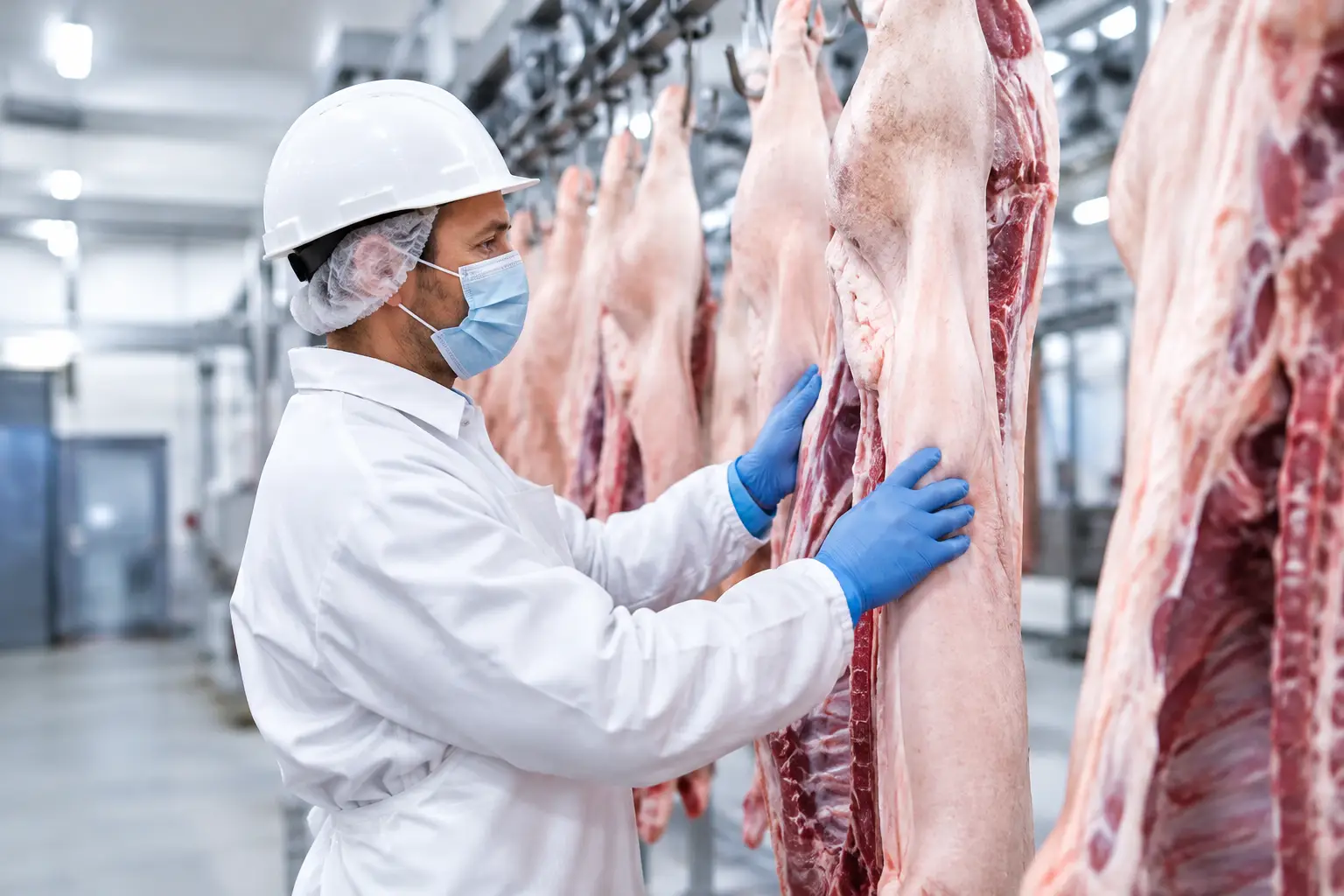
For an international buyer, a pork supplier’s slaughter operation is not simply the first step in production. It determines product consistency, microbiological control, shelf life, specification accuracy, and the reliability of every shipment that follows. This industrial pork slaughter guide explains the operational areas that procurement teams should review when sourcing fresh or frozen pork at commercial scale.
A capable processor must connect animal handling, veterinary inspection, hygienic processing, rapid chilling, cutting, packaging, and dispatch within one controlled system. The value of this integrated approach becomes particularly clear when a buyer requires repeatable volumes, varied cuts and offal, strict documentation, and dependable delivery to international markets.
What Industrial Pork Slaughter Means for Procurement
Industrial pork slaughter is a high-capacity, regulated process designed to transform livestock into safe, traceable pork products under controlled conditions. Scale alone is not a measure of supplier capability. Buyers should look for whether high throughput is supported by facility layout, automation, trained personnel, preventive maintenance, sanitation programs, laboratory controls, and documented release procedures.
At an industrial facility, each production stage must protect both food safety and commercial specifications. A delay in chilling can affect shelf life. Inconsistent cutting can lead to unacceptable yield variation. Weak lot control can complicate a recall or prevent a buyer from meeting local import requirements. These risks are linked, which is why evaluating a slaughterhouse only by weekly capacity provides an incomplete picture.
For buyers importing pork from Spain and the European Union, the process also begins within a regulatory framework that covers animal identification, veterinary oversight, welfare requirements, hygiene, and traceability. However, importing markets may impose further conditions on labeling, health certification, residue controls, product temperature, or approved establishment status. The supplier must be able to align its operation with the destination market, not only with domestic requirements.
Animal Welfare Starts Before the Processing Line
Animal welfare has direct operational relevance. Calm, properly managed animals support safer handling conditions and can help reduce quality issues associated with stress. Buyers assessing a supplier should consider how animals are transported, unloaded, rested, moved through lairage, and handled before processing.
Effective welfare management relies on trained teams, suitable facilities, equipment maintenance, and continuous supervision. It also requires a clear approach to non-ambulatory animals, emergency procedures, and welfare verification. At industrial scale, these controls cannot depend solely on individual judgment. They need written procedures, monitoring records, and corrective actions when standards are not met.
The stunning stage must be managed in accordance with applicable animal-welfare legislation and validated operating procedures. For B2B customers, the practical question is whether the supplier can demonstrate control through staff competency, equipment checks, monitoring, and documented review. Welfare performance should be treated as part of a broader supplier assurance program, alongside hygiene and traceability.
Hygienic Slaughter and Veterinary Control
The core food-safety challenge in pork slaughter is preventing contamination during each transition from live animal to chilled carcass. Hygienic design, controlled separation of clean and unclean areas, equipment sanitation, and employee hygiene are essential. A well-designed plant manages product flow, personnel movement, tools, water, air, and waste so that contamination risks are identified and controlled.
Official veterinary inspection is another critical point. Animals are assessed before processing, and carcasses and organs are inspected afterward in accordance with applicable regulations. This control supports public health, animal-health surveillance, and the suitability of products for the food chain.
Buyers should ask how the processor manages deviations. Relevant examples include a failed hygiene check, an abnormal inspection finding, a temperature excursion, or a discrepancy in animal identification. A mature system isolates affected product, investigates the cause, documents the decision, and prevents unintended release. The strength of this response often says more about a supplier than a routine audit result.
Laboratory Support and Verification
Food-safety systems need verification, not only written procedures. In-house scientific laboratory capability can support microbiological testing, hygiene monitoring, water analysis, and trend review with greater speed and operational visibility. The precise testing plan will depend on the product, market, and regulatory requirements, but results must be converted into decisions on sanitation, process adjustment, or product disposition.
Procurement teams should distinguish between a supplier that conducts isolated tests and one that uses data to manage risk. Regular trend analysis can reveal recurring issues in a production area, shift, product category, or piece of equipment before they become a customer complaint or border rejection.
Chilling Is a Commercial Control Point
Once veterinary checks are complete, carcass chilling becomes central to product safety and quality. The objective is to reduce product temperature under controlled conditions while limiting condensation, handling damage, and unnecessary weight loss. The correct chilling profile depends on the product format, intended use, and subsequent processing plan.
For fresh pork buyers, chilling discipline affects shelf-life planning and transport options. For frozen products, it affects the condition of raw material entering the freezing and packaging process. In either case, temperature records should remain connected to product identification and shipment documentation.
Cold-chain capability should be assessed beyond the slaughterhouse. Buyers need confidence in refrigerated storage capacity, loading practices, temperature monitoring, transport coordination, and contingency planning. The best specification on paper has limited value if product temperatures cannot be maintained through handover to the logistics provider.
Traceability in an Industrial Pork Slaughter Guide
Traceability should allow a processor to connect finished products back through cutting, processing, carcass handling, animal origin, and relevant production records. In practical terms, this means the supplier can identify what was produced, when it was produced, which lot it belongs to, where it was stored, and where it was dispatched.
For international sourcing, traceability also supports certificate management and destination-market compliance. A shipment may require specific establishment information, health documentation, date codes, labeling details, or evidence that products were segregated according to market requirements. The depth of traceability needed varies by market and product, but the system should be capable of producing accurate records quickly.
Lot definition requires careful balance. Very broad lots may make investigations unnecessarily complex, while extremely narrow lots can increase administrative burden and reduce operational flexibility. The appropriate approach depends on production volume, product flow, customer requirements, and risk assessment.
From Carcass to Customer Specification
Industrial pork production creates value through controlled cutting and product allocation. A buyer may require fresh primal cuts, boneless items, trim, skin, fat, bones, edible offal, or frozen products for further manufacturing. Each category has different requirements for specification, packing format, labeling, storage, and export authorization.
The processor’s cutting capacity matters because it influences the ability to supply a broad portfolio without compromising consistency. It should be supported by clear cutting standards, weight tolerances, visual quality checks, packaging controls, and verification of label accuracy. When procurement programs involve multiple products, buyers should confirm that specifications are managed centrally and remain consistent across production runs.
Litera Meat operates an integrated pork-processing platform in Binéfar, Spain, covering slaughter, cutting, cold-chain handling, packaging, quality control, and commercial distribution. With 22 cutting lines and capacity to process 160,000 pigs weekly, its operating model reflects the level of coordination required to serve high-volume domestic and international pork programs.
Questions Buyers Should Ask a Pork Processor
Before approving a supplier, buyers should obtain practical answers on throughput, product range, approved export markets, cold-storage capability, traceability response time, and documentation management. They should also review how the processor controls animal welfare, sanitation, veterinary findings, temperature, foreign-material risk, and nonconforming product.
It is useful to ask how customer specifications are converted into production instructions. This reveals whether commercial requirements are clearly transmitted to cutting, packaging, quality, warehouse, and shipping teams. A supplier that can explain this process clearly is better positioned to manage ongoing programs and specification changes.
Finally, buyers should assess communication as carefully as physical infrastructure. International pork trade depends on accurate forecasts, realistic lead times, complete documents, and rapid response when conditions change. A processor with disciplined operations and an export-focused commercial team can help reduce avoidable disruption across the supply chain.
The right sourcing decision is built on evidence: controlled processing, documented traceability, reliable cold-chain execution, and the ability to deliver the required pork products consistently from Spain to the destination market.